Bridge cranes, as a core piece of equipment in modern industrial material handling systems, undertake the heavy lifting, transporting, and stacking of heavy objects. In various industrial environments, such as workshops, warehouses, and docks, bridge cranes, due to their efficiency, stability, and safety, have become an indispensable component. Among them, the 20/5t bridge crane, with its unique performance parameters and wide range of applications, has become the preferred equipment in many industrial fields. This article will comprehensively analyze all aspects of the 20/5t bridge crane, from its basic structure and operating principle to performance parameters, installation and commissioning, operation and maintenance, and safety management, aiming to provide relevant professionals with a detailed technical reference.
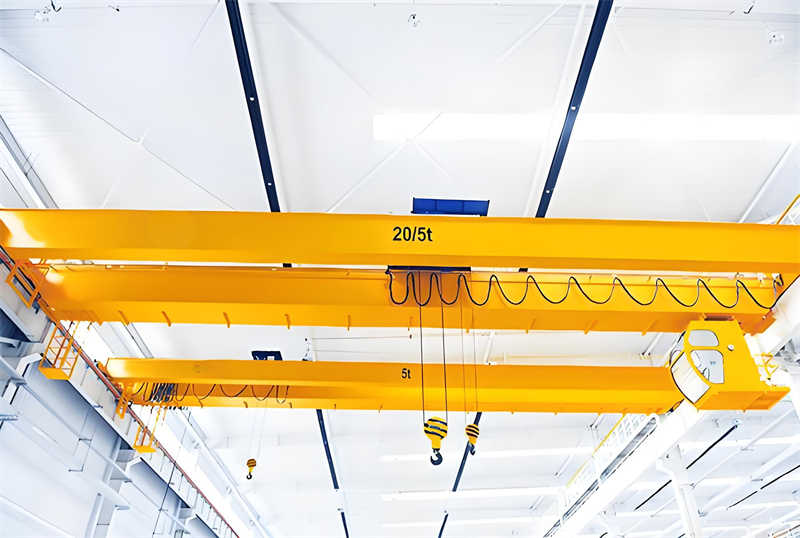
The basic structure of a 20/5t bridge crane consists of four main components: the metal structure, operating mechanism, hoisting mechanism, and electrical control system.
Metal Structure
The metal structure is the primary load-bearing component of a bridge crane and primarily includes the main girder, end beams, and trolley frame. The main girder, the primary load-bearing structure of the crane, typically adopts a box-shaped structure, offering high strength and rigidity. The end beams are connected to the ends of the main beam, forming the overall crane framework. The trolley frame is mounted on the main beam and carries and operates the hoisting mechanism.
Traveling Mechanism
The traveling mechanism consists of the trolley running mechanism and the trolley running mechanism. The trolley running mechanism is responsible for horizontal movement of the crane and typically consists of a drive unit, wheel assembly, tracks, and brakes. The trolley running mechanism is responsible for moving the trolley frame on the main beam. Its structure is similar to the trolley running mechanism, but its size and load capacity are smaller.
Hoisting Mechanism
The hoisting mechanism is the key component in a bridge crane for lifting and lowering loads. It typically consists of an electric motor, a speed reducer, a drum, wire rope, and a pulley system. The motor drives the drum through the speed reducer, causing the wire rope to be wound or released around the drum, thereby lifting and lowering the load. The pulley system changes the direction of the wire rope’s movement and increases lifting force.
Electrical Control System
The electrical control system is the nerve center of the bridge crane, responsible for receiving operating instructions, controlling the operation of the traveling and hoisting mechanisms, and implementing safety protection functions. It usually consists of power supply, control electrical appliances, protection electrical appliances and circuits, etc. Modern bridge cranes usually use programmable logic controllers (PLCs) as the control core, which has the advantages of simple operation, high reliability and easy maintenance.
The operating principle of a 20/5t bridge crane is driven by commands from the electrical control system. The crane’s operating mechanism and hoisting mechanism coordinate their movements to lift and lower heavy objects.
Receiving and Transmitting Operating Instructions
Operational instructions are typically input into the electrical control system by the operator using a joystick or button. Upon receiving the instructions, the electrical control system converts them into electrical signals and transmits them to the corresponding actuators.
Operating Mechanism Operation
The electrical control system drives the wheel assemblies of the trolley and carriage operating mechanisms on the tracks by controlling the start, stop, and direction of rotation of the motors. Simultaneously, it controls the operation of the brakes to ensure accurate stopping and braking of the operating mechanisms.
Hoisting Mechanism Operation
The electrical control system controls the speed and direction of rotation of the motors to rotate the drum and wind or release the wire rope, thereby lifting and lowering heavy objects. Furthermore, the lifting force and direction of movement can be adjusted by controlling the combination and number of pulleys.
Safety Protection Mechanism Implementation
The electrical control system also features various safety protection mechanisms, such as limit switches, overload protection, and overcurrent protection. When the crane reaches its limit position or an abnormal situation occurs, these protection mechanisms will immediately activate and cut off the power supply to ensure the safe operation of the crane.
The performance parameters and specifications of a 20/5t bridge crane are important indicators for measuring its performance and range of use. These parameters and specifications typically include lifting capacity, span, lifting height, operating speed, and operating class.
Lifting capacity is one of the key performance parameters of a bridge crane, indicating the maximum weight the crane can safely lift and handle. The 20/5t bridge crane is available in two lifting capacity configurations: 20 tons and 5 tons. This means the crane can be operated with either a 20-ton or 5-ton lifting capacity, depending on actual needs. Furthermore, the crane can be used in combination with either capacity to meet more complex handling requirements.
Span refers to the distance between the ends of a bridge crane’s main beam and is an important indicator for measuring the crane’s range of use. The span of a 20/5t bridge crane is typically determined based on actual site conditions, with common spans ranging from 10 to 30 meters. Different span configurations can meet the needs of different industrial environments, ensuring efficient handling within confined spaces.
Lifting height refers to the maximum height to which a crane can lift a load. The lifting height of a 20/5t bridge crane is typically customized based on actual needs, with common lifting heights ranging from a few meters to several dozen meters. Higher lifting heights meet the needs of heavy cargo handling, while lower lifting heights are suitable for industrial environments with limited space.
Operating speed is a key indicator of a bridge crane’s operating efficiency. The operating speed of a 20/5t bridge crane typically includes trolley speed, trolley speed, and hoist speed. These speed parameters can be adjusted and optimized based on actual needs to achieve more efficient handling operations. To ensure safe crane operation, the operating speed must also meet relevant standards and regulations.
The working class refers to the operating life and performance level that a bridge crane can achieve under specified operating conditions. The working class of a 20/5t bridge crane is typically determined based on factors such as frequency of use, operating environment, and load conditions. Different working classes correspond to different service life and performance requirements to ensure that the crane maintains stable performance under varying operating conditions.
The installation and commissioning of a 20/5t bridge crane is crucial for ensuring its proper operation and extending its service life. This process requires the involvement of professional technicians and strict adherence to relevant installation and commissioning specifications.
Before installing a 20/5t bridge crane, thorough preparation is required. This includes site surveys, foundation construction, equipment and material preparation, and personnel training.
Site Survey
A site survey is the primary task before installation. Technicians must conduct a detailed survey of the installation site to understand the environmental conditions, spatial layout, and the specific installation location of the crane. They must also clean and organize the site to ensure there are no obstructions or safety hazards during installation.
Foundation Construction
Foundation construction is a key step in installing a 20/5t bridge crane. Based on the crane’s weight and size, technicians must design and construct an appropriate foundation structure. This foundation typically includes a concrete foundation, embedded components, and anchor bolts. During foundation construction, the stability and strength of the foundation structure must be ensured to support the crane’s weight and withstand the vibration and shock experienced during operation.
Equipment and Material Preparation
Before installing a 20/5t overhead crane, the necessary equipment and materials must be prepared. These include the crane itself, electrical control system, rails, wheel sets, and wire ropes. Tools and equipment required for installation, such as a crane, welder, and bolt wrench, must also be prepared. When preparing these equipment and materials, ensure their quality meets relevant standards and regulations to ensure a quality and safe installation.
Personnel Training
Before installing a 20/5t overhead crane, installers must receive professional training and instruction. This training covers the crane’s structure and operating principles, installation procedures and methods, and safe operating procedures. This training familiarizes installers with the crane’s performance and features, and helps them master proper installation methods and operating skills, ensuring a safe and high-quality installation process.
The installation of a 20/5t overhead crane requires strict procedures and methods. These steps and methods typically include the assembly and welding of the metal structure, the installation of the running gear and hoisting mechanism, and the wiring and commissioning of the electrical control system.
Metal Structure Assembly and Welding
Metal structure assembly and welding is the first step in installing a 20/5t overhead crane. Technicians assemble and weld metal structural components, such as the main beam, end beams, and trolley frame, according to drawings and specifications. During the assembly process, they must ensure that the connections between components are secure and reliable, and that they meet the relevant dimensional and tolerance requirements. During the welding process, they must use appropriate welding methods and process parameters to ensure weld quality and strength.
Running Gear and Hoisting Mechanism Installation
During the installation of the running gear and hoisting mechanism, technicians assemble and commission all components according to drawings and specifications. This includes installing the drive unit, installing the wheel assembly, laying the track, and commissioning the brakes. During the installation process, they must ensure that all components fit together properly and meet the relevant dimensional and tolerance requirements. At the same time, all components must be debugged and calibrated to ensure flexible, accurate, and reliable operation.
Electrical Control System Wiring and Debugging
The wiring and debugging of the electrical control system is a key step in installing a 20/5t overhead crane. Technicians must wire and debug all components of the electrical control system according to drawings and specifications. This includes laying power lines, wiring control circuits, installing protective devices, and programming and debugging the PLC. During the wiring process, it is important to ensure that the connections are secure and reliable and comply with relevant electrical safety regulations. During debugging, the electrical control system undergoes functional testing and verification to ensure that it functions properly and meets design requirements.
After the installation of a 20/5t bridge crane is complete, commissioning and acceptance work is required. This includes no-load testing, load testing, and safety and reliability assessments.
No-load Testing
The no-load testing is the first step in commissioning a 20/5t bridge crane. During the no-load testing, technicians will start the crane and operate various mechanisms to verify their flexibility, accuracy, and reliability. They will also check the proper functioning of various electrical control system functions, such as limit switches and overload protection. The no-load testing provides a preliminary assessment of whether the crane meets design and operational requirements, laying the foundation for subsequent load testing and safety assessments.
Load Testing
The load testing is a critical step in commissioning a 20/5t bridge crane. During the load testing, technicians will perform lifting, transporting, and stacking operations according to specified loads and operating conditions. The load testing verifies the crane’s load-bearing capacity, stability, and safety, ensuring it can function properly under specified operating conditions. During the load test, various parameters and data, such as lifting capacity, lifting height, operating speed, and the functions of the electrical control system, must be recorded to provide a basis for the subsequent safety and reliability assessment.
Safety and Reliability Assessment
The safety and reliability assessment is the final step in the commissioning of a 20/5t overhead crane. During this assessment, technicians conduct a comprehensive inspection and testing of all crane components and systems, including the strength of the metal structure, the stability of the operating mechanism, the reliability of the hoisting mechanism, and the safety of the electrical control system. Furthermore, crane operators and maintenance personnel must undergo training and assessment to ensure their proficiency and safety awareness. This safety and reliability assessment comprehensively assesses the crane’s performance and quality, ensuring it meets relevant standards and regulations.
During the commissioning and acceptance process, if any problems or defects are discovered with the crane, technicians must promptly address and rectify them. This includes repairing damaged components, adjusting improper parameters, and optimizing inappropriate structures. These rectifications and optimizations ensure that the crane meets design and operational requirements, providing a strong foundation for subsequent official operation.
The operation and maintenance of a 20/5t bridge crane are crucial for ensuring its proper operation and extending its service life. Correct operation methods and effective maintenance measures can significantly improve crane performance and safety, reducing failure rates and repair costs.
When operating a 20/5t bridge crane, strict adherence to operating procedures and precautions is required. These procedures and precautions typically include pre-operation inspection and preparation, lifting operation procedures and techniques, and emergency response procedures.
Pre-Operation Inspection and Preparation
Before operating a 20/5t bridge crane, a detailed inspection and preparation are required. This includes checking that all crane components and systems are intact and functioning properly; that all functions of the electrical control system are functioning properly; and that the on-site environment is safe and obstruction-free. These inspections and preparations can help promptly identify and eliminate potential safety hazards, ensuring the proper operation of the crane and the safety of the operator.
Lifting Operation Procedures and Techniques
During lifting operations, it is necessary to follow the prescribed operating procedures and techniques. This includes starting the crane and operating all its mechanisms; selecting the appropriate lifting capacity and height; and controlling the crane’s speed and direction. Attention must also be paid to operational details and techniques, such as smoothly raising and lowering loads and avoiding shock and vibration. Correct operating procedures and techniques ensure crane stability and safety, improving operational efficiency and quality.
Emergency Handling Methods
During lifting operations, various emergencies may occur, such as electrical failures, mechanical failures, or loss of control of the load. In these situations, the operator must quickly implement emergency measures to ensure the safety of themselves and those around them. This includes immediately shutting off the power and stopping the crane; using the emergency brake or manual controls to control the movement of the load; and promptly reporting the incident to the police and seeking professional assistance. Proper emergency handling procedures can minimize the risk of accidents and losses.
Maintenance and troubleshooting of 20/5t bridge cranes are crucial for ensuring their proper operation and extending their service life. Regular maintenance and timely troubleshooting can promptly identify and correct potential problems and defects, improving the crane’s performance and safety.
Daily Maintenance Content and Cycles
Daily maintenance is the foundation of 20/5t bridge crane maintenance. It typically includes cleaning, lubrication, tightening, and inspection. Cleaning requires regular cleaning of all crane components and systems to remove dust, oil, and debris. Lubrication requires lubrication according to the specified lubrication cycles and lubrication points to minimize friction and wear between components. Tightening requires inspecting and tightening fasteners such as bolts and nuts between components to ensure secure and reliable connections. Inspection requires a comprehensive inspection of all crane components and systems to promptly identify and address potential problems and defects.
Common Fault Diagnosis and Troubleshooting
During use, 20/5t bridge cranes may experience various common faults. These typically include electrical, mechanical, and hydraulic failures. Electrical faults can be diagnosed and corrected by inspecting components such as the electrical control system’s wiring, electrical components, and sensors. Mechanical faults can be diagnosed and corrected by inspecting components such as the transmission, bearings, and connectors. Hydraulic faults can be diagnosed and corrected by inspecting components such as the hydraulic pump, valve, and cylinder. When diagnosing and troubleshooting, follow the principle of starting with the easiest and then the most difficult, and starting with the outside and then the inside. Step by step, identify the cause of the fault and then take appropriate remedial measures.
Component Replacement and Repair Techniques
During maintenance, it may be necessary to replace or repair certain crane components. These include electrical components, transmissions, bearings, and connectors. When replacing or repairing components, follow relevant maintenance techniques and precautions. For example, when replacing electrical components, ensure that the new component is the same model and specification as the old one. When replacing transmissions, ensure that the transmission ratio and transmission efficiency meet the requirements. When replacing bearings, ensure that the bearing model and accuracy meet the requirements. Safety and hygiene must also be maintained during maintenance to avoid personal injury or environmental pollution.
Safety management and risk control are crucial for ensuring the safe operation of 20/5t bridge cranes. By establishing robust safety management systems and regulations, strengthening the implementation of risk control and preventive measures, and improving operators’ safety awareness and operational skills, crane safety risks can be significantly reduced and operators’ lives protected.
Establishing robust safety management systems and regulations is fundamental to ensuring the safe operation of 20/5t bridge cranes. These systems and regulations typically include operator training and assessment requirements, equipment safety inspection and evaluation standards, and emergency response plans and drill procedures.
Operator Training and Assessment Requirements
To ensure that operators’ safety awareness and operational skills meet requirements, regular training and assessment are required. This includes comprehensive safety education and skills training for new employees and regular safety knowledge updates and operational skill enhancement training for current employees. Furthermore, assessments and evaluations of operator training outcomes are necessary to ensure proficient operational skills and a strong safety awareness.
Equipment Safety Inspection and Assessment Standards
To ensure that 20/5t bridge cranes meet safety and reliability requirements, regular safety inspections and assessments are required. This includes comprehensive inspections of all crane components and systems, as well as monitoring and assessment of the crane’s performance parameters and operating status. Safety inspections and assessments can promptly identify and address potential safety hazards and issues, ensuring the proper operation of the crane and the safety of operators.
Accident Emergency Plan and Drill Process
To address potential lifting accidents and minimize the risks and losses, a comprehensive emergency plan and regular drills are necessary. This includes clarifying the emergency response process and division of responsibilities, as well as developing targeted emergency measures and rescue plans. The development and rehearsal of emergency plans can enhance operators’ ability to respond to emergencies, ensuring that appropriate emergency measures can be quickly implemented and effective rescue efforts can be carried out in the event of an accident.
In addition to establishing a robust safety management system and regulations, targeted risk control measures are also necessary to mitigate the safety risks of 20/5t bridge cranes. These measures typically include strengthening the safety protection and monitoring of the electrical control system, regularly inspecting and maintaining the metal structure and operating mechanism, and improving operators’ safety awareness and operational skills.
Strengthening the Safety Protection and Monitoring of the Electrical Control System
The electrical control system is a key component of a 20/5t bridge crane. Its safety and reliability significantly impact the crane’s operational stability and safety. Therefore, strengthening the safety protection and monitoring of the electrical control system is necessary. This includes regular inspection and maintenance of the electrical control system’s wiring, electrical components, and sensors, as well as real-time monitoring and evaluation of the electrical control system’s operating status. By strengthening the safety protection and monitoring of the electrical control system, potential safety hazards and issues can be promptly identified and addressed, ensuring the proper operation of the electrical control system and the safety of the crane.
Performing Regular Inspection and Maintenance of the Metal Structure and Operating Mechanism
The metal structure and operating mechanism are among the load-bearing and transmission components of a 20/5t bridge crane. Their safety and reliability significantly impact the crane’s operational stability and load-bearing capacity. Therefore, regular inspection and maintenance of the metal structure and operating mechanism are essential. This includes inspecting and evaluating the strength, rigidity, and stability of the metal structure; and inspecting and maintaining components such as the transmission, bearings, and connectors of the operating mechanism. Regular inspection and maintenance can promptly identify and address potential defects and problems, ensuring the proper operation of the metal structure and operating mechanism, and the safety of the crane.
Improving Operator Safety Awareness and Operating Skills
Operator safety awareness and operating skills are key factors affecting the safety of 20/5t bridge cranes. Therefore, it is necessary to strengthen operator safety education and training to enhance their safety awareness and operating skills. This includes regular operator safety knowledge and skills training; organizing operator participation in safety drills and accident case analysis; and encouraging operators to actively learn new safety knowledge and skills. Strengthening operator safety education and training can improve their safety awareness and operating skills, ensuring strict adherence to operating procedures and safety requirements during operation, and reducing accident risks and losses.
Contact our crane specialists
Send us a message and we will get back to you as soon as possible.