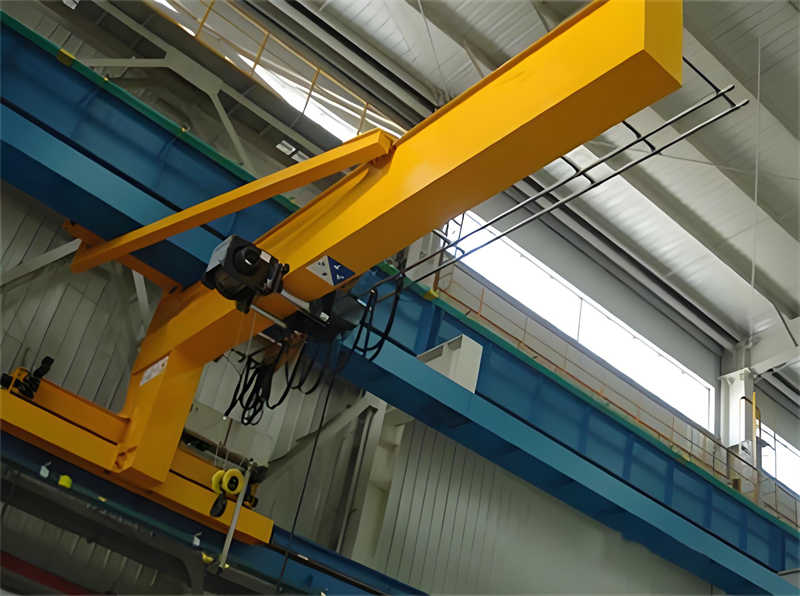
Home → Jib crane → 5t Electric Hoist Wall Crane Instructions
5t Electric Hoist Wall Crane Instructions
I. Application and Main Technical Parameters
Application
This 5t electric hoist wall-mounted crane is designed for safe and reliable handling and loading and unloading of cargo over short distances in warehouses, workshops, docks, and production lines. Its operating temperature range is -5°C to 40°C. It is not suitable for environments with fire or explosion hazards, corrosive gases, or relative humidity exceeding 85%. It is also not suitable for lifting molten metal or toxic or flammable materials. The crane features independent travel rails, allowing it to simultaneously serve multiple workstations, effectively expanding its operating range, improving factory space utilization, reducing worker workload, and boosting production efficiency.
Main Technical Parameters
Lifting Capacity: 5t
Effective Boom Length: 4m
Maximum Wheel Load: 5.3t
Gross Weight: 4t
Maximum Lifting Height: 4m
Rated Lifting Speed: 6.1m/min
Rated Trolley Operating Speed: 30m/min
Rated Trolley Operating Speed: 20.5m/min
Working System: A3
II. Structure and Mechanism
Metal Structure
This crane is a new type of material handling equipment developed based on a pilaster-type jib crane. It operates on three rails and is mounted on factory building columns, allowing longitudinal movement along the rails. The electric hoist enables lateral movement along the boom and vertical lifting. The structure consists of a main beam, support beams, active end beams, and passive end beams.
Electric Hoist
The electric hoist is responsible for lifting loads and moving longitudinally along the main beam. For detailed structural features, please refer to the electric hoist manual. Operating Mechanism
This product utilizes a separate drive system, with driving and braking performed by a conical brake motor. The transmission utilizes a three-in-one enclosed gear drive, offering advantages such as simple structure, smooth operation, and high reliability.
Electrical Equipment
The operating motors are available in two types: a single-speed conical squirrel-cage motor (for operating speeds of 30 m/min and 45 m/min) and a conical wound-rotor motor (for operating speeds of 75 m/min). Two electrical control methods are available depending on the operating mode. The electric hoist and the entire crane are equipped with safety devices, such as a lifting limit switch and an end limit switch.
III. Installation
At the user’s site, install the crane operating mechanism drive unit on the crossbeam.
Bolt the main crossbeam together as shown. Note that these bolts are special bolts (made of 45-gauge steel). Intermittent welding may be used to ensure safety, but avoid over-welding to prevent deformation.
IV. Operation
Operational Requirements
Operators must possess appropriate crane operating qualifications and undergo regular training and skill assessments.
Before starting the electric hoist crane, ensure that all functions are functioning properly. Report any malfunctions immediately to maintenance.
During operation, any illegal operations, such as exceeding the crane’s rated load or operating at excessive speed, are strictly prohibited.
Operators must pay full attention to the operation and refrain from non-work activities, such as using mobile phones or smoking.
Safety Precautions
Before operation, ensure the work surface is level and safe, and all obstacles are cleared from the work area.
During operation, maintain good visibility and maintain effective communication with other operators.
Overloading is strictly prohibited, and the rated lifting capacity of the electric hoist crane must not be exceeded.
During operation, it is strictly prohibited to remain directly under or near any hoisted object.
Use the control handles carefully during operation to avoid accidents caused by sudden operation.
Electric hoists must not be used for vertical transportation of personnel.
Emergency Procedures
If any warning signals or abnormal conditions are encountered during operation, stop operation immediately and report to management.
If the hoisted object slips or falls, press the emergency stop button immediately and take necessary safety precautions.
During emergencies, operators should remain calm and strictly follow the emergency plan.
After an accident occurs, management should be notified immediately and necessary safety measures should be implemented to ensure safety on site and provide medical treatment for the injured.
V. Maintenance
Electric hoist cranes should undergo maintenance and servicing according to established schedules, including cleaning and lubrication of the machinery and inspection of the electrical system.
Equipment repairs and inspections must be performed by qualified personnel, and relevant records must be kept.
During maintenance or repairs, the power supply must be disconnected to ensure safe operation.
After maintenance and repairs, a trial run and functional inspection must be performed to confirm that the equipment has returned to normal operating condition.
Contact our crane specialists
Send us a message and we will get back to you as soon as possible.