This report comprehensively describes the technical characteristics, structural composition, application fields and purchase guide of the LX electric single-beam suspension crane, aiming to provide professional equipment selection reference for industrial production enterprises. As a typical representative of light lifting equipment, the LX electric single-beam suspension crane is widely used in various industrial material handling occasions with its compact structure, economical and practical, and flexible installation. The report will conduct a systematic analysis from multiple dimensions such as product overview, technical parameters, design features, installation and maintenance, and market selection, and focus on comparing the technical differences between ordinary and European standard types to help users make reasonable choices based on actual needs.
The LX electric single-beam suspension crane is a light and small lifting equipment, which is a special form of bridge crane. Its design follows the JB/T2603 standard. It is mainly composed of a metal structure main beam, end beam, electric hoist and operating mechanism, and is installed on the I-beam track on the upper part of the factory building by suspension. Unlike traditional bridge cranes, the LX track is directly erected on the lower chord of the factory building frame or a special bracket, without the need for additional support columns. This feature makes it particularly suitable for workplaces with limited space.
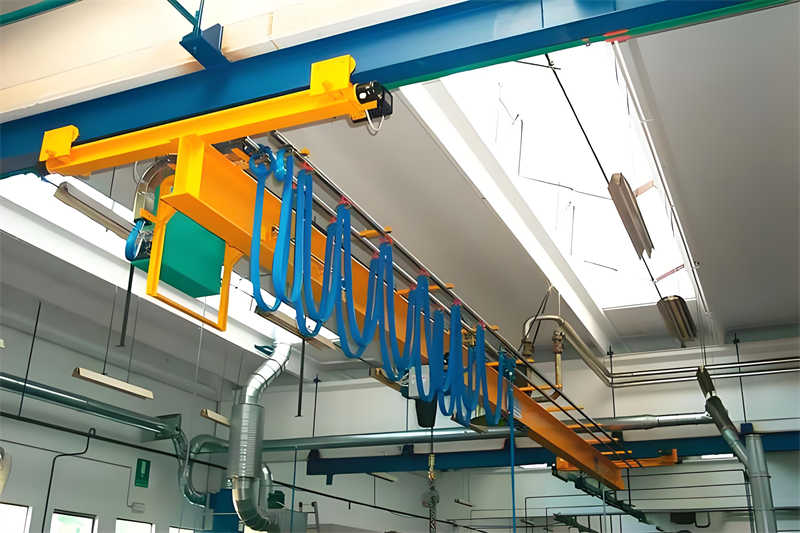
From the application field, this type of crane mainly serves machinery manufacturing assembly workshops, warehouses, freight yards, mines, docks, logistics centers and maintenance sites, etc., and undertakes the lifting, loading and unloading and positioning of various materials. Its typical working environment temperature range is -20°C to +40°C (ordinary type) or -10°C to +40°C (European standard type), and the ambient humidity generally does not exceed 85%. According to the search results, the LX type crane can be used with CD1 and MD1 electric hoists to form a complete lifting system.
From the perspective of carrying capacity, the LX type electric single-beam suspension crane is a light lifting equipment, and the rated lifting capacity range is usually 0.5 tons to 10 tons, among which 0.5 tons, 1 ton, 2 tons, 3 tons, 5 tons and 10 tons are common tonnage grades. In terms of span, standard products cover a range of 3 meters to 16 meters. If there are special needs, most manufacturers can provide non-standard customization services. This flexible configuration method enables it to adapt to various site conditions and lifting requirements.
In terms of operation, the LX crane is mainly operated from the ground, and various functions can be realized through handle control or wireless remote control. Some models can also be configured for cab operation. In terms of power supply, 380V±10%, 50Hz three-phase AC is generally used, and the allowable voltage fluctuation range of the motor is ±10% of the rated voltage. These design features enable the LX crane to meet basic lifting needs while taking into account the convenience and safety of operation.
The technical parameter system of the LX electric single-beam suspension crane fully reflects its working capacity and scope of application, and is the key basis for equipment selection. According to the comprehensive data from multiple sources, the main performance indicators of this type of crane show certain standardized characteristics, while also retaining space for personalized customization.
In terms of lifting parameters, the rated lifting capacity range has been verified in multiple documents, and the standard configuration is 0.5 tons to 10 tons. Among them, pages 6 and 5 clearly state that the specific tonnage includes 0.5 tons, 1 ton, 2 tons, 3 tons, 5 tons and 10 tons. The span parameters are generally 3-16 meters . When the standard span cannot meet the needs, most manufacturers can provide non-standard design services. The lifting height is generally 6 meters to 30 meters, but the specific value depends on the configuration of the electric hoist rather than the main structure of the crane. The working level is usually A3 which meets the needs of general industrial applications.
In terms of operating performance, the standard operating speed is divided into two levels of 20m/min and 30m/min , which is basically consistent with the European standard model. The crane’s cantilever length is designed to be 0.5-1m , providing additional operational flexibility for specific work scenarios. The wheel pressure parameters vary depending on the specific model. Web page 8 specifically points out that the large and small wheel pressure values will be clearly marked in the product description. These data are crucial for evaluating the bearing capacity of the plant structure.
The electrical parameters show high consistency: the working voltage is 380V three-phase AC, and the voltage fluctuation is allowed to be ±10%; the rated frequency is 50Hz . As a key component, the motor power of the electric hoist varies according to the lifting weight, but well-known brands such as Nanjing Special Motor or Nanjing General Factory Motor are usually used to ensure operational reliability. In terms of electrical components, high-end configurations will use international brands such as Siemens or Schneider , which improves the stability of the control system.
The environmental adaptability index shows that the working environment temperature range of ordinary LX cranes is -20°C to +40°C , while the temperature adaptability range of European standard models (LX European style) is slightly narrower, from -10°C to +40°C . Both require that the relative humidity of the working environment does not exceed 85%, and should avoid use in flammable, explosive, or corrosive media environments. These parameters are of great guiding significance for equipment selection in special industrial environments.
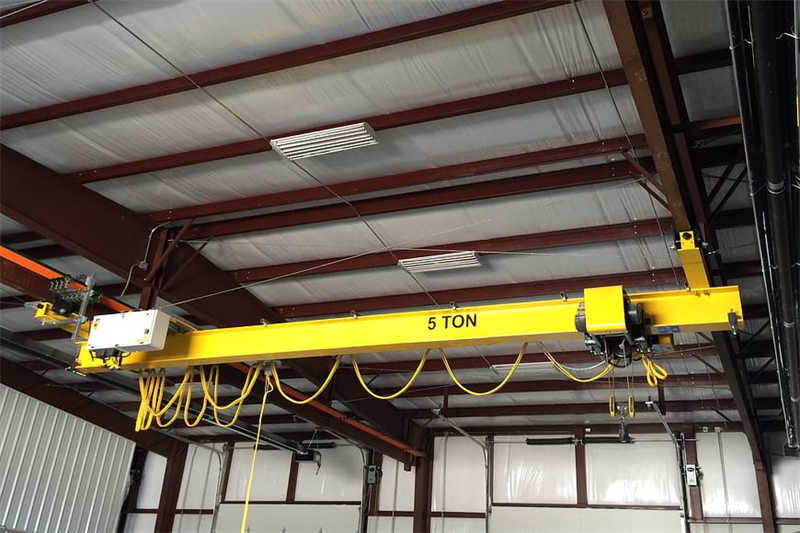
Table: List of main technical parameters of LX electric single beam suspension crane
| Parameter Category | Technical indicators | Remark |
| Rated lifting capacity | 0.5-10 ton | Common grades: 0.5, 1, 2, 3, 5, 10 tons |
| Effective span | 3-16m | Non-standard customization is available |
| Working class | A3 | Conform to JB/T2603 standard |
| Running speed | 20/30m/min | Special requirements can be customized |
| Operating temperature | -20°C to +40°C | European standard: -10°C to +40°C |
| Power parameters | 380V±10%,50Hz | Three-phase alternating current |
The mechanical structure of the LX electric single-beam suspension crane embodies the design essence of light lifting equipment, achieving maximum simplicity while ensuring sufficient strength. The whole machine is mainly composed of four parts: bridge structure, lifting mechanism, operating mechanism and electrical control system, each of which has its own unique design characteristics and functional considerations.
As the main load-bearing component of the crane, the bridge structure is made of the main beam and the end beam connected by welding or bolts. The main beam can be made of I-beam or box beam structure. In actual application, the composite structure of “steel plate and I-beam welding” is more often used. This design not only ensures sufficient bending strength, but also controls the overall deadweight. The end beam is fixed at both ends of the main beam, equipped with wheels and I-beam rails to form a complete operation support system. Web page 7 further pointed out that high-end configuration cranes are made of high-quality steel such as Q235 and Q345B/D, and the box structure design enhances the overall stability and firmness.
It is worth noting that the LX type European standard electric single-beam suspension crane is more optimized in structural design. For example, its track system can be directly installed on the existing factory roof structure without additional brackets, thereby maximizing the use of factory space. This design is particularly suitable for production sites with high requirements for space utilization, reflecting the innovative thinking of European standard products in details.
The lifting function is realized by the electric hoist, which runs along the lower flange of the I-beam of the main beam to complete the lifting of the items. The standard configuration generally uses CD1 or MD1 electric hoists, and the hoisting device is mostly a hook. The manufacturing standard of the electric hoist: the key components such as wire rope, gear, coupling are produced by CNC machine tools, and the wheels are vacuum forged and quenched by medium frequency to ensure wear resistance and long-term stability.
The operating mechanism includes two parts: trolley operation and trolley operation. Trolley operation refers to the longitudinal movement of the entire crane along the suspension track, while trolley operation refers to the lateral movement of the electric hoist along the main beam. Its basic working principle: driven by an electric motor, the lifting object can be lifted to the target height, and then positioned to the working position by the movement of the suspension beam along the track. A high-quality operating mechanism should ensure smooth starting and braking to avoid load swing, which is particularly important in precision lifting operations.
The electrical system is the “nerve center” of the crane, and its performance directly affects the safety and operability of the equipment. Web page 7 mentioned that high-end LX cranes use electrical components from well-known brands such as Siemens or Schneider, which improves system reliability. Diversified control methods are a major feature of LX cranes. The operation methods can be selected from handle control, wireless remote control or control panel operation to meet the needs of different scenarios.
Safety protection devices are an important part of the electrical system, including basic configurations such as limit switches, overload protection, and emergency stop. Although the LX crane has a simple structure, it is still equipped with necessary safety devices to ensure safe use within the rated parameter range. European standard models usually add more safety designs that meet European standards, such as dual brake systems and electrical components with higher protection levels.
Lightweight structural design is a significant advantage of LX suspension cranes. Compared with traditional bridge cranes, it does not require a large support structure, has a light weight and is easy to install. Web page 8 specifically pointed out that this type of crane is suitable for narrow spaces with a height of “rail surface to roof truss lower chord ≤ 500mm”, which makes it irreplaceable in space-constrained renovation projects. The compact and durable design concept runs through all components of the LX crane, meeting the basic requirements of modern industry for efficient and flexible lifting equipment.
LX electric single-beam suspension cranes have developed multiple product series with different characteristics according to different design standards and application requirements. Understanding the differences between these product types will help users make the best choice according to their own working conditions. By analyzing the search results, we can roughly divide these products into two categories: ordinary type and European standard type. Each type has its own unique performance characteristics and applicable scenarios.
Ordinary LX electric single-beam suspension cranes are the most common type in China, and their design and manufacturing strictly follow the JB/T2603 standard. This type of crane is used in conjunction with electric hoists in the form of CD1, MD1, etc. to form a light and small crane system with rail operation. The main characteristics of the ordinary type are simple structure, economical cost, and easy maintenance, which are suitable for general industrial environments. Its typical application places include lifting and loading and unloading operations between fixed spans in factories, mines, power stations, warehouses and workshops. From the technical parameters, the working environment temperature range of the ordinary type is relatively wide (-20°C to +40°C), which can adapt to the climatic conditions in most parts of my country. The rated lifting capacity is usually 0.5-5 tons, and the span is 3-16 meters, which basically meets the material handling needs of small and medium-sized enterprises.
The European standard LX electric single-beam suspension crane (also known as the LX European electric single-beam suspension crane) has formed a distinct product difference. Various name variants of this type of product include “LX European suspension crane”, “LX European standard suspension single-beam crane”, etc. The most notable feature of the European standard type is that it is designed and manufactured in accordance with European standards, with higher requirements in terms of safety, reliability and energy efficiency. The technical parameters provided on page 4 show that its applicable ambient temperature range is -10°C to +40°C, the relative humidity is limited to less than 85%, and the power supply requirement is 380V±10%50Hz. Compared with the ordinary type, the European standard type is usually more stringent in terms of material selection, manufacturing process and safety devices. It “can be directly installed on the roof structure of the existing factory building without the need to install the suspension crane track bracket”, which greatly improves the space utilization rate.
The difference between double-track and single-track models is reflected in the title (“LX electric double-track suspension crane LX electric monorail suspension crane”), and although in actual use it is mainly concentrated on single-beam single-track models, this reminder indicates that users can choose different track configurations according to actual needs. Double-track systems generally provide higher stability and load-bearing capacity, while single-track systems are more concise and economical.
Special customized models reflect the market demand for non-standard products. If there are special requirements for span, our company can design and manufacture non-standard products, and the products can be configured according to the needs of different occasions. These customized services may include special working conditions such as special lifting weights, non-standard spans, explosion-proof designs, and low-temperature environment applications. Including a variety of optional configurations, such as wheel materials (vacuum forged or as required by customers), electrical brand selection, control methods (cab, wireless remote control, control panel), etc., reflects the flexibility of product design.
From the application point of view, the European standard type is particularly suitable for occasions with high requirements for space utilization and operating accuracy, such as precision manufacturing workshops, food and pharmaceutical industries, etc. due to its compact design and high safety. The ordinary type meets the basic lifting needs of conventional industrial environments with a high cost-effectiveness. LX cranes are widely used in “industry, mining, warehouses, docks, logistics, maintenance and other occasions”. This wide applicability is achieved through a diverse product series. When choosing, users should not only consider basic parameters such as lifting weight and span, but also combine the characteristics of the use environment, operating frequency, accuracy requirements and other factors to choose the most suitable product type.
The LX electric single-beam suspension crane occupies an important position in the field of modern industrial material handling with its flexible structural design and reliable performance characteristics. By analyzing the application descriptions and technical characteristics from multiple sources, we can fully grasp its value and applicable scenarios in actual production, and provide practical guidance for users to select models.
Mechanical manufacturing and assembly workshops are the most classic application scenarios for this type of crane. Both web pages 2 and 6 clearly point out its wide application in production workshops. In the process of mechanical manufacturing, the transportation, assembly and positioning of parts and components frequently require the cooperation of lifting equipment. The LX crane has become an important auxiliary equipment on the production line with its precise positioning ability and flexible control method. The LX type is particularly suitable for lifting operations in the field of mechanical manufacturing, which perfectly matches the needs of most mechanical processing scenarios with its working level (A3) and conventional lifting weight range (0.5-10 tons).
Warehousing and logistics is another important application direction. Modern warehousing and logistics have extremely high requirements for space utilization, and the LX suspension crane is directly installed on the lower chord of the roof truss, so that it does not occupy valuable ground space. Whether it is raw material storage, finished product delivery, or cargo sorting in the warehouse, LX cranes can provide efficient solutions.
Special industrial sites also have their place for LX cranes. The application occasions mentioned in webpage 5 include mines, docks, logistics centers and maintenance sites. A specific case is the application in the industrial fire pump room, with a rated lifting capacity of 2T, a span of 7 meters, and a lifting height of 6m. These places usually have limited space and diverse work content, and the flexibility and adaptability of LX cranes are fully demonstrated in such environments. Webpage 9 also specifically points out that it is suitable for “cave and other places”, showing its unique advantages in special space structures.
High space utilization is the most significant advantage of LX suspension cranes. It “spans above the working area” and “is horizontally mounted above the workshop, warehouse and material yard”, making full use of the upper space of the factory. It is suitable for “places where the height from the rail surface to the lower chord of the roof truss is ≤500mm”, which is particularly important in space-constrained renovation projects. “The entire factory area can be used for production”, which has substantial value for enterprises to optimize production layout.
Good economy is reflected in many aspects, which can “reduce workshop construction costs”. First, the suspension design reduces the need for supporting structures and reduces the cost of plant construction; second, the light structure saves material usage and reduces the cost of the equipment itself; third, it is easy to install and maintain, reducing the maintenance cost during the service life. “Lightweight structure” and “easy installation and maintenance” both indirectly support its economic advantages.
Flexible operation is another highlight of the LX crane, which has multiple control methods such as “independent handle operation and can also be equipped with wireless remote control”. Its working principle: the motor is controlled by the control panel to drive the lifting mechanism to operate, and the object can be accurately lifted and moved to the target position. This operational flexibility enables the LX crane to adapt to a variety of material handling tasks and meet the requirements of modern production for flexibility.
Safe and reliable Although it is a light equipment, the LX crane is not ambiguous in safety design. The high-quality configuration of its key components: wheels are vacuum forged and quenched by medium frequency, wheelsets produced by CNC machine tools, wire ropes and gears, and well-known brand motors and electrical appliances (Siemens or Schneider). Its “design and manufacturing according to standard JB2603-2008” ensures basic safety performance. The European standard model goes a step further and adopts the European standard safety design. Its technical features combine “technology and performance in one”.
Table: Advantages of LX electric single-beam suspension crane in various application fields
| Application Areas | Main Application | Core Advantages |
| Mechanical manufacturing assembly workshop | Parts transfer, assembly positioning | Precise operation, smooth operation, A3 working class |
| Warehouse/Logistics Center | Cargo loading and unloading, warehouse transportation | High space utilization, no floor space occupied |
| Special industrial sites (mines, docks, etc.) | Material handling, equipment maintenance | Strong adaptability and compact structure |
| Space-restricted areas | Various lifting operations | Height from rail surface to roof truss ≤ 500mm |
In the long run, the advantages of the LX electric single-beam suspension crane are not only reflected in the equipment itself, but also in the optimization of the entire production system. It has created substantial value for modern industrial enterprises by improving material handling efficiency, saving valuable space, and reducing comprehensive costs. It can both “reduce workshop construction costs” and “improve production efficiency”. This dual advantage enables it to continue to maintain an important position in the industrial field.
The installation and maintenance process of the LX electric single-beam suspension crane directly affects the performance and safety and reliability of the equipment. By comprehensively analyzing the installation specifications, technical instructions and construction plans, a complete and rigorous LX electric single-beam suspension crane installation and maintenance process can be established. This process should include the following key steps:
In the early stage of installation, it is necessary to accurately measure and plan the installation position of the crane according to the use scenario and actual needs to ensure its stability and working space; conduct detailed inspections of the hanging beams, slings and electrical control systems to confirm that they are intact and meet safety standards.
During the installation, strictly follow the equipment manual, follow the corresponding safety regulations and technical specifications to ensure installation accuracy and firmness; during the installation process, the balance and stability of the hoisting operation should be considered to avoid safety accidents caused by improper operation.
After the installation is completed, carry out comprehensive and detailed functional testing and debugging to confirm that the functions of the crane are normal and the performance indicators meet the standards; check whether the connections of each component are tight and reliable, especially the electrical connection parts, to prevent overheating or other safety hazards caused by poor contact.
Contact our crane specialists
Send us a message and we will get back to you as soon as possible.