As an indispensable equipment in modern industry, the design of 2t electric single-beam crane is not only related to production efficiency, but also directly affects the safety of operation. This manual aims to comprehensively explain the design concept, technical details and practical guide of 2t electric single-beam crane. Starting from the product overview, you will learn about the basic structure, design intention and applicable scenarios of the crane, as well as a series of key technical parameters and performance indicators to ensure that the equipment can meet diverse industrial needs. At the same time, we deeply analyze the core links such as structural design, power system selection, and safety protection devices, and show the comprehensive consideration of the equipment in terms of stability, efficiency and safety. In addition, this manual also provides detailed guidance on the installation and commissioning process, use and maintenance methods, aiming to help users operate this industrial weapon efficiently and safely.
The 2t electric single-beam crane is a lifting equipment designed for light to medium-sized material handling. It has a compact structure and is easy to operate. It is widely used in factories, warehouses, docks and other places. The crane uses an electric hoist as a lifting mechanism, and realizes flexible handling of materials in three-dimensional space through the support of the main beam and end beam. Its design takes full account of work efficiency and safety, aiming to provide users with efficient and reliable material handling solutions.
The design of this crane focuses on the compactness of the structure and the ease of operation, so that it can work flexibly in a small space. Its structure includes the main beam, end beam, electric hoist and other parts, each of which has been carefully designed and optimized to ensure that it can meet various application requirements.
In terms of application, 2t electric single-beam cranes are widely used in factories, warehouses, docks and other places, becoming an indispensable and important equipment in these places. Whether on the production line or in warehouse management, it can quickly and accurately complete the material handling work, greatly improving production efficiency and warehouse management level.
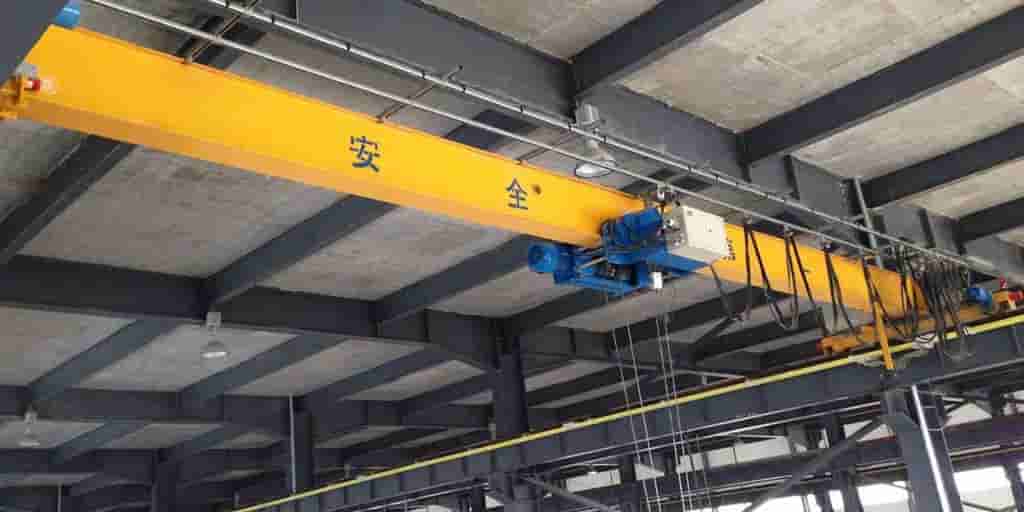
The main purpose of designing a 2t electric single-beam crane is to meet the needs of fast and accurate material handling on modern production lines. It is suitable for various light and heavy industrial production environments, especially in occasions where small to medium-sized goods need to be frequently handled, such as automobile manufacturing, machinery manufacturing, electronic assembly and other industries. In addition, the crane is also suitable for warehouse management, logistics distribution and other links, which can significantly improve the efficiency and accuracy of material handling.
In modern industrial production, the demand for material handling is getting higher and higher. Materials need to be moved from one place to another quickly and accurately. And this crane is designed to meet this demand. Whether it is frequent handling on the production line or cargo management in the warehouse, it can provide efficient and reliable solutions.
The main technical parameters of the 2t electric single-beam crane include lifting capacity, span, lifting height, operating speed, etc. Among them, the lifting capacity is 2 tons, the span can be customized according to user needs, the lifting height is generally 6 to 30 meters, and the operating speed is adjusted according to the specific application scenario. In terms of performance indicators, the crane has stable lifting performance, good running stability and high work efficiency.
This crane has stable lifting performance, which can ensure the safety and stability of materials during handling. Good running stability makes the crane more stable and quiet during operation. High work efficiency means that it can complete a lot of work in a short time and improve production efficiency.
During the design process, the 2t electric single-beam crane strictly follows relevant national standards and specifications, such as “Crane Design Specifications” and “Electric Hoist Safety Regulations”. These standards and specifications ensure the safety and reliability of the crane during design, manufacturing, installation and use.
This crane strictly complies with relevant national standards and specifications from design to manufacturing, installation and use. These standards and specifications are formulated to ensure the safety and reliability of the crane, so we can use this crane with confidence. Whether on the production line or in the warehouse, it can provide us with efficient and safe material handling services.
As the core load-bearing component of the 2t electric single-beam crane, the rationality of its structural design directly affects the load-bearing capacity, rigidity and stability of the entire crane. During the design process, the main beam is made of high-quality high-strength low-alloy structural steel or carbon structural steel. Through advanced welding technology and fine mechanical calculations, it is ensured that it has sufficient strength and rigidity to withstand various complex loads generated during the lifting operation, including vertical lifting loads, horizontal moving loads, and possible bending moments and torques.
In order to reduce the weight of the whole machine, improve operating efficiency and save energy, the main beam is designed with the principle of lightweight. By optimizing the cross-sectional shape and reasonably configuring the material layout, the structural deadweight is effectively reduced while meeting the strength and rigidity requirements, thereby reducing the energy consumption of the crane during operation. In addition, the main beam also has good fatigue resistance and can maintain stable mechanical properties under long-term continuous working conditions, ensuring safety and reliability during long-term use.
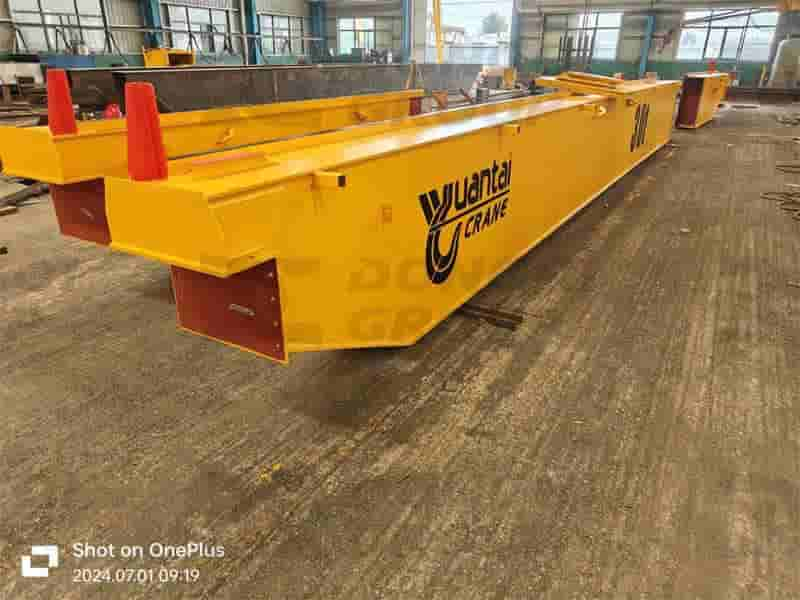
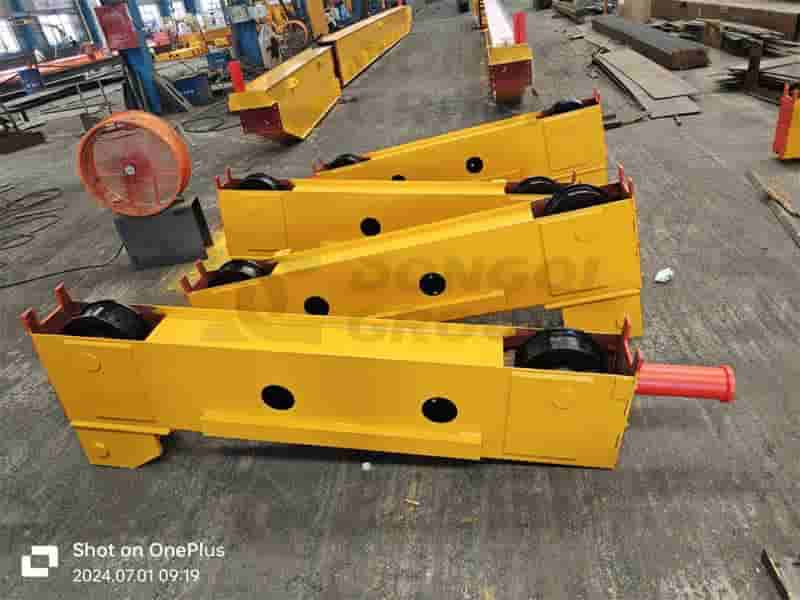
The end beam and outrigger are key components that support the main beam and the operating mechanism. The end beam is reasonably designed to ensure that the crane runs smoothly on the track. The end beam is welded with high-quality steel and has sufficient strength and rigidity to withstand various loads during the lifting process. At the same time, the design of the end beam also takes into account the need for lightweight to reduce the overall weight and operating energy consumption of the crane.
The outrigger is made of high-strength steel and has sufficient support to ensure the stability of the crane during operation. The design of the outrigger also takes into account the need for easy installation and adjustment, making installation and adjustment more convenient and quick.
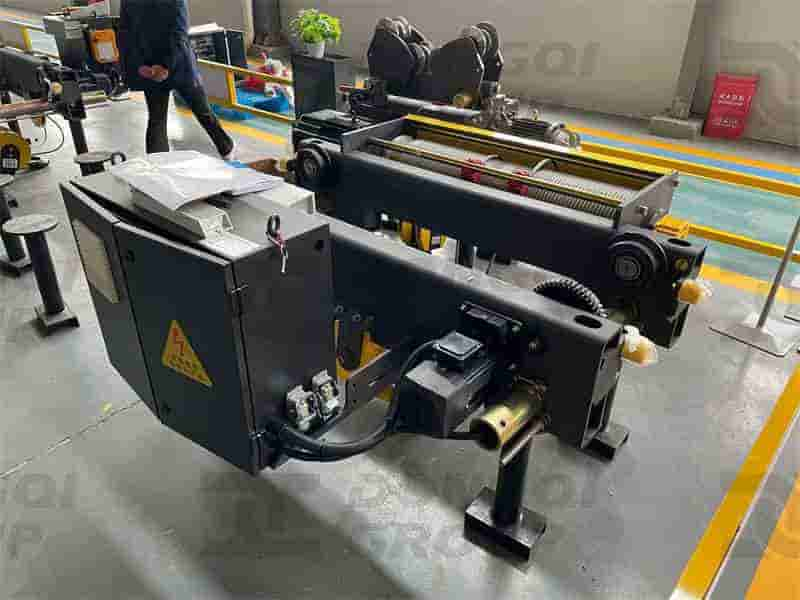
The lifting mechanism is one of the key components of the 2t electric single-beam crane, which consists of an electric hoist, wire rope, pulley block, etc. The electric hoist adopts advanced design concepts and has the characteristics of small size, light weight, and fast lifting speed. The electric hoist’s motor adopts an efficient and energy-saving type, which has the characteristics of smooth operation and low noise. The wire rope and pulley block are carefully designed and selected to ensure safety and reliability during the lifting process. The wire rope has the characteristics of high strength, wear resistance, and corrosion resistance, and can meet the needs of various complex working environments. The pulley block adopts high-precision gear transmission, which has the characteristics of smooth operation and low noise, and can ensure the stability and accuracy during the lifting process.
The operating mechanism is mainly composed of motors, reducers, wheels, etc. The motor adopts high-efficiency and energy-saving type, which has the characteristics of smooth operation and low noise. The reducer adopts high-precision gear transmission to ensure stability and accuracy during operation. The wheels are made of wear-resistant materials with good wear resistance and service life. The design of the operating mechanism also takes into account the needs of easy installation and adjustment, making installation and adjustment more convenient and quick.
During the selection process, we fully considered the parameters of the crane’s lifting capacity, lifting height and operating speed to determine the appropriate specifications of the electric hoist. We focus on the performance of the electric hoist, and the selected products have the characteristics of compact structure, easy operation, safety and reliability. We also consider the specific needs and use environment of the user to ensure that the selected electric hoist can meet the needs of various application scenarios.
During the configuration process, we selected energy-efficient motors and high-precision reducers according to the operation requirements and working environment of the crane. These components not only have stable operating performance and long service life, but also can reduce the energy consumption and operating costs of the crane. We also focus on the reliability of the product and the convenience of maintenance to ensure that the selected motors and reducers can meet the requirements of long-term stable operation.
The power transmission system is mainly composed of motors, reducers, couplings, drive shafts, etc. During the design process, we fully considered factors such as transmission efficiency, stability and reliability. Through reasonable layout and careful design, the stability and efficiency of the power transmission system are ensured. We also use advanced manufacturing processes and materials to ensure that the quality and performance of the products meet the standards.
The control system is one of the key components of the 2t electric single beam crane, which is responsible for controlling the operation and lifting action of the crane. We use advanced control technologies such as PLC control, variable frequency speed regulation, etc. to achieve automatic control and intelligent management of the crane. These technologies not only improve the operating efficiency and accuracy of the crane, but also reduce the labor intensity and safety risks of the operators. We also pay attention to the reliability and stability of the control system to ensure that the product can operate normally under various complex working conditions.
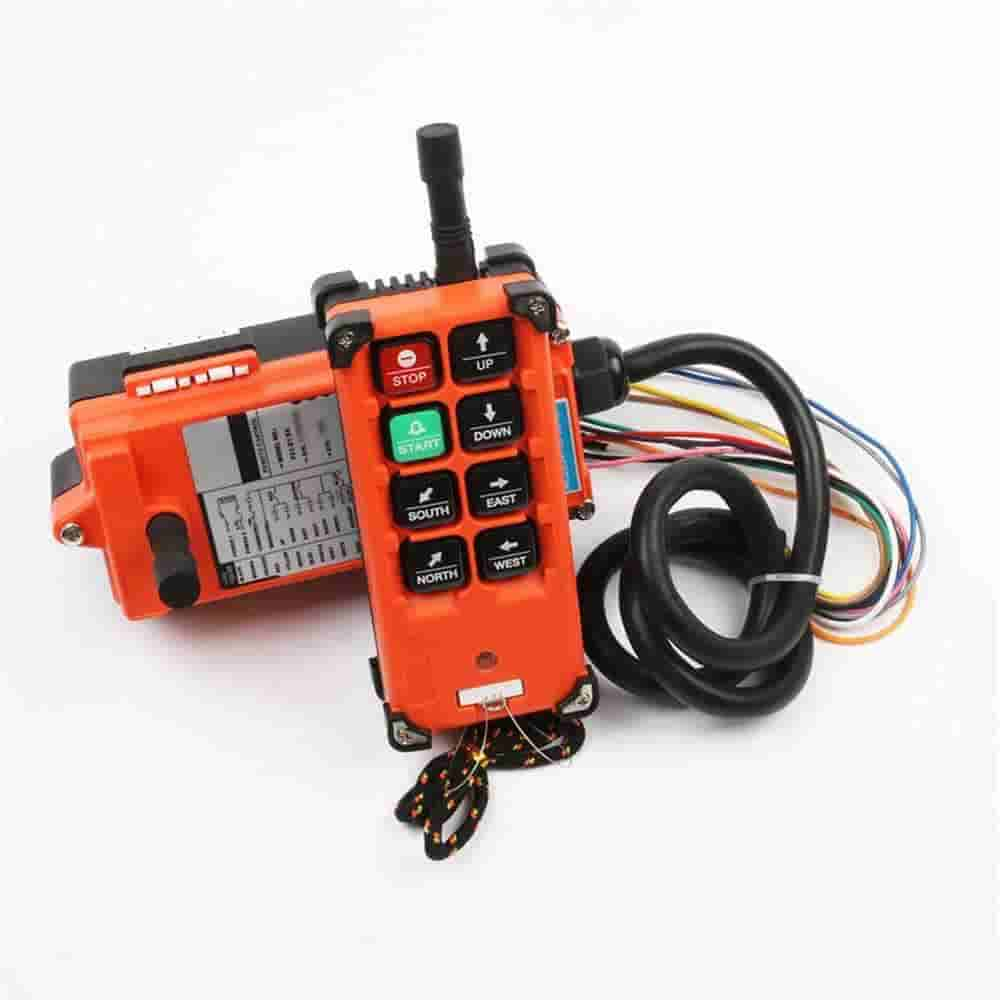
Table: Control system configuration table
| Control system components | Configuration details | Technical features | Remark |
| PLC Controller | _ | Automated control to improve operational efficiency and accuracy | Core control components |
| Frequency converter | _ | Wide speed regulation range to achieve smooth lifting and operation | Motor speed control key |
| Control Panel | Human Machine Interface | Intuitive operation, display of operating status and fault information | Operational convenience |
| Safety protection device | Overload protection, limit protection, etc. | Ensure safe operation of cranes and reduce safety risks | Improved safety performance |
| Communication Module | _ | Realize remote monitoring and fault diagnosis functions | Intelligent management |
Table: Power system configuration table
| Powertrain components | Configuration details | Performance characteristics | Remark |
| Electric hoist | 2t Specifications | Compact structure, easy operation, safe and reliable | Lifting core components |
| Motor | High efficiency and energy saving | Stable operation, long service life, and reduced energy consumption | Power Source |
| Reducer | High precision | High transmission efficiency, reducing energy loss | Power transmission key |
| Couplings | _ | Stable connection and reliable torque transmission | Power transmission components |
| Transmission shaft | _ | Bear torque and transmit power | Power transmission path |
Limit protection device is a key component to prevent the crane from exceeding the set range during operation. In order to ensure the safety of the crane, we have designed reliable limit switches and travel limiters. The limit switch automatically cuts off the power supply and sends an alarm signal when the crane runs to the limit position through mechanical or electrical means to prevent the crane from continuing to run. The travel limiter measures the running distance of the crane and triggers the limit switch for protection when it reaches the preset limit position.
The overload protection device is a key component to prevent the crane from overloading during the lifting process. In order to ensure the stability and safety of the crane, we have selected high-precision sensors and controllers. These devices can monitor the lifting weight of the crane in real time and compare the data with the preset set value through the controller. When the lifting weight exceeds the set value, the controller will send an overload alarm signal and automatically cut off the power supply to stop the lifting action.
The anti-unhooking protection device is a key component to prevent the crane from unhooking during the lifting process. In order to ensure that the hook is always in a safe and reliable state during the lifting process, we have designed a reliable hook lock mechanism and an anti-unhooking device. These devices can automatically lock the hook and send out an alarm signal when the hook lock mechanism fails or is improperly operated, ensuring the safety and reliability of the crane.
The emergency stop device is a key component to ensure that the crane can stop running quickly in an emergency. In order to ensure the life safety of the operator and the integrity of the equipment, we have designed an easy-to-operate emergency stop button and a reliable braking system. When the operator encounters an emergency, he can quickly press the emergency stop button and cut off the power supply to stop the crane immediately. In addition, we have also adopted advanced braking technology to ensure that the crane can stop quickly and safely in an emergency.
Before starting to install the 2t electric single-beam crane, a series of preparations need to be carried out to ensure the smooth progress of the installation work and the normal use of the crane. First of all, it is necessary to conduct a comprehensive survey of the installation site to understand the environmental conditions of the site, such as space size, ground flatness, power supply configuration, etc., so as to provide accurate data support for subsequent installation work. Secondly, it is necessary to conduct a detailed inspection of the equipment to confirm that all components are intact, such as the main beam, end beam, outrigger, lifting mechanism, operating mechanism, etc., to ensure that they meet the design requirements and can meet the use requirements. In addition, it is necessary to train the operators to familiarize them with the operation methods, safety regulations and maintenance requirements of the crane to ensure the safety of the operators and the normal operation of the equipment.
The installation of the 2t electric single-beam crane needs to be carried out in certain steps and pay attention to some matters. First of all, it is necessary to install the track according to the design requirements, ensure the flatness and straightness of the track, and use professional measuring tools for detection and adjustment. Next, install the main beam, use a crane or hoist to lift it to the predetermined position, and adjust its horizontality and verticality to ensure that the main beam and the track are well matched. At the same time, it is necessary to install the end beam and the outrigger, connect them to the main beam, and ensure that the connection is firm and reliable. In addition, it is necessary to install the lifting mechanism and the operating mechanism, install them to the specified position according to the design requirements, and ensure that the connection between the components is firm and reliable. During the installation process, it is necessary to strictly follow the design requirements and follow the relevant safety regulations and operating specifications to ensure the smooth progress of the installation work and the safety of personnel.
Debugging is a key link to ensure the normal operation of the 2t electric single-beam crane. During the debugging process, various tests and verifications need to be carried out according to a certain process. First, a no-load operation test is required to check whether the various operating mechanisms of the crane are operating normally, such as the lifting and lowering of the lifting mechanism, the horizontal movement of the operating mechanism, etc. Secondly, a load operation test is required to check the operating stability of the crane and the sensitivity of the limit protection device under the rated load. In addition, limit protection device tests and overload protection device tests are also required. During the test process, professional calibration methods and tools are required for detection and analysis to ensure that the performance indicators of the crane meet the design requirements and usage standards.
After the installation and commissioning are completed, a comprehensive safety inspection of the 2t electric single-beam crane is required. First, it is necessary to check the installation of each component to confirm whether the installation position and size of each component meet the design requirements; whether the connection between the components is firm and reliable; whether the overall stability of the crane is good, etc. At the same time, it is also necessary to check the lubrication of the crane to confirm whether each lubrication point has been properly lubricated and whether the lubrication is good. In addition to the safety inspection, it is also necessary to perform various performance tests and calibrations on the crane in accordance with the acceptance standards to confirm that the crane meets the acceptance standards and is certified by the relevant departments before it can be officially put into use, allowing users to use the crane equipment with confidence and ensure the smooth progress of production work.
In order to ensure the safe use of 2t electric single-beam cranes, detailed operating procedures and safety instructions need to be formulated. The operating procedures mainly include the operation methods and precautions of starting, running, and stopping the crane. Before starting, the operator needs to check whether the various parts of the crane are intact and ensure the safety and reliability of tools such as hooks and slings. During operation, the operator needs to maintain a stable speed and load to avoid overloading and emergency stops. When stopping, the operator needs to gradually slow down and ensure that the hoisted objects land safely. Safety instructions include safety protection measures for operators, emergency response measures, etc. Operators must wear personal protective equipment, such as helmets, gloves, etc., and ensure that they always maintain a safe distance during operation. In an emergency, the operator should respond calmly and deal with it according to the emergency plan.
Daily maintenance is the key to ensure the long-term and stable operation of 2t electric single-beam cranes. In order to keep the crane in good working condition, we need to formulate detailed maintenance plans and guidelines. First of all, the crane should be lubricated regularly to ensure that the friction and wear of each component are minimized. Secondly, the crane should be cleaned regularly to remove dust and debris to avoid damage to the equipment. It is also necessary to regularly check the operation of various components, such as motors, reducers, wire ropes, etc., to ensure that they are in good working condition. In addition, it is essential to provide maintenance training for operators so that they are familiar with the methods and precautions of maintenance. Through the implementation of these measures, the service life of the crane can be effectively extended and the efficiency of equipment use can be improved.
During use, 2t electric single-beam cranes may have various faults. In order to troubleshoot in time and ensure the normal operation of the crane, we need to master common fault diagnosis and troubleshooting methods. First of all, we need to understand the working principles and fault manifestations of each component. For example, the motor may have problems such as overheating and excessive noise; the reducer may leak oil, gear wear, etc.; the wire rope may break, deform, etc. Secondly, we need to master common troubleshooting steps and solutions. After discovering the fault, the machine should be shut down and the power supply should be cut off in time to ensure safety; then make a preliminary judgment based on the fault manifestation and take corresponding troubleshooting steps; finally, take corresponding maintenance measures based on the troubleshooting results. At the same time, we also need to establish a fault reporting and recording system to track and analyze faults.
As the use time increases, some parts of the 2t electric single-beam crane may be worn or damaged. In order to ensure the long-term and stable operation of the crane, we need to regularly overhaul and replace parts. During the overhaul process, we need to conduct a comprehensive inspection and evaluation of the various parts of the crane, and formulate corresponding maintenance and replacement plans based on the evaluation results. Severely worn parts should be replaced in time to ensure the performance and safety of the crane; damaged parts should be repaired or replaced in time to avoid affecting the normal operation of the crane. At the same time, we also need to select high-quality spare parts and accessories for replacement work to ensure the performance and safety of the crane. For important spare parts and accessories, a spare parts library should be established and regular inspection and maintenance work should be carried out; for general spare parts and accessories, they can be purchased and replaced when necessary.
Contact our crane specialists
Send us a message and we will get back to you as soon as possible.