As key equipment in heavy industries such as steel smelting, the performance and safety of metallurgical cranes are directly related to production efficiency and operational safety. Metallurgical crane standards cover a full range of specifications from basic configuration to material technology, operation and maintenance, and even technical transformation. These standards not only ensure the stable operation of the crane in various extreme environments, but also improve the overall operating efficiency. Understanding and mastering the various standards of metallurgical cranes is of great significance to ensuring industrial production safety and optimizing operating processes. This article will deeply explore the standard requirements for the basic configuration, material technology, operation and maintenance, and technical transformation of metallurgical cranes, and present readers with a comprehensive and in-depth metallurgical crane standard system.
As an indispensable lifting equipment in the metallurgical industry, the basic configuration of metallurgical cranes directly affects the efficiency and safety of the entire production process. Therefore, the configuration selection of metallurgical cranes requires comprehensive consideration and careful planning from multiple aspects.
In the metallurgical industry, there are various types of cranes, including bridge cranes, gantry cranes, semi-gantry cranes, cantilever cranes, double-beam cranes, single-beam cranes, etc. Each type is suitable for different working environments and needs. When selecting, it is necessary to comprehensively consider factors such as working space, load capacity, operating speed, working environment temperature, production process layout, safety regulations, and maintenance costs. For example, in a high-temperature smelting workshop, a lifting machinery with high temperature resistance and sufficient structural strength should be selected, and at the same time, it should be ensured that its structural strength is sufficient to withstand loads under extreme conditions.
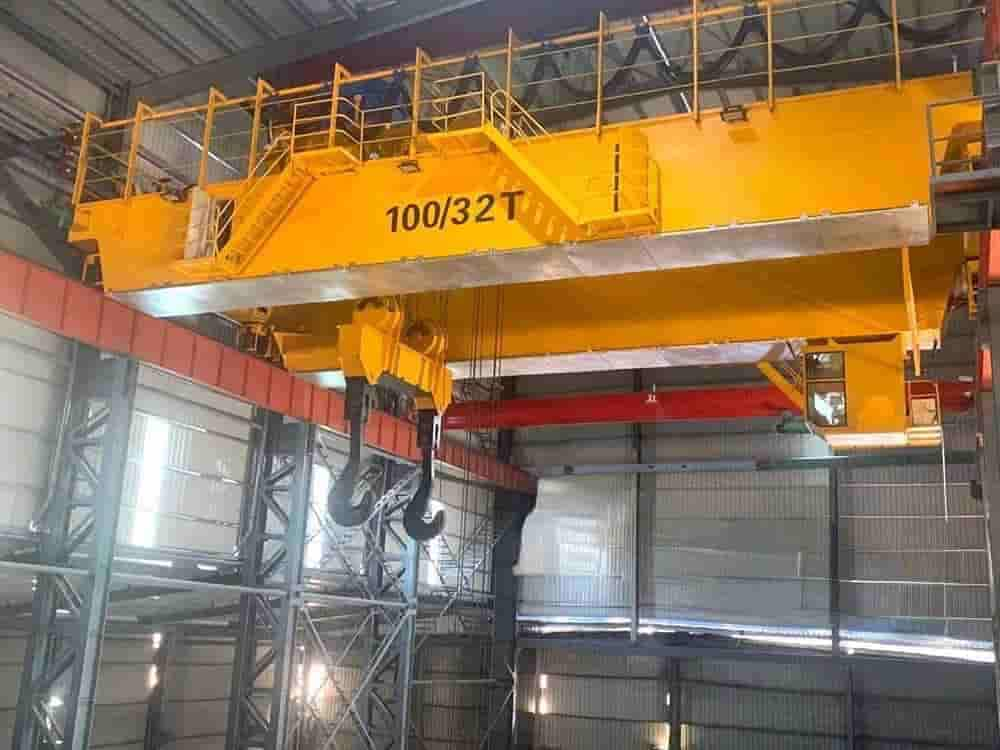
As the power source of metallurgical cranes, the performance of the motor directly affects the lifting capacity and operating efficiency of the crane. When selecting, high-efficiency, energy-saving, and high-temperature resistant motors should be given priority, and equipped with a reliable braking system to ensure that it can stop quickly in an emergency and prevent accidents. The configuration of the braking system must meet the requirements of fast response and stable braking, and regular inspection and maintenance are required to ensure that it is always in good condition.
During operation, metallurgical cranes need to be equipped with complete limiters and safety protection devices to prevent safety hazards such as overloading, over-limiting and collision. Limiters include travel limiters, height limiters, etc., which are used to limit the operating range of the crane to prevent it from exceeding the preset limit. Safety protection devices include overload protection devices, wind protection devices and emergency stop switches, etc., which are used to protect the crane and operators from injury in emergency situations. In addition, a monitoring system can be set up to monitor the operating status and load conditions of the crane in real time to further improve safety and efficiency.
When metallurgical cranes operate in high temperature environments, their heat resistance and heat dissipation measures must be considered. For example, the electrical system needs to use high temperature resistant materials and set up effective heat dissipation devices to prevent electrical failures caused by high temperature. At the same time, the structure of the crane also needs special treatment to improve its high temperature resistance and ensure that it can still operate stably in high temperature environments. In addition, the crane needs to be inspected and maintained regularly to ensure that its various performance indicators meet the requirements.
In short, the configuration selection of metallurgical cranes needs to be comprehensively considered and carefully planned from multiple aspects to ensure that they can serve the metallurgical industry production efficiently and safely.
The material and process standards of metallurgical cranes are important specifications that must be strictly followed during their design, manufacturing and use. These standards not only determine the performance and safety of metallurgical cranes, but also directly affect their service life and economic benefits.
As the core load-bearing component of metallurgical cranes, the material selection and welding process of the main beam are directly related to the safe operation and life of the entire crane. First, the main beam material must have high strength to ensure that it will not deform or break when bearing heavy objects; secondly, high toughness is essential to cope with the impact loads that may be encountered during the lifting process; in addition, good corrosion resistance is also indispensable, because the metallurgical environment is often highly corrosive.
In terms of material selection, high-quality alloy steel or stainless steel is usually used, which have excellent mechanical properties and corrosion resistance. In terms of welding technology, advanced welding technology and methods must be used to ensure the quality of the weld and avoid welding defects such as cracks and slag inclusions. At the same time, necessary heat treatment and surface treatment are also required to improve the performance and corrosion resistance of the welded joint.
Wire rope and hook are key components of metallurgical cranes. Their materials and performance directly affect the safety and reliability of the crane. First of all, the wire rope must be made of high-quality alloy steel wire to ensure that it has high strength, high toughness and good wear resistance. At the same time, in order to increase the service life, the wire rope must also be pre-tensioned to eliminate internal stress and reduce fatigue damage.
The hook must be forged with high-strength alloy steel to ensure that it will not break or deform when bearing heavy objects. In addition, the hook must also undergo heat treatment and surface hardening treatment to improve its hardness and wear resistance and enhance its carrying capacity. During the selection and use process, it is also necessary to avoid overloading and unreasonable use to extend its service life.
The electrical control equipment of the metallurgical crane is a key part of controlling the operation and operation of the crane, so effective protective measures need to be taken to ensure its normal operation. First of all, an electrical box with a high dust and water resistance level should be used to prevent dust, water vapor, etc. from damaging the electrical components. Secondly, a heat dissipation device and a temperature monitoring system should be installed to ensure that the electronic control equipment can still operate stably in a high temperature environment. In addition, the electronic control equipment should be inspected and maintained regularly to detect and deal with potential problems in a timely manner.
As an important lifting equipment, metallurgical crane plays an irreplaceable role in the fields of steel, non-ferrous metal smelting, etc. In order to ensure the safe operation and efficient operation of metallurgical cranes, strict operation and maintenance specifications need to be formulated and implemented. These specifications are intended to ensure that the operators of metallurgical cranes have the corresponding qualifications and skill levels, and to ensure that metallurgical cranes are well maintained and maintained in daily use.
The operators of metallurgical cranes must undergo professional training and obtain the corresponding qualification certificates to prove that they have the skills and knowledge to operate metallurgical cranes. The training content should include the basic operation of metallurgical cranes, safety regulations, emergency response methods, etc., to ensure that operators can operate the cranes correctly and safely. In addition, operators also need to participate in regular refresher training to keep their skill levels and knowledge updated.
Metallurgical cranes are highly complex mechanical equipment, and daily inspection and maintenance systems need to be established to ensure that they are always in good working condition. Daily inspection includes detailed inspection and testing of key parts such as the electrical system, mechanical parts, and safety protection devices of the metallurgical crane to ensure its normal operation and safety and reliability. Maintenance includes regular lubrication, cleaning, tightening, and replacement of wearing parts of the metallurgical crane to extend its service life and ensure its efficient operation. Through regular inspection and maintenance, potential faults can be discovered and eliminated in time, the expansion of faults and damage to equipment can be avoided, and the reliability and service life of the crane can be improved.
Metallurgical cranes may encounter various emergencies during operation, such as electrical failures, mechanical failures, or accidents. In order to ensure that they can respond quickly and properly in emergencies, a complete emergency response plan needs to be formulated. The plan should include emergency parking procedures, personnel evacuation plans, accident handling procedures, etc., to ensure that they can respond quickly and effectively in emergencies. At the same time, drills need to be organized regularly to improve the emergency handling capabilities and teamwork spirit of operators, and ensure that measures can be taken quickly and orderly in emergencies to reduce losses and risks.
With the rapid development of science and technology, the technical transformation and upgrading of metallurgical cranes has become an important way to improve their performance, reduce costs and enhance market competitiveness. As an indispensable and important equipment in industrial production, the technical transformation and upgrading of metallurgical cranes are of great significance to improving production efficiency and ensuring safe production.
When carrying out the technical transformation of metallurgical cranes, it is necessary to first formulate a detailed technical transformation plan. The plan should include the goals, specific contents, required materials and technical parameters of the transformation. At the same time, a comprehensive safety assessment should be carried out. The safety assessment aims to consider the possible safety risks in the transformation process and formulate corresponding preventive measures to ensure the smooth progress of the transformation work and avoid safety accidents during the transformation process.
Key components of metallurgical cranes, such as motors, brake systems, wire ropes and hooks, may affect the operation of the entire system due to wear or performance degradation during long-term use. In order to ensure the performance and safety of the crane, key components need to be inspected and evaluated regularly. According to the evaluation results, formulate corresponding upgrade and replacement standards. During the upgrade and replacement process, high-quality components that meet the standard requirements must be selected, and installation and commissioning must be carried out in strict accordance with the operating procedures. At the same time, the replaced components must be tested and verified to ensure that their performance meets the requirements.
With the continuous development of Internet of Things technology, its application in the field of metallurgical cranes is becoming more and more extensive. By installing an Internet of Things monitoring system, functions such as remote monitoring, fault diagnosis, and data analysis can be realized. The monitoring system collects the operating status data of the crane in real time, such as load, speed, temperature, etc., and discovers potential faults and optimization space through data analysis. At the same time, the Internet of Things monitoring system can also provide fault warning and alarm functions so that operators can take timely measures to deal with it. This can not only improve the operating efficiency of metallurgical cranes, but also reduce maintenance costs and further increase the service life of equipment.
Contact our crane specialists
Send us a message and we will get back to you as soon as possible.