As an indispensable large-scale equipment in the modern industrial field, the design of 100T double-girder bridge crane is not only related to production efficiency, but also directly affects the operation safety and equipment life. This design manual aims to comprehensively explain the design concept, technical details and safety specifications of the 100T double-girder bridge crane, and provide a detailed reference for relevant practitioners. From the basic structure of the crane to the fine design of key components, to the safe operation procedures and maintenance strategies, each link has been carefully considered and strictly calculated to ensure that the crane can meet the requirements of efficient, stable and safe operation. By reading this manual, readers will have a deep understanding of the technical essence of the crane and lay a solid foundation for actual operation and maintenance.
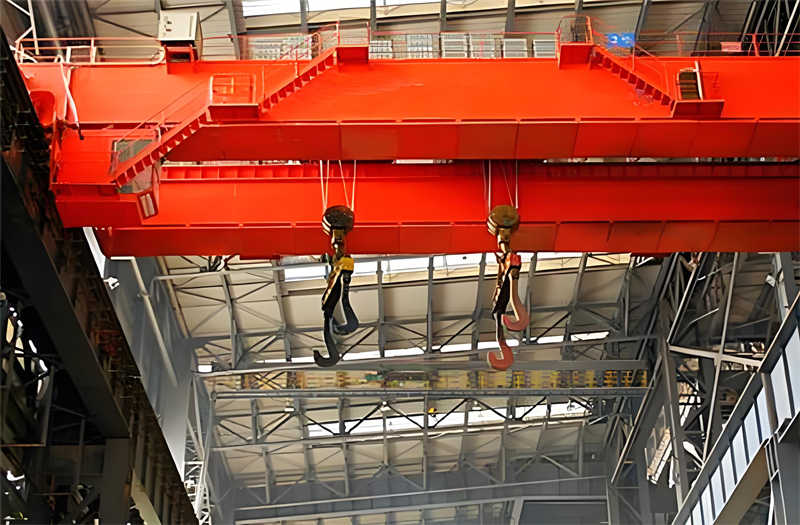
Double-girder bridge crane is a heavy lifting equipment widely used in industrial plants and warehouses. Its main structure includes bridge, trolley, trolley running mechanism and electrical control system. Among them, the bridge is the main part of the crane, mainly composed of two parallel main beams and two secondary beams, shaped like a bridge. The trolley runs on the main beam and can be moved left and right by the motor drive. The trolley running mechanism is responsible for driving the entire crane to move on the track. The electrical control system is responsible for controlling various operations of the crane.
The 100T double-girder bridge crane is the model with the most outstanding load-bearing capacity in this crane series. Its rated lifting capacity reaches 100 tons. It is suitable for those occasions where heavy goods need to be handled, hoisted and stacked, such as large factories, warehouses and ports. The crane has the characteristics of strong structure, strong load-bearing capacity and smooth operation, which can ensure the safety and integrity of the goods during the handling process. In addition, the 100T double-girder bridge crane also has the advantages of simple operation and convenient maintenance, which can greatly improve work efficiency and reduce operating costs. Therefore, the 100T double-girder bridge crane is one of the indispensable important equipment in modern industrial production.
The purpose of this design is to meet the needs of heavy-duty cargo handling in a specific industrial environment and ensure that the crane has a high degree of safety and reliability during operation. The design requirements include meeting the load-bearing requirements of the rated lifting weight, ensuring the stable operation of the crane under complex working conditions, improving the convenience of operation and maintenance, and complying with the safety specifications of relevant industry standards. In particular, it is necessary to ensure that the designed crane can adapt to various harsh working environments, such as high temperature, high humidity, dust, corrosion and other environments, and can maintain stable performance and reliability in these environments. At the same time, the convenience and safety of operators must also be taken into account, so that operators can easily complete various lifting and handling tasks, and can maintain stable operation under various complex working conditions.
The main technical parameters of the 100T double-beam bridge crane include lifting weight, span, lifting height, operating speed, etc. The performance indicators are mainly reflected in the crane’s carrying capacity, stability, operating accuracy, service life and other aspects. These parameters and indicators are key elements that need to be strictly controlled and optimized during the design process. In actual applications, these parameters and indicators will directly affect the performance and efficiency of the crane. Therefore, designers need to fully consider these factors to ensure that the designed crane can meet actual needs and have high performance and efficiency.
This design manual starts with an overview of the crane design and gradually goes into the design details of each key component, including the main lifting mechanism of the trolley, the selection of motors and reducers, safety and technical requirements, maintenance and lubrication, component repair and troubleshooting, installation and commissioning, as well as accessories, packaging, transportation and storage. Each part aims to comprehensively and in detail explain the design ideas, calculation methods and implementation steps to ensure the overall performance and safety of the crane. In particular, in the safety and technical requirements section, this manual will explain in detail the various safety standards and specifications to ensure that the safety performance of the crane complies with relevant national laws and standards; in the maintenance and lubrication section, this manual will provide a detailed maintenance plan and lubrication plan to ensure the long-term stable operation of the crane; in the component repair and troubleshooting section, this manual will provide common component repair methods and troubleshooting solutions so that problems can be solved promptly and effectively when they occur; in the installation and commissioning section, this manual will provide detailed installation and commissioning steps and commissioning methods to ensure the correct installation and smooth commissioning of the crane.
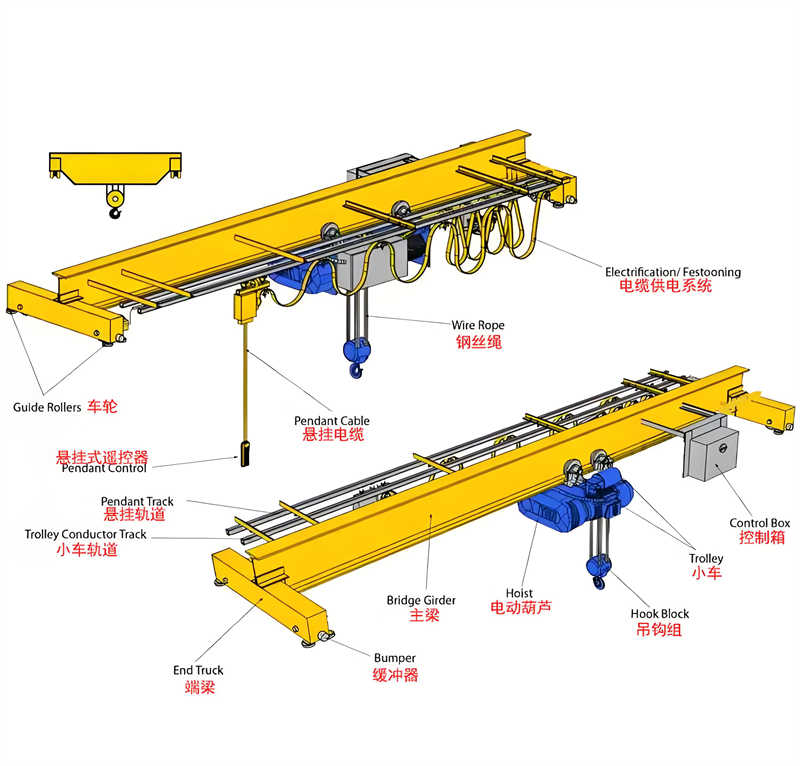
The selection of the transmission scheme of the main hoisting mechanism of the trolley is one of the most important links in the entire crane design process. Considering the use environment and load requirements of the crane, we finally chose the transmission method of direct connection between the planetary reducer and the drum. This design method not only ensures the stability of the hoisting mechanism, but also significantly improves its load-bearing capacity to meet the needs of various complex lifting operations. At the same time, in order to achieve precise control and adjustment of the lifting speed, we ensure the uniformity and controllability of the lifting speed through a reasonable gear transmission ratio design.
As an important part of the lifting mechanism, the design of the pulley block and hook block directly affects the lifting capacity and safety of the crane. According to the rated lifting weight and lifting height of the crane, we carefully designed the multiples of the pulley block and the structure of the hook block. In the design of the pulley block, we considered factors such as the number of pulleys, the arrangement method and the transmission efficiency to ensure the efficiency and safety of the lifting operation. The design of the hook group focuses on the strength, wear resistance and safety of the hook to meet various different lifting needs. In addition, we have also made strict regulations on the materials, manufacturing processes and inspection standards of pulleys and hooks. We use high-strength, wear-resistant and corrosion-resistant materials to ensure the manufacturing accuracy and quality stability of pulleys and hooks. At the same time, we have also established complete inspection standards to ensure that each product meets the requirements, thereby ensuring the safety and reliability of lifting operations.
As the key load-bearing component of the lifting mechanism, the selection and calculation of wire rope are crucial. According to the use environment and load requirements of the crane, we selected wire ropes with high strength, wear resistance and corrosion resistance. These wire ropes have excellent mechanical properties and good performance, and can meet the needs of various complex lifting operations. At the same time, we accurately calculated and selected key parameters such as the diameter, length and safety factor of the wire rope. The calculation of these parameters takes into account factors such as the rated lifting capacity, lifting speed and working environment of the crane, ensuring the safety and reliability of the wire rope during use. In addition, we have also made detailed regulations on the installation, use and maintenance of wire ropes. These regulations include the installation sequence of wire ropes, precautions during use, and maintenance methods, etc., aiming to ensure the safety and reliability of wire ropes during use.
The main dimensions of the pulley include the pulley diameter, wheel groove width and depth, etc. The selection of these dimensions directly affects the lifting capacity of the crane and the service life of the pulley. We determined the main dimensions of the pulley through precise calculations based on the rated lifting capacity of the crane and the multiples of the pulley block. During the calculation process, we considered factors such as the material properties, manufacturing process and strength requirements of the pulley to ensure the safety and reliability of the pulley. In addition, we also adopted advanced manufacturing processes and inspection methods to ensure the quality and performance of the pulley. These manufacturing processes include CNC machine tool processing, heat treatment and other links, while the inspection methods include dimensional inspection, material inspection and other steps. Through these precise calculations and advanced manufacturing processes, we can ensure that the pulley has sufficient strength and wear resistance during use, so as to meet the needs of various complex lifting operations.
As one of the core components of the lifting mechanism, the size design and strength verification of the drum are directly related to the lifting capacity and safety of the crane. We designed reasonable parameters such as drum diameter, length and rope groove shape according to the rated lifting weight and lifting speed of the crane. The design of these parameters takes into account factors such as the material properties, manufacturing process and strength requirements of the drum to ensure the safety and reliability of the drum. At the same time, in order to ensure that the drum can withstand various complex loads and working conditions during use, we also carried out strict strength verification. During the strength verification process, we used finite element analysis and other methods to conduct detailed mechanical analysis and calculations on the drum to ensure that it has sufficient strength and durability during use. In addition, we have also strictly regulated the manufacturing process and inspection standards of the drum. These regulations include the processing sequence of the drum, the control of heat treatment and other links, and the implementation of steps such as dimensional inspection, etc., in order to ensure that the quality and performance of the drum meet the requirements, thereby ensuring the safety and reliability of the lifting operation.
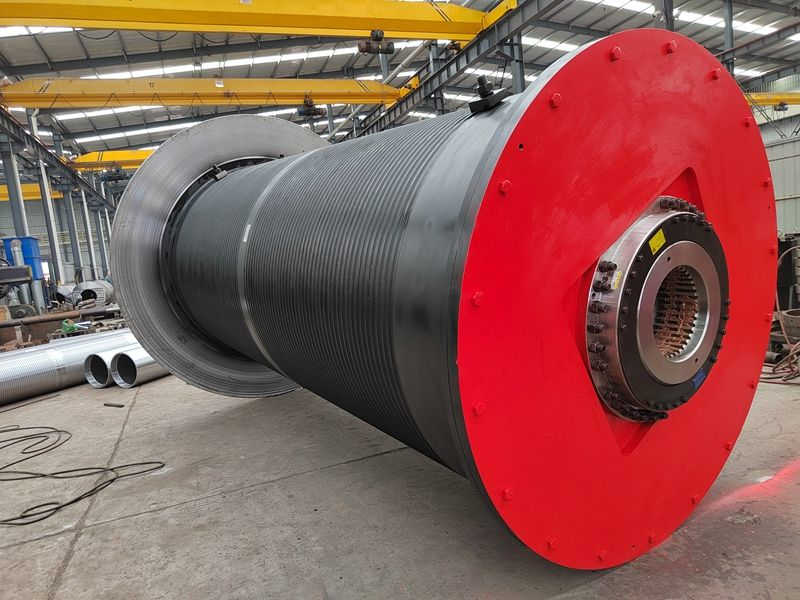
Table: Roll design parameter table (basic parameters)
| Parameter name | Description | Design value/range | Remark |
| Roll diameter | Outer diameter of the reel | _ | Designed according to rated lifting capacity and lifting speed |
| Roll length | Axial length of the reel | _ | Determined by wire rope length and rope groove layout |
| Rope groove shape | How to fix the wire rope on the drum | _ | Such as V-shaped groove, U-shaped groove, etc. |
| Material selection | Roll manufacturing materials | High-strength steel | Ensure the strength and durability of the reel |
| Rated lifting capacity | The maximum lifting weight that the drum can bear | _ | Determined according to crane design requirements |
| Lifting speed | The rising speed of the wire rope when the drum rotates | _ | Affects the efficiency and safety of lifting operations |
Table: Roll design parameter table (strength verification and manufacturing requirements)
| Verification/manufacturing requirements | Description | Method/Standard | Remark |
| Strength calculation | Strength analysis of the drum under various working conditions | Finite Element Analysis | Ensure the reel has sufficient strength and durability |
| Manufacturing process | Roll processing and heat treatment process | CNC machine tool processing, heat treatment, etc. | Ensure the dimensional accuracy and material properties of the roll |
| Dimensional inspection | Measurement and verification of key roll dimensions | Precision measuring tools | Ensure that the roll size meets the design requirements |
| Material Testing | Chemical composition and mechanical properties testing of roll materials | Chemical analyzer, mechanical testing machine | Ensure that the roll material meets the requirements |
| Heat treatment control | Temperature and time control during heat treatment of coils | Heat treatment process specifications | Guarantee the organization and performance of the roll material |
| Quality Inspection | Inspection of the appearance and internal quality of finished rolls | Appearance inspection, non-destructive testing, etc. | Ensure roll quality and performance meet requirements |
In the design process of the crane, the selection and calculation of the motor are crucial. According to the use environment and load requirements of the crane, we carefully selected motors with high efficiency, low noise and easy maintenance. Through in-depth calculations, we determined the key parameters of the motor, such as power, speed and torque, to ensure that the crane can meet various working requirements during operation. In addition, we also made detailed provisions for the cooling method, protection level and installation size of the motor to ensure its stability and reliability during long-term use.
In order to ensure the stability and safety of the motor during long-term operation, we conducted in-depth verification of its heating conditions. By calculating parameters such as the temperature rise, thermal resistance and heat dissipation coefficient of the motor, we evaluated the heat dissipation capacity and thermal stability of the motor. At the same time, we also made detailed provisions for the motor’s overload protection, thermal relay setting and heat dissipation measures to ensure that it can still operate safely and reliably under harsh working conditions.
As an important part of the crane transmission system, the selection and matching of the reducer is directly related to the running stability and load-bearing capacity of the crane. According to the use environment and load requirements of the crane, we carefully selected reducers with high precision, high efficiency and low noise characteristics, and ensured the coordinated operation of the reducer and the motor through precise matching calculations. In addition, we have also made detailed provisions for the lubrication method, maintenance cycle and troubleshooting of the reducer to ensure its stability and reliability during use.
Hoisting speed and power are one of the important indicators of crane performance. According to the use environment and load requirements of the crane, we determined the reasonable hoisting speed and power range through precise calculations and verifications. At the same time, we conducted a detailed analysis of the transmission efficiency, load characteristics and dynamic response of the hoisting mechanism to ensure the efficiency and stability of the crane during operation. These measures together ensure that the performance and safety of the crane are maximized.
To ensure the safe operation of the crane, we have formulated a series of detailed and comprehensive safety and technical rules. These rules run through the entire life cycle of the crane, and strict regulations and requirements are made for each link from design, manufacturing, installation to commissioning, use and maintenance. In the design stage, we follow the relevant national standards and industry specifications to ensure that the structure of the crane is stable and strong enough, and take into account various safety factors. In the manufacturing and installation stages, we use high-quality materials and advanced processes, and operate in strict accordance with the specifications to ensure the installation quality and safety of the crane. In the commissioning and use stages, we have formulated a series of operating procedures and safety requirements, requiring operators to strictly abide by them to ensure the normal operation and safe use of the crane. We also conduct professional skills training and assessment for the maintenance personnel of the crane to ensure that they have the ability and quality to maintain and maintain the crane.
As the direct operator of the crane, the performance of the driver’s responsibilities is directly related to the safe operation of the crane. We have clarified the driver’s operating responsibilities and made detailed regulations and requirements for them. The driver needs to be familiar with the performance characteristics, operating procedures and safety requirements of the crane to ensure that the crane can be operated skillfully and safely during the operation. The driver must operate in accordance with the prescribed procedures and signals, and must not change the operating procedures or violate safety requirements without authorization. During the operation of the crane, the driver needs to be vigilant at all times, detect and deal with abnormal situations in a timely manner, and prevent accidents. The driver should also regularly inspect and maintain the crane to ensure its normal operation and extend its service life. At the same time, we have conducted professional training and assessments for the drivers to improve their safety awareness and operating skills.
Since the crane often needs to contact high-voltage power during operation, safety precautions for electric shock are essential. We have taken a variety of measures to prevent the risk of electric shock. First, we set up a leakage protection device, which can immediately cut off the power supply in the event of leakage to prevent electric shock accidents. Secondly, we have taken grounding protection measures to reliably connect the metal casing of the equipment to the grounding grid to ensure the safety of the equipment. In addition, we also regularly inspect and maintain the electrical system of the crane to ensure its safe and reliable operation. Finally, we also conducted safety education and training for electric shock for operators to improve their safety awareness and prevention capabilities.
In order to ensure the long-term and stable operation of the crane, we have formulated detailed maintenance cycles and contents. These cycles and contents cover various key components and systems of the crane, including mechanical transmission systems, electrical control systems, safety protection devices, etc. In the mechanical transmission system, we regularly check the wear of key components such as gears, bearings, chains, and perform necessary cleaning and tightening work. For the electrical control system, we regularly check the normal operating status of components such as cables, switches, sensors, and the connection of electrical lines. In addition, we also regularly check the integrity and reliability of safety protection devices to ensure that they can effectively prevent accidents. Through these regular inspections, cleaning, tightening and replacement and other maintenance work, potential faults and safety hazards can be discovered and handled in time, thereby ensuring the long-term and stable operation of the crane.
Lubrication is one of the important measures to ensure the normal operation of various parts of the crane and extend their service life. We have clarified the lubrication parts of the crane and the principles for selecting lubricants. For key components such as gears, bearings, chains, we use specific lubricants for regular lubrication to ensure their normal operation and extend their service life. In the selection of lubricants, we pay attention to their quality and service life, select lubricants with good performance, and replace them strictly according to the prescribed replacement cycle to ensure that they always maintain good lubrication effect.
In order to track and manage the maintenance of cranes, we have established detailed maintenance records and management systems. These records and management systems cover the maintenance plan, execution, fault handling and spare parts management of cranes. We regularly review and analyze maintenance records to find deficiencies and take corresponding improvement measures. In addition, we also use data analysis tools to deeply explore and analyze maintenance records to find potential failure modes and maintenance trends, so as to better guide the development of maintenance work.
In order to ensure that the key components of the crane can be repaired promptly and effectively when a fault occurs, we have developed detailed maintenance guides. These guides are designed to provide comprehensive and professional guidance to maintenance personnel to ensure that the key components of the crane can be repaired promptly and effectively when a fault occurs. These guidelines cover various key components of the crane, including the bridge, trolley, trolley running mechanism, lifting mechanism, etc. For each component, the guide provides detailed maintenance steps and precautions to guide maintenance personnel to perform maintenance operations correctly.
For common faults that may occur during the operation of the crane, we have conducted a detailed troubleshooting and solution summary. These faults include electrical system faults, mechanical transmission system faults, safety protection device faults, etc. By analyzing the causes of the faults and solutions, maintenance personnel can quickly and accurately locate and troubleshoot the faults to ensure the normal operation and safety of the crane. At the same time, these solutions can also help maintenance personnel better understand the operating principles of the crane and improve their maintenance skills and levels.
In order to ensure that the maintenance work of the crane can proceed smoothly, we are equipped with necessary maintenance tools and spare parts. These tools and spare parts cover various key components and systems of the crane, including electrical components, mechanical parts, safety protection devices, etc. At the same time, detailed regulations are made for the management and storage of spare parts to ensure the quality and availability of spare parts. By regularly counting and updating the spare parts inventory, it can be ensured that the crane can be repaired in a timely and effective manner when a failure occurs. In addition, we have established a complete maintenance tool and spare parts management system to ensure the smooth progress of maintenance work. The management and storage of these tools and spare parts have received our high attention to ensure their quality and availability. By regularly counting and updating the spare parts inventory, it can be ensured that the crane can be repaired in a timely and effective manner when a failure occurs.
Before installing the crane, a comprehensive site survey must be carried out, including assessing the ground bearing capacity, determining the equipment layout and construction plan, etc. It is also necessary to carry out foundation construction according to the actual situation on site to ensure the stability and safety of the crane. During the preparation process, a detailed equipment installation plan must also be formulated, including equipment selection, parameter setting, construction process and personnel configuration. At the same time, the precautions during the installation process are clarified, including safety measures, environmental protection requirements, construction sequence and cooperation. Through strict installation preparation and precautions, the installation quality and safety of the crane can be ensured.
The crane erection process is one of the key links to ensure that the crane can be correctly installed and stably operated. It is necessary to carry out the steps of bridge assembly, trolley installation, trolley running mechanism installation, electrical system installation, etc. in a certain order. Each step needs to be carried out strictly in accordance with the operating requirements and precautions to ensure the smooth progress of the erection process and the correct performance of the crane.
After the crane is erected, detailed debugging work is required to ensure that the various performance indicators of the crane meet the design requirements. The debugging method includes steps such as no-load test, load test and performance test. The no-load test is mainly to check whether the various components of the crane are operating normally, the load test is to check whether the actual load-bearing capacity of the crane meets the design requirements, and the performance test is to check whether the various performance indicators of the crane meet the standards. At the same time, strict acceptance standards need to be formulated to conduct a comprehensive inspection and evaluation of the crane’s lifting capacity, operating speed, stability, safety protection devices and other aspects. Only cranes that meet the acceptance standards can be officially put into use.
In order to ensure the integrity and availability of the crane, we provide a detailed list of standard accessories. These accessories include but are not limited to electrical control components, such as buttons, indicator lights, control boxes, etc.; safety protection devices, such as overload protectors, limit switches, protective covers, etc.; lubricants, such as lubricating oils, greases, etc.; maintenance tools, such as wrenches, screwdrivers, pliers, etc. In addition, we also provide some special accessories, such as hooks, lifting rings, wire ropes, etc. These accessories are necessary for the normal operation of the crane, and a detailed list and supporting services are provided to ensure that the crane is fully supported and guaranteed during installation, commissioning and use.
In order to ensure the safety and integrity of the crane during transportation, we have formulated strict packaging requirements and marking specifications. First, we use high-strength wooden boxes or metal boxes to pack the various components and systems of the crane. During the packaging process, we will take various measures, such as filling, fixing, moisture-proofing, etc., to ensure that the crane will not be damaged during transportation. Secondly, we clearly mark the model, specifications, weight, precautions and other information of the crane on the packaging. This information not only helps with the correct identification and management during transportation and storage, but also provides necessary reference for subsequent installation and use.
In terms of transportation methods, we choose the most suitable transportation method based on factors such as the size, weight and transportation distance of the crane. Usually, we use land transportation methods such as car transportation or train transportation. When choosing transportation vehicles and routes, we will evaluate and select according to the actual situation to ensure that the crane can reach the destination safely and stably during transportation. During transportation, we need to strictly abide by traffic rules and safety requirements. The driver needs to have the corresponding driving license and professional qualification certificate, obey traffic signals and signs, and ensure driving safety. In addition, we will take some additional safety measures, such as tying and fixing, moisture and sun protection, and collision prevention, to ensure the integrity and availability of the crane.
After the crane arrives at the destination, we need to store and manage it properly. First of all, the storage environment needs to be dry, ventilated, and free of pollutants such as corrosive gases and dust. This ensures the long-term preservation and quality of the crane. Secondly, we need to formulate strict management requirements, including regular inspections, maintenance, fire prevention and theft prevention. Through the implementation of these measures, we can ensure that the crane can be put into use quickly and accurately when it is needed.
In summary, the design manual of the 100T double-beam bridge crane covers the design overview of the crane, the design of the trolley main hoisting mechanism, the selection of motors and reducers, safety and technical requirements, maintenance and lubrication, component repair and troubleshooting, installation and commissioning, as well as accessories, packaging, transportation and storage. Through comprehensive and detailed design and instructions, we ensure that the crane has stable and reliable performance, safety and long service life. At the same time, it can also provide reference and reference for professionals in related fields to jointly promote the continuous development and progress of crane technology.
Contact our crane specialists
Send us a message and we will get back to you as soon as possible.