As a key equipment in industrial production, the safety and reliability of metallurgical cranes are directly related to production efficiency and personnel safety. In order to ensure that such heavy machinery can still operate stably under extreme working conditions, a set of detailed and strict inspection standards is particularly important. These standards not only cover the full-cycle technical data review from design and manufacturing to installation and commissioning, but also go deep into every detail of the working environment, including environmental safety, personnel qualifications and the standardization of equipment management and maintenance. In addition, the selection of materials for metal structures, the quality of welds, and strict inspections of major components such as slings, wire ropes, pulleys, brakes, etc. are all key links to ensure that the performance of the crane meets the standards. The safety of the electrical system should not be ignored either. From the protection level of the motor to the protection measures of the electronic control equipment, to the effectiveness of overspeed protection and safety devices, each one is an important guarantee for the overall safety of the crane. In the end, a comprehensive inspection of safety devices and protective measures has built the last line of defense for the safe operation of metallurgical cranes.
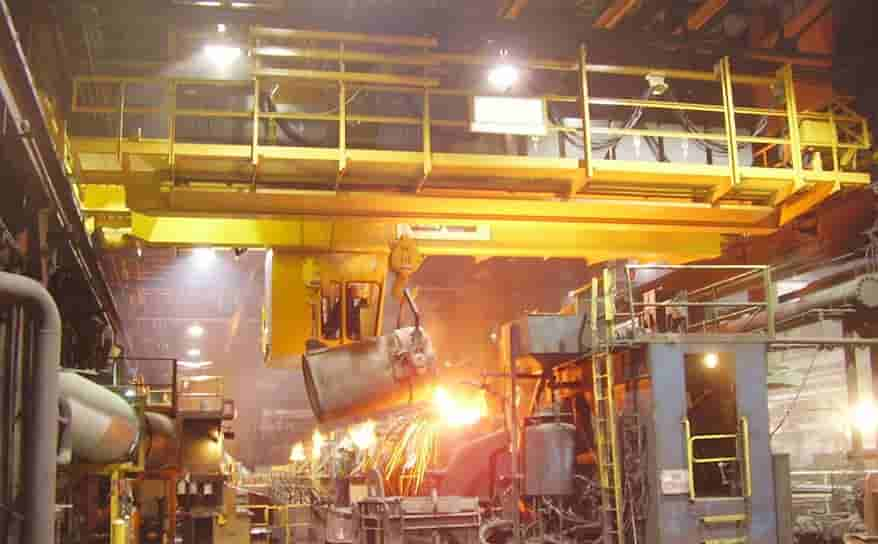
Technical data is the basis for in-depth understanding of the performance, operating status and fault warning of the crane, and it is of great importance to ensure the safe operation and efficient operation of the crane. Complete and accurate technical data can provide strong support for the inspection work and ensure the reliability and effectiveness of the inspection results.
The manufacturing and certificate of qualification of metallurgical cranes are key proofs to ensure that their quality meets national standards and industry specifications. During the inspection, the model, specification, manufacturing date, manufacturer and other information of the crane should be carefully checked to see if they are consistent with the certificate of qualification. At the same time, it is also necessary to confirm whether the certificate of qualification is issued by an institution with relevant qualifications to ensure that the manufacturing quality and safety of the crane are authoritatively recognized. In addition, it is necessary to carefully read the validity period of the certificate of qualification to ensure that the crane is still within the qualified validity period during the inspection.
The self-inspection report and installation and commissioning record are important bases for reflecting whether the various performance indicators of the crane meet the standards during the installation and commissioning process. The self-inspection report should record in detail the various performance indicators of the crane, including but not limited to load capacity, running speed, braking performance, etc. The installation and commissioning record should record in detail the installation process and commissioning results of the crane, including but not limited to installation dimensions, electrical system commissioning, hydraulic system commissioning, etc. The inspector should carefully review these records to understand whether there are any problems with the crane during the installation and commissioning process and whether these problems have been properly resolved. By comparing and analyzing the self-inspection report and installation and commissioning records, the overall performance and stability of the crane can be further evaluated.
Table: Key contents of self-inspection report
| Serial number | Inspection items | Key content | Check the results |
| 1 | Carrying capacity | Maximum lifting capacity of the crane | _ |
| 2 | Running speed | Crane operating speed range | _ |
| 3 | Braking performance | Crane braking distance and braking time | _ |
| 4 | Safety devices | Such as limiters, buffers, etc. | _ |
| 5 | Control System | Stability and response speed of control system | _ |
| 6 | Electrical System | Working conditions and insulation performance of electrical components | _ |
| 7 | Lubrication conditions | Lubrication conditions and grease quality of each lubrication point | _ |
| 8 | Accessories | Such as the condition and wear of hooks, wire ropes, etc. | _ |
Table: Installation and commissioning record key content table
| Serial number | Installation and debugging project | Key content | Debugging results |
| 1 | Installation Dimensions | Installation location and dimensions of each component | _ |
| 2 | Electrical system commissioning | Connection and debugging of electrical lines | _ |
| 3 | Hydraulic system debugging | Pressure and flow debugging of hydraulic system | _ |
| 4 | Mechanical system debugging | The operation and coordination of each mechanical component | _ |
| 5 | Safety device debugging | Functionality and sensitivity testing of safety devices | _ |
| 6 | Control system debugging | Functionality and stability testing of control systems | _ |
| 7 | Machine operation test | Overall operation and performance of the crane | _ |
In addition to the manufacturing and qualification certificates, self-inspection reports and installation and commissioning records, metallurgical cranes should also have other relevant technical documents, such as instruction manuals, maintenance manuals, etc. These documents are of great significance for understanding the operation methods, maintenance requirements and troubleshooting methods of the crane. During the inspection, the integrity and accuracy of these documents should be ensured. At the same time, it is also necessary to check whether these documents are consistent with the actual equipment to ensure the practicality and reliability of the documents.
Through the above inspection of technical data, the performance, status and existing problems of metallurgical cranes can be fully understood, providing strong support for subsequent inspection work. On this basis, inspectors can formulate more scientific and reasonable inspection plans and methods to ensure that the safety and reliability of metallurgical cranes are fully guaranteed.
The working environment has an important impact on the safe operation of metallurgical cranes. In order to ensure the safe operation of metallurgical cranes, the working environment must be strictly inspected.
The use environment of metallurgical cranes should meet certain safety requirements, including ground bearing capacity, space dimensions, lighting conditions, etc. The ground bearing capacity should be sufficient to ensure that the crane will not overturn due to insufficient ground bearing capacity and other safety accidents. The space dimensions should be reasonable to ensure that the crane can operate normally and avoid accidents such as collisions due to insufficient space. The lighting conditions should be good to ensure that the operator can clearly observe the work site and avoid safety accidents due to poor vision. During the inspection, the working environment of the crane should be checked on site to confirm that the ground bearing capacity is sufficient, the space dimensions are reasonable, and the lighting conditions are good to avoid safety accidents caused by environmental factors.
Metallurgical cranes should be professionally inspected regularly to ensure that their various performance indicators meet the specified requirements. Regular inspections should be carried out by qualified professionals and inspection reports should be issued. Operators should have the corresponding qualifications and skill levels to be able to operate the crane skillfully and handle emergencies. During the inspection, the regular inspection report and the operator’s qualification certificate should be consulted to confirm that the inspection cycle of the crane and the operator’s qualifications meet the requirements. If it is found that the inspection cycle has expired or the operator’s qualifications do not meet the requirements, the crane should be stopped from use immediately and corresponding treatment should be carried out.
Equipment management and maintenance are the key to ensuring the long-term and stable operation of metallurgical cranes. Enterprises should establish a complete equipment management system and maintenance plan, and strictly carry out maintenance and maintenance in accordance with the system. During the inspection, the equipment management system and maintenance plan of the enterprise should be understood, the daily maintenance and maintenance records of the crane should be checked, and the equipment should be maintained and managed in a timely and effective manner. If it is found that the equipment is improperly maintained or there are safety hazards, corresponding treatment should be carried out immediately.
After completing the working environment inspection of the metallurgical crane, a comprehensive safety inspection should be carried out to ensure the safe operation of the equipment. The safety inspection should include the structure, mechanism, electrical, control system and other aspects of the equipment. If safety hazards are found, they should be rectified immediately and effective measures should be taken to prevent accidents. After the rectification is completed, a review and acceptance should be carried out to ensure that the rectification effect meets the requirements.
As the core load-bearing component of metallurgical cranes, the quality of its design, manufacturing and maintenance directly affects the performance, stability and safety of the entire crane, and thus determines the smooth progress of production operations.
In the design and manufacturing process of metallurgical cranes, the correct selection of metal structural materials is crucial. Ideal metal structural materials should have excellent mechanical properties, such as high strength, good plasticity and toughness, to ensure that they do not break or plastically deform under heavy loads, impact loads and long-term stress; have excellent corrosion resistance, can maintain stable physical and chemical properties under harsh environments such as high temperature, high humidity, high load and chemical erosion, resist the penetration and damage of corrosive media, thereby extending the service life of the crane.
During the inspection stage, the quality certificate or corresponding quality inspection report of the material should be carefully reviewed first, and the chemical composition of the material should be analyzed to confirm whether it meets the relevant national standards and design requirements; the mechanical properties of the material should be tested, including but not limited to tensile strength, yield strength, elongation and other indicators, to verify whether the material meets the load-bearing capacity under the design load. At the same time, a comprehensive appearance inspection of the metal structure should be carried out, including but not limited to the appearance quality of the weld, the overall dimensional accuracy of the structural parts, the surface roughness, and the presence of various defects such as cracks, slag inclusions, pores, and deformation.
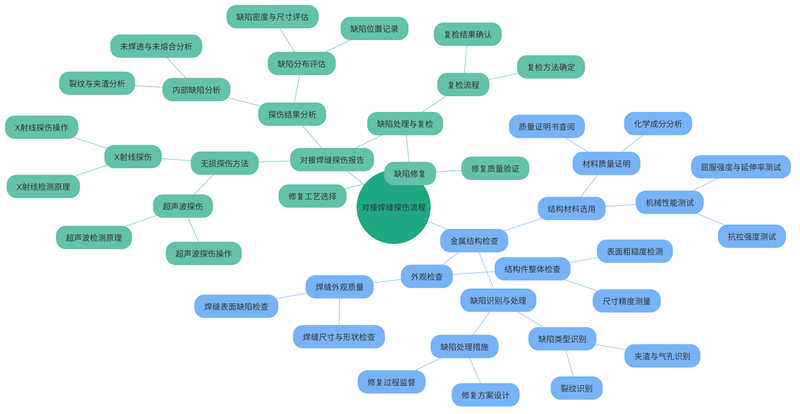
As one of the most important connection methods in the metal structure of metallurgical cranes, the welding quality of butt welds is directly related to the overall load-bearing capacity and operational safety of the crane. During the inspection, the non-destructive testing report of the butt weld should be carefully reviewed, such as the test results of ultrasonic testing, X-ray testing or magnetic particle testing, to fully understand whether there are various defects such as incomplete penetration, incomplete fusion, cracks, slag inclusions, and their distribution inside the weld. For welds found to have defects, they should be repaired in time.
Main parts and mechanisms are the core components of metallurgical cranes to realize various functions, and their operating status is directly related to the performance and safety of the entire equipment. In regular maintenance inspections, the following key components must be inspected and maintained in detail and rigorously:
As the main component that directly carries heavy objects, the integrity and reliability of the main hook sling are crucial. During the inspection, first conduct an appearance inspection of the sling to observe whether there are cracks, deformations, excessive wear and tear, especially the state of the connection parts and the key load-bearing parts. At the same time, for the main rope and auxiliary rope combination equipped, professional tools must be used regularly for detailed flaw detection to confirm whether there are problems such as internal cracks or breaks. For slings and wire ropes that are severely worn or defective, they must be replaced in a timely manner in strict accordance with relevant regulations to ensure operational safety.
As an important component of the crane, the operating status of the pulley directly affects the operating efficiency and safety of the crane. During the inspection, the rotation flexibility of the pulley, whether the lubrication condition is good, and the wear and deformation degree of the wheel groove should be checked. Defective pulleys should be repaired or replaced in a timely manner. As an important safety component of the crane, the performance of the brake is directly related to the safety of the crane. During the inspection, the braking effect and response time of the brake should be checked to ensure that it can play a role quickly and accurately in an emergency. For brakes with poor performance or defects, they should be repaired or replaced in time.
As an important part of the transmission system of metallurgical cranes, the operating status of the reducer directly affects the performance and stability of the entire equipment. During the inspection, the operation of the reducer should be checked to observe whether there are abnormal noise, vibration and other problems. At the same time, the lubricating oil needs to be replaced regularly to ensure that the lubrication of the reducer is in good condition. As a key component for carrying and transmitting power, the wear and deformation of the drum directly affect the operating efficiency of the crane. During the inspection, the surface condition of the drum should be carefully checked to confirm whether there are cracks, excessive wear and other problems. For defective reducers and drums, they should be repaired or replaced in time.
As the core component of metallurgical cranes to achieve automatic control, the operating status of the electrical system is directly related to the performance and safety of the entire equipment.
Special motors equipped with metallurgical cranes need to have sufficient power and torque reserves to ensure that they can provide sufficient power when performing lifting operations. Since the working environment of metallurgical cranes is usually harsh, the protection level of the motor is particularly important. During the inspection, the nameplate information of the motor should be checked in detail to confirm whether its parameters such as model, specification, power and torque meet the design requirements. At the same time, check whether the protection level of the motor reaches IP54 or higher to cope with harsh environments such as dust and moisture. The operating status is also the focus of the inspection, and observe whether the motor is stable during operation and has no abnormal noise and vibration.
As the core component of the electrical system of metallurgical cranes, the normal operation of electrical control equipment is crucial to ensure the safety and reliability of the entire system. During the inspection, the protective cover, junction box and other components of the electrical control equipment should be carefully checked to see if they are intact and can effectively prevent accidental contact and external factors. At the same time, check whether the electrical control equipment has safety hazards such as leakage and short circuit to ensure that its insulation performance is good. Any problems or hidden dangers found should be repaired or replaced in time to avoid causing more serious safety accidents.
Overspeed protection and safety devices play a vital safety role in the electrical system of metallurgical cranes. During the inspection, it is necessary to focus on checking whether the setting value of the overspeed protection device meets the national standards and actual working conditions to ensure that it can respond quickly and take necessary protective measures during the hoisting operation. At the same time, test the sensitivity and reliability of safety devices, including but not limited to overload protection, limit protection, emergency stop and other devices, to ensure that these devices can play the expected protective effect at critical moments. For overspeed protection and safety devices with poor performance or defects, they should be repaired or replaced in time to ensure the safety of staff and the normal operation of equipment.
Safety devices and protective measures play a vital role in the safe operation of metallurgical cranes. They are an indispensable part of ensuring the safety of operators, preventing equipment damage and avoiding safety accidents. By regularly checking and maintaining these safety devices and protective measures, the risk of accidents can be effectively reduced and the reliability and safety of metallurgical cranes can be improved.
The rising limit position limiter is one of the key components for the safe operation of metallurgical cranes. Its main function is to automatically send a signal and cut off the rising power source when the hook approaches or reaches the preset height during the rising process to prevent the hook from continuing to rise and causing overwinding accidents. During the inspection process, technicians need to simulate the crane rising operation process and test the sensitivity and reliability of the limiter through actual operation.
The specific inspection steps are as follows:
The lifting weight limiter is an important safety device to prevent metallurgical cranes from overloading. It monitors the load of the crane in real time. When the load reaches or exceeds the rated value, the limiter will automatically send out a warning signal and cut off the power source to avoid equipment damage and safety accidents caused by overloading. During the inspection, hoisting operations of different weights should be simulated, and the setting value of the lifting weight limiter should be verified by actual loading or simulated loading to ensure its accuracy and reliability. At the same time, the response time of the limiter should be checked to observe whether it can quickly cut off the power source after receiving the overload signal to prevent overloading. For limiters with inaccurate setting values or slow response, it is necessary to adjust or replace new limiters in time, and recalibrate and test them.
In addition to the limit position limiter and the lifting weight limiter, metallurgical cranes should also have a series of other safety devices and protective measures. For example, windproof devices: In strong wind weather, windproof devices can effectively prevent the crane from accidentally moving or overturning; buffers: At the end of the lifting operation, the buffers can absorb the impact force between the hook and the beam to reduce equipment wear; guardrails: Safety guardrails set around the crane operation area can effectively prevent people and objects from entering the dangerous area by mistake, thereby ensuring the safety of the work site. During the inspection, it is necessary to check the integrity and effectiveness of these safety devices and protective measures one by one. For example, check the windproof device to observe whether its operating status is stable and reliable in strong wind weather; perform performance tests on the buffer to check whether its effect of absorbing impact force meets the requirements; and conduct safety assessments on the guardrails to confirm whether it can effectively prevent people and objects from entering the dangerous area by mistake. Through comprehensive and detailed inspections and assessments, the overall safety of metallurgical cranes is guaranteed.
In summary, the inspection standards for metallurgical cranes cover technical data, operating environment, metal structure, main components and mechanisms, electrical system, safety devices and protective measures, etc. Through comprehensive and detailed inspections, potential safety hazards can be discovered and eliminated in a timely manner to ensure the safe operation of metallurgical cranes.
Contact our crane specialists
Send us a message and we will get back to you as soon as possible.