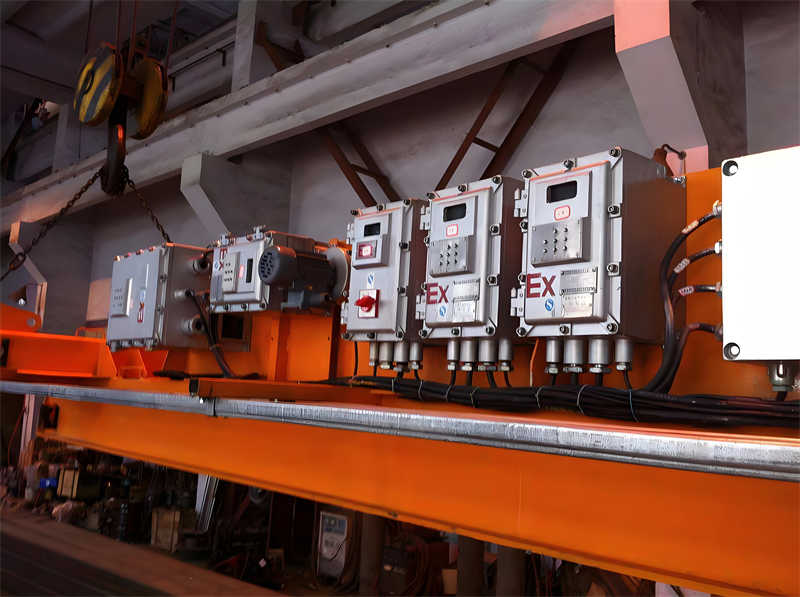
ATEX vs IECEx Explosion-Proof Cranes: A Practical Guide for Chemical Plants (2025)
Introduction: Why Certification Matters in Hazardous Environments
In March 2024, a chemical plant in Germany faced an €8.3 million fine after an improperly certified crane nearly caused a catastrophic incident in a hydrogen processing area. This highlights a critical reality: in explosive environments, crane certification isn’t just compliance—it’s a fundamental safety requirement.
For plant managers and procurement teams, choosing between ATEX and IECEx certifications can be complex. This guide provides:
Key differences between ATEX and IECEx standardsHow to select the right crane for chemical plant environments2025 updates to explosion-proof regulationsPractical considerations for procurement and maintenance
Section 1: ATEX vs IECEx – Understanding the Standards
1.1 Legal Status and Geographic Application
Standard Governing Body Primary Regions Legal Requirement ATEX European Union EU/EEA Mandatory (Official ATEX Directive ) IECEx International Electrotechnical Commission Middle East, Asia, Australia Often required by contracts (IECEx Official Site ) NEC (NFPA 70) National Fire Protection Association North America Mandatory (NFPA 70 Standard )
Key Insight: While ATEX is mandatory in Europe, many global operators (e.g., Saudi Aramco) require IECEx certification, even for EU-made equipment.
1.2 Certification Processes Compared
ATEX Directive 2014/34/EU:
Self-certification allowed for Category 3 equipmentNotified Body review required for Categories 1 & 2Typical certification time: 8-12 weeks
IECEx System:
Mandatory third-party testing by an ExCB (Certification Body)Annual factory audits requiredTypical certification time: 14-18 weeks
2025 Update: IECEx now requires QR-coded certificates for quick verification.
1.3 Marking Systems Explained
ATEX Example: II 2G Ex db IIC T4 Gb
II : Equipment group (surface industries)2G : Category 2, Gas atmosphereEx db : Flameproof + increased safetyIIC : Gas group (hydrogen)T4 : Temperature class (≤135°C)
IECEx Example: Ex db IIC T4 Gb
Nearly identical technical requirements
No EU-specific categorization
Recommendation: If operating in multiple regions, dual-certified cranes simplify compliance.
Section 2: Key Selection Criteria for Chemical Plants
2.1 Chemical Resistance & Material Selection
Chemical Exposure Recommended Material Sulfuric acid (>80%) Hastelloy C-276 Chlorine gas Titanium-clad steel Ammonia solutions Epoxy-coated carbon steel Saltwater environments 316L stainless steel
Maintenance Tip: Regular inspections for corrosion or coating wear are critical in aggressive chemical environments.
2.2 Smart Monitoring & Safety Features
Modern explosion-proof cranes often include:
Gas detection sensors (auto-shutdown at 20% LEL)Temperature monitoring (prevents overheating)Vibration sensors (predict bearing failures)
Best Practice: Ensure monitoring systems are intrinsically safe (Ex i) to avoid additional ignition risks.
Section 3: Cost Considerations & ROI
3.1 Total Cost of Ownership (TCO) Comparison
Cost Factor ATEX/IECEx Crane Non-Certified Crane Initial Purchase €80,000–€100,000 €50,000–€70,000 5-Year Maintenance €10,000–€15,000 €30,000–€50,000 Regulatory Fines Risk Low High (€200K–€1M+) 10-Year TCO €120K–€150K €200K–€500K+
Key Takeaway: While certified cranes have higher upfront costs, they reduce long-term risks and expenses .
3.2 Ways to Optimize Costs
Consider refurbished certified cranes (40–50% cost savings)Modular upgrades (start with Zone 2, expand later)Preventive maintenance plans (reduce downtime)
Section 4: A Step-by-Step Procurement Guide
Step 1: Hazard Assessment
Identify chemicals present (SDS review)
Map hazardous zones (Zone 0/1/2)
Use tools like the IECEx Zone Classification Guide (Link )
Step 2: Technical Specifications
Required protection type (Ex d, Ex e, etc.)
Temperature class (based on chemical autoignition points)Material compatibility (acid resistance, corrosion protection)
Step 3: Supplier Evaluation
Ask potential suppliers:
Can you provide test reports for my specific gas group ?
Do you offer dual ATEX/IECEx certification ?
What is your mean time between failures (MTBF) in similar plants?
Step 4: Installation & Compliance
Ensure proper grounding to prevent static sparks
Train operators on safe handling in Ex zones
Maintain certification documentation for audits
Section 5: Future Trends in Explosion-Proof Cranes
5.1 2025 Regulatory Updates
IECEx: New requirements for cable gland sealing ATEX: Stricter dust explosion (Ex tD) rules
5.2 Emerging Technologies
AI-driven predictive maintenance (reducing unplanned downtime)Hydrogen-ready designs (for future energy applications)
Recommendation: When purchasing, consider upgradeability for future standards.
Conclusion & Next Steps
Key Takeaways:
ATEX = EU compliance, IECEx = global flexibility Material selection is as critical as Ex rating Certified cranes lower long-term costs
Recommended Actions: Consult with a hazardous area lifting specialistVerify supplier certifications via IECEx Certified Equipment Database