As one of the indispensable equipment in the modern industrial field, the electric single-beam suspension crane is favored by various manufacturing and warehousing companies for its efficient and flexible operation characteristics. This manual aims to comprehensively introduce the details of the electric single-beam suspension crane, from the basic overview of the product to complex fault diagnosis. You will learn how the unique design of the crane meets the diverse material handling needs and how to ensure the safety and stability of the operation through the fine structure. In addition, the comprehensive guide to installation, commissioning, operation, maintenance and safe use will help you maximize the operating efficiency of the equipment while ensuring the safety of the operator. Whether it is a first-time or experienced user, you can benefit from it and achieve precise control of the electric single-beam suspension crane.
The electric single-beam suspension crane is a professional material handling equipment widely used in industrial plants, warehouses and logistics centers. It has a compact design and is easy to operate. It uses an electric drive system to lift, transport and position goods. The crane uses a single main beam as the load-bearing structure and is suspended on the track system. It can flexibly adapt to various operating environments and effectively improve work efficiency and space utilization.
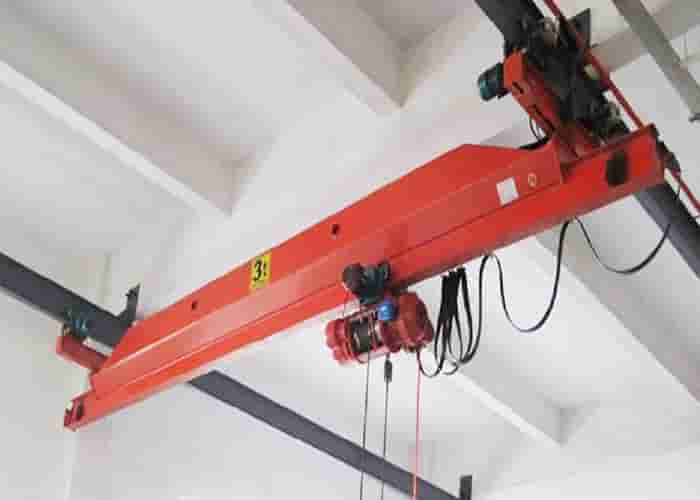
The electric single-beam suspension crane is mainly used for handling, stacking and assembling various items, such as heavy machinery parts, cargo boxes, pallets, etc. Its powerful lifting capacity, precise displacement control and wide operating range make it an indispensable equipment in the manufacturing, warehousing and logistics industries. In addition, the crane also supports customized configuration to meet the special needs of different industries.
The electric single-beam suspension crane is known for its high efficiency, energy saving and environmental protection. It adopts advanced electrical control system to achieve precise operation and energy consumption management; the structure is sturdy and durable, and the maintenance cost is low; at the same time, it has good noise control and vibration suppression capabilities to ensure the comfort of operators and the safety of the working environment.
The crane is suitable for indoor environments with normal temperature, dryness and no corrosive gases. To ensure its normal operation and extend its service life, it should be avoided in places with extreme temperature, humidity or explosive and flammable gases. In addition, the installation and operation of the crane must comply with local safety regulations and standards.
The main structure of the electric single-beam suspension crane includes several key parts, such as the main beam, end beam, walking mechanism, lifting mechanism and electrical control system. The main beam, as the main component for carrying goods, is welded with high-strength steel to ensure sufficient strength and rigidity under various working conditions, thereby ensuring the stability and safety of the crane. The end beam connects the two ends of the main beam to form a stable frame structure, and also provides a stable walking foundation for the crane. The walking mechanism is an important part of the electric single-beam suspension crane, which drives the crane to move along the track through a drive device. This design enables the crane to flexibly shuttle between work areas and improve work efficiency. The lifting mechanism is responsible for the lifting and lowering of goods. It realizes the lifting and suspension of goods through components such as drums and wire ropes, and is equipped with key components such as motors, reducers and brakes to ensure the smooth and safe lifting of goods. The electrical control system is responsible for the control and protection of the entire equipment. It uses automation control technologies such as PLC to achieve precise control and protection of the crane to ensure the normal operation of the equipment and the safety of the operator.
The key components of the electric single-beam suspension crane include motors, reducers, brakes, drums and wire ropes, all of which are well-known brand products to ensure the reliability and durability of the equipment. The motor, as a power source, provides stable power output to ensure the normal operation of the equipment. The reducer reduces the speed of the motor and increases the torque, so that the equipment can meet the needs of heavy-duty operations. The brake can quickly stop the equipment when needed to ensure safety. The drum and wire rope are responsible for the lifting and suspension of goods, and have sufficient strength and wear resistance to meet various operational needs.
The electric single-beam suspension crane is equipped with multiple safety protection devices to ensure the safety of operators and goods. The overload limiter can prevent the equipment from overloading, thereby avoiding equipment damage or safety accidents caused by overloading. The travel limiter can limit the travel range of the equipment to prevent the equipment from over-running or colliding on the track. The anti-unhooking device can prevent the goods from falling off in the air, thereby ensuring the safe transportation of the goods. The emergency stop button can quickly stop the equipment when abnormal or dangerous conditions occur, avoiding accidents. The existence of these safety protection devices makes the electric single-beam suspension crane more reliable and safer during operation.
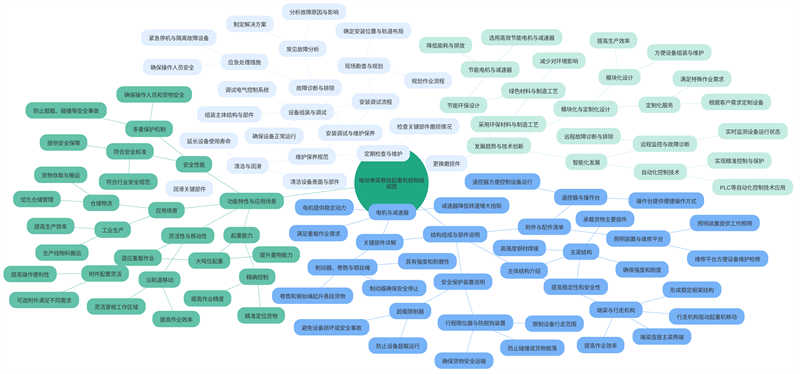
The electric single-beam suspension crane provides a series of accessories and parts to meet different operation requirements and improve the convenience of operation. Remote control, operating table and lighting device are all optional accessories, and users can choose to configure them according to actual needs. The remote control can easily control the operation and operation of the equipment and improve the operation efficiency; the operating table can provide a more convenient operation method; the lighting device can provide sufficient working lighting to ensure the safety and smooth progress of the operation. The maintenance platform is also one of the optional accessories, which is convenient for operators to maintain and repair the equipment; the tool box can provide necessary maintenance tools and accessories; the guardrail can provide necessary safety protection to ensure the safety of the operator. Users can choose to configure these accessories and parts according to actual needs to improve the performance and use experience of the equipment.
Before installing the crane and its accessories, a comprehensive and detailed inspection must be carried out. First, the main structural components of the crane, such as the bridge, sling, walking mechanism, etc., are visually inspected to ensure that there is no obvious deformation, damage or corrosion, and to confirm that the functions of each component are normal, such as brakes, limit switches and other safety devices are complete and reliable. At the same time, according to the specifications and weight of the crane, reasonably plan and prepare the corresponding installation tools and equipment, including but not limited to cranes, wrenches, screwdrivers, cables, etc. During the installation process, safety is the primary consideration. Make sure that all personnel involved in the installation have received relevant safety training, understand and comply with safe operating procedures. Familiarity with installation drawings and operating procedures is also essential. The installation drawings detail the installation sequence, steps and precautions of the crane, while the operating procedures specify specific operating methods and safety instructions. By carefully reading and understanding these documents, you can ensure that the installation process goes smoothly and meets the design requirements. In addition, before starting the installation, a comprehensive inspection of the installation site is required to ensure that the installation requirements of the crane are met. This includes checking the straightness and levelness of the track and the bearing capacity of the foundation and other key indicators.
The installation steps include track installation, crane assembly, electrical wiring and system debugging. Track installation is the basic work of crane installation. It is necessary to ensure that the straightness and levelness of the track meet the requirements to ensure smooth and safe operation of the crane. Crane assembly needs to be carried out step by step according to the drawings and instructions to ensure that all components are installed correctly and meet the design requirements. Electrical wiring needs to be operated in accordance with electrical safety regulations to ensure the normal operation and safety of the electrical system. System debugging requires testing and verification of various functions of the crane to ensure that the equipment performance meets the design requirements.
Debugging and testing are important links to ensure the normal operation and performance of the crane. During the debugging process, each function of the crane needs to be tested and verified one by one to ensure its normal operation. For example, when testing the lifting function, it is necessary to gradually increase the load weight to observe whether the lifting speed and stability of the crane meet the design requirements; when testing the walking function, it is necessary to observe whether the crane runs smoothly and accurately on the track; when testing the braking function, it is necessary to observe whether the braking effect of the crane when it stops is good. It is also necessary to check and adjust the various parameters of the electrical control system to ensure the safety and reliability of the equipment. Through the strict implementation of debugging and testing, potential problems and hidden dangers can be discovered and solved in time, and the occurrence of safety accidents can be effectively prevented.
During the installation process, safety operating procedures and relevant safety standards and specifications must be strictly observed. Illegal operations and risky operations are strictly prohibited. At the same time, it is necessary to strengthen the safety management of the site and implement personnel protection measures in place to avoid accidents; attention to the safety management of the site and the protection of personnel are crucial links. During the installation process, it is necessary to ensure that all personnel involved in the installation have received relevant safety training and have the corresponding qualification certificates to understand and comply with the safety operating procedures; personnel protection measures must be in place, including wearing personal protective equipment such as safety helmets, protective glasses, gloves, etc., as well as setting up warning areas and arranging special personnel for supervision. After the installation is completed, the crane must be fully inspected and tested to confirm that it meets the design requirements and usage requirements before it can be put into use.
Before starting the crane, a series of preparations must be carried out to ensure safety and work efficiency. First, check the power supply system to confirm that the voltage is stable and meets the equipment requirements, and check whether the electrical control system is normal, including various indicator lights, alarm devices, and automatic control systems. Perform detailed functional tests on various safety protection devices, such as limit switches, emergency stop buttons, overload protection devices, etc., to ensure that they can function reliably at critical moments.
The operator needs to ensure that there are no people stranded in the working area of the crane, especially there should be no obstacles on the path of hoisting goods to avoid accidents. When everything is ready, start the crane step by step according to the operating procedures to avoid sudden acceleration or full-speed operation causing impact on the equipment. After starting, pay close attention to the operating status of the crane, including whether the movements of various components are coordinated, whether the sound is normal, whether the temperature is appropriate, etc. If there is any abnormality, it should be handled in time.
When shutting down the crane, all moving parts should be stopped at the current position first, and the cargo and slings should be securely fixed before being gradually lowered to the lowest position. Then cut off the power supply and lock the control box to prevent unauthorized operation from causing accidental start.
Conventional operating procedures are the core part of crane operations, and each step needs to be strictly followed. When hanging cargo, select a suitable sling combination according to the shape, weight and size of the cargo, and ensure that the connecting parts such as hooks and wire ropes are firm and reliable, without safety hazards such as wear or breakage.
During the lifting process, the operator needs to pay attention to the stability of the cargo at all times to avoid accidents caused by swinging or tilting. When walking, control the speed and direction of the crane to make it run smoothly according to the predetermined trajectory. Before reaching the designated location, precise positioning adjustments should be made to ensure that the cargo can be accurately placed at the target location.
The unloading stage also requires careful operation. Unloading should be carried out only after confirming that the cargo is stable. Slowly lower the cargo to the ground or designated location, and use special tools to assist support to prevent the cargo from slipping or being damaged. After the cargo is completely lowered and confirmed to be stable, release the hook and other connecting devices.
In emergency situations, such as equipment failure, personal injury or other situations that may cause danger, emergency stop operations should be taken immediately to ensure site safety to the greatest extent. Specific operations include but are not limited to: quickly press the emergency stop button or any clearly marked stop button on the relevant equipment; cut off the power supply; after confirming that the crane has stopped running, promptly notify the relevant personnel to carry out necessary inspections and treatment.
Daily maintenance and inspection are important links to maintain the long-term stable operation of the crane and extend its service life. For mechanical parts, it is crucial to regularly inspect and maintain key components such as motors, reducers, brakes, and wire ropes. When checking the motor, pay attention to its working condition, whether the temperature is normal, and whether there is any abnormal sound or vibration; perform functional inspections and wear inspections on the reducer and brake; pay close attention to the wear condition of the wire rope and the connection and fixation.
The electrical control system also requires regular maintenance and inspection, including cleaning and functional testing of the control cabinet, sensors, signal lines, etc. In addition, the results of each maintenance and inspection must be recorded to analyze the equipment operating status trend and promptly identify and deal with potential problems. The comprehensive implementation of these measures can significantly improve the efficiency and safety of the crane, effectively reduce the failure rate and extend the life of the equipment.
Table: Daily maintenance inspection items (mechanical parts)
| Inspection items | Check content | Inspection Standards | Remark |
| Motor | Working status, temperature, abnormal noise or vibration | No abnormal sound, moderate temperature, no vibration | _ |
| Reducer | Function test, wear inspection | Functioning normally, no obvious wear | _ |
| Brakes | Function test, wear inspection | Reliable braking, no obvious wear | _ |
| Wire Rope | Wear condition, connection fixation condition | No severe wear and tear, firm connection | _ |
| Limit switches | Functional testing | Reliable shutdown when triggered | Mechanical safety critical components |
| Emergency stop button | Functional testing | Press to stop immediately | Mechanical safety critical components |
| Overload protection device | Functional testing | Reliable shutdown when overloaded | Mechanical safety critical components |
Table: Daily maintenance inspection items (electrical control system)
| Inspection items | Check content | Inspection Standards | Remark |
| Control cabinet | Cleaning and tidying up, functional testing | Clean and free of debris, functioning properly | _ |
| Sensor | Functional testing | Accurate feedback signal | Electrical safety critical components |
| Signal line | Connection conditions, insulation performance | Good connection and no insulation damage | _ |
| Power System | Voltage stability, meeting equipment requirements | The voltage is stable and meets the equipment requirements | _ |
| Electrical control system | Indicator lights, alarm devices, automatic control systems | Normal display, no alarm, normal control | Electrical safety critical systems |
| Recording and trend analysis | Maintenance and inspection results records | Complete records, trend analysis | Facilitates timely detection and resolution of potential problems |
In order to ensure the safe and efficient operation of the crane, a comprehensive and detailed safety operating procedure must be formulated and strictly implemented. This set of procedures should specify in detail the specific operating steps and safety precautions of the crane from startup to shutdown, from operation to maintenance, etc., to ensure that each step of the operation has rules to follow and a basis to rely on. For example, during the startup phase, the operator must confirm that all parts of the equipment are intact, the electrical control system is normal, the surrounding environment is safe and barrier-free, and strictly follow the startup procedure in the operation manual for cold start or hot start; during operation, the appropriate speed and load capacity should be selected according to the actual working conditions to avoid overloading and overspeeding, and at the same time pay attention to monitoring the equipment status, timely discover and eliminate potential faults; and in the shutdown phase, the next step should be carried out only after ensuring that the equipment is completely stopped and stable.
In addition, the safety operating procedures should also clarify the responsibilities and powers of the operator. The operator must strictly abide by the provisions of the regulations, use and maintain the equipment reasonably, and have the right to refuse any instructions that violate safety regulations. Such procedures are used to ensure the safe operation of the crane and avoid accidents and failures caused by improper operation.
The key to ensuring the safe and efficient operation of the crane is that the operator must have the corresponding qualifications and skill levels. Operators must receive professional training and pass assessments before taking up their posts to ensure that they are familiar with the structure, performance, use methods and operating rules of the crane’s safety protection devices; at the same time, operators must receive regular reviews and continuous training to keep their knowledge and skills up to date and adapt to the ever-changing working environment and equipment update needs. Operators must not only know how to operate the crane correctly, but also have the ability to judge the status of the equipment and predict potential problems.
It is crucial to set up obvious safety warning signs and protective measures around the crane, which helps to remind operators and all personnel on site to pay attention to safety. Safety warning signs should be clear and include information such as the equipment’s hazard level, safe operating procedures, and the location of the emergency stop button so that quick action can be taken in an emergency; protective measures should include guardrails, protective nets, non-slip floors, etc., to reduce the possibility of accidents and ensure personnel safety. In addition, it is also essential to regularly check and maintain the effectiveness of these safety warning signs and protective measures to ensure that they are always in good working condition.
In order to ensure the safety and reliability of crane operation, a thorough emergency handling and rescue strategy must be formulated. Clear emergency handling processes and methods should be set in advance for various possible equipment failures and accidents. For example, when encountering equipment failure, the operator should have the ability to preliminarily judge the type of failure, and isolate and shut down the equipment according to the established process, and report it to the relevant department in a timely manner so that professional personnel can be quickly arranged for repairs; for possible personal injury or cargo loss, a detailed emergency rescue plan should also be formulated in advance, clarifying the evacuation route, first aid measures, and contact communication methods, etc., to ensure that rescue operations can be carried out quickly and effectively in an emergency. By regularly organizing emergency drills and training, operators can master emergency handling skills, which can not only improve their ability to deal with emergencies, but also effectively reduce the degree of accident losses, and ensure the safety of personnel and the integrity of equipment.
During the use of the crane, various fault phenomena may occur, such as motor overheating, brake failure, wire rope breakage, etc. The causes of these faults may include equipment aging, wear, improper operation or inadequate maintenance. For example, motor overheating may be caused by long-term high-load operation or poor heat dissipation; brake failure may be caused by brake pad wear, hydraulic system failure or electrical control system problems; wire rope breakage may be caused by overload, wear, corrosion or knotting.
Troubleshooting must follow certain methods and steps. First, it is necessary to carefully observe and analyze the fault phenomenon to understand the specific manifestations and effects of the fault; secondly, it is necessary to check one by one according to the fault phenomenon and possible causes, such as checking whether the key components of the equipment are damaged or worn, checking whether the electrical control system of the equipment is normal, and checking whether the lubrication system of the equipment is working properly; finally, it is necessary to conduct a comprehensive analysis based on the structure and working principle of the equipment to determine the specific location and cause of the fault.
According to different fault causes, corresponding troubleshooting measures need to be taken. For failures caused by aging or wear of equipment, it is necessary to replace or repair them in time, such as replacing worn parts, repairing damaged lines, etc. For failures caused by improper operation, it is necessary to strengthen the training and management of operators to improve their operating skills and safety awareness; for failures caused by inadequate maintenance, it is necessary to strengthen the daily maintenance and inspection of equipment, such as regularly replacing hydraulic oil and checking the lubrication system. At the same time, it is also necessary to make improvement suggestions based on the results of troubleshooting to improve the reliability and durability of the equipment. For example, it can be recommended to regularly inspect and maintain the equipment, strengthen the training and management of operators, and improve the manufacturing quality and reliability of the equipment.
Table: Common fault troubleshooting and treatment comparison table (crane)
| Fault phenomenon | Possible causes | Troubleshooting methods | Troubleshooting measures and suggestions |
| Motor overheating | Long-term high-load operation and poor heat dissipation | Check the motor running time and whether the cooling system is working properly | Replace worn motor parts, strengthen heat dissipation measures, and adjust workload |
| Brake failure | Brake pad wear, hydraulic system failure, electrical control system problems | Check the wear of the brake pads, the pressure of the hydraulic system and whether the electrical control system is normal. | Replace worn brake pads, repair hydraulic system failures, inspect and repair electrical control systems |
| Wire rope broken | Overload, wear, corrosion, kinking | Check the wire rope for wear and corrosion, whether there is any knot, and whether the load exceeds the standard. | Replace broken wire ropes, strengthen load management, and regularly check wire rope status |
| Equipment abnormal sound | Loose parts, poor lubrication, severe wear | Check whether the parts of the equipment are loose, whether the lubrication system is normal, and whether the wear is serious. | Tighten loose parts, strengthen lubrication measures, and replace severely worn parts |
| Electrical control system failure | Circuit aging, poor contact, control component damage | Check whether the circuit is aging, whether the contact is good, and whether the control components are working properly | Replace aging circuits, repair poor contact problems, and replace damaged control components |
| Hydraulic system failure | Hydraulic oil contamination, leakage, insufficient pressure | Check whether the hydraulic oil is clean, whether the system is leaking, and whether the pressure meets the requirements. | Replace contaminated hydraulic oil, repair leaks, and adjust system pressure to normal range |
| Lubrication system failure | Insufficient lubricating oil, contamination, or blockage of lubrication pipelines | Check the lubricating oil quantity, cleanliness, and whether the lubrication pipeline is blocked. | Refill lubricating oil, replace contaminated lubricating oil, and clean blocked lubricating pipelines |
Table: Fault prevention measures recommended table
| Fault type | Precautions | Implementation recommendations |
| Equipment aging and wear | Regular inspection and replacement of worn parts | Develop a regular maintenance plan and replace severely worn parts in a timely manner |
| Improper operation | Strengthen operation training and management | Regularly organize operator training to improve operating skills and safety awareness |
| Inadequate maintenance | Strengthen daily maintenance and inspection | Develop a daily inspection plan to ensure that the equipment is in good condition |
| Improper load management | Strictly control the load and avoid overloading | Strengthen load management to ensure that equipment operates within the specified load range |
| Poor lubrication | Check the lubrication system regularly to ensure adequate lubrication | Develop a lubrication plan, check and replenish lubricants regularly |
| Electrical control failure | Check the electrical system regularly to ensure that the circuits and control components are normal. | Strengthen electrical system inspection and replace aging or damaged circuits and control components in a timely manner |
| Hydraulic system failure | Check the hydraulic oil and hydraulic system regularly to ensure cleanliness and normal pressure | Replace hydraulic oil regularly, check hydraulic system for leaks, and adjust system pressure |
As an efficient and flexible lifting equipment, the main technical parameters of the electric single-beam suspension crane in its design and selection process include but are not limited to the following:
Lifting capacity: refers to the maximum load weight that the crane can safely lift. This parameter directly determines the scope of application of the crane in various application scenarios and must be reasonably selected according to actual operation requirements and expected load.
Span: measured from the outer edge of the crane’s operating track, indicating the maximum distance the crane runs on the track. Different span specifications correspond to different installation space requirements and operating efficiency. Users need to determine the appropriate span size according to the actual working environment and operation process.
Lifting height: refers to the maximum lifting distance of the crane in the vertical direction, including the vertical distance from the ground to the highest point of the hook. This parameter is crucial for the workshop floor height and hoisting space planning to ensure that the material can be smoothly lifted to the target position during the operation.
Operation speed: includes the main beam operation speed and the hoisting device lifting speed, indicating the distance moved by each mechanism of the crane in unit time. Running too fast may increase the difficulty of operation and reduce stability, while running too slow may affect work efficiency. Therefore, reasonable speed setting is crucial to ensure operation safety and efficiency.
Performance indicators are important bases for measuring the performance of cranes, mainly including stability, accuracy, noise, vibration, etc. Test methods need to be formulated and implemented according to specific performance indicators. For example, stability testing can be carried out by simulating load swing and eccentric load under actual working conditions; accuracy testing requires the use of precise measuring equipment to calibrate the position control and load display of the crane; noise and vibration testing requires the use of corresponding instruments in a specific environment to evaluate its acoustic characteristics and dynamic response during operation. Through the evaluation of these test methods and performance indicators, it can be ensured that the crane has high performance and reliability while meeting the use requirements.
As a key equipment involving industrial safety and efficiency, the design, manufacture, installation and use of electric single-beam suspension cranes must strictly comply with a series of international and domestic standards. Common certifications include ISO (International Organization for Standardization), CE (European Safety Certification Mark), GB (China National Standard), etc. These certifications and standards not only cover the structural strength, electrical safety, explosion-proof performance and other aspects of the crane, but also put forward specifications and requirements for its design, manufacture, use and maintenance. During the purchase and use process, users should clearly understand the standards and certification requirements that need to be followed to ensure that the selected electric single-beam suspension crane complies with national laws and industry specifications to ensure the safety and effectiveness of the operation.
Contact our crane specialists
Send us a message and we will get back to you as soon as possible.