As a core piece of modern industrial material handling equipment, electric single-girder bridge cranes play an irreplaceable role in a variety of locations, including factories, warehouses, and ports. 3T electric single-girder bridge cranes, with their moderate lifting capacity and flexible operation, are the most commonly used lifting equipment in small and medium-sized industrial sites. This article comprehensively analyzes the professional features and technical details of 3T electric single-girder bridge cranes from multiple perspectives, including structural design, technical parameters, manufacturing processes, installation procedures, operation and maintenance, and application selection. This provides a systematic reference for technical personnel and a professional technical basis for purchasing decisions.
The 3T electric single-girder bridge crane is a lightweight and compact lifting device characterized by a simple structure, light weight, low energy consumption, and high space utilization. This crane is typically used in conjunction with electric hoists, such as the CD1 or MD1 types. Its applicable span range is generally 7.5 to 22.5 meters, and its operating temperature range is wide, from -25°C to +40°C, meeting the requirements of most industrial environments. Compared to traditional double-girder bridge cranes, 3T electric single-girder bridge cranes are typically 15-30% lighter. This feature reduces the requirements for plant structures, energy consumption, and production costs.

Structurally, the 3T electric single-girder bridge crane consists of four core components: the main girder, end beams, electric hoist, and electronic control system. The main girder utilizes a box-type structure welded from high-quality steel. This structure offers high bending strength and low weight. Precise calculations and finite element analysis ensure that deflection under rated load is within acceptable limits. The end beams connect the main girder to the running rails and can be either integral or split. The split design facilitates transportation and on-site installation.
In terms of operation, the 3T electric single-girder bridge crane offers both ground-based push-button control and remote control. The push-button switch operates at a safe 36V voltage. Users control the crane by pressing the correct button according to the direction symbols indicated on the switch. This user-friendly design ensures both safety and ease of operation. 3T electric single-girder bridge cranes are widely used in a variety of industries, including machinery manufacturing, assembly lines, petrochemicals, warehousing and logistics, power construction, papermaking, and railways. Their efficient material handling capabilities significantly improve production efficiency across these sectors, making them an indispensable piece of equipment in modern industrial production.
Notably, modern 3T electric single-girder bridge cranes typically have a design lifespan of up to 20 years, offering a long service life and effective lifespan. Furthermore, their striking orange-red exterior design not only complies with safety regulations but also makes the equipment easily recognizable in industrial environments, embodying a user-friendly design philosophy.
The technical parameter system of a 3T electric single-girder bridge crane comprehensively reflects the equipment’s performance characteristics and operating capacity. These parameters are interrelated and together determine the crane’s operating efficiency and application range. A thorough understanding of these technical parameters is crucial for equipment selection, safe operation, and maintenance.
The rated lifting capacity is the most fundamental crane parameter. The 3T electric single-girder bridge crane has a design load capacity of 3 tons (inclusive). This parameter refers to the maximum weight permitted for lifting during normal operation. It is important to note that the rated lifting capacity includes the weight of the spreader, not just the weight of the material being lifted. In actual operation, overloading is strictly prohibited. All 3T electric single-girder bridge cranes are equipped with a weight overload protection device that automatically shuts down when overloaded to ensure safety.
The span parameter, which refers to the horizontal distance between the centerlines of the crane rails, is also a key technical parameter. 3T electric single-girder bridge cranes have a wide range of spans, typically ranging from 7.5m to 31m, depending on the manufacturer’s design. The most common applicable span is 7.5 to 22.5m. Span selection should be determined based on the actual dimensions of the factory building. A suitable span ensures the crane can move freely within the width of the warehouse or factory building, fully utilizing the working space. It’s important to note that span size directly affects the load-bearing conditions of the main beam. Large-span cranes require a more robust main beam structure to resist mid-span deflection.
Lifting height is another key parameter, determining the crane’s vertical operating range. Common lifting heights for 3T electric single-girder overhead cranes include 6, 9, and 12 meters. Some European-style models can achieve higher lifting heights through optimized design, allowing the crane to operate closer to the front. Lifting height selection should be based on the factory building’s headroom and actual lifting requirements to avoid insufficient height that affects performance or excessive height that wastes energy and space. Speed parameters directly impact crane efficiency. 3T electric single-girder overhead cranes have multiple speed parameters:
Different speed combinations can meet efficiency and accuracy requirements in different scenarios. Generally, lower speeds are used for safety under heavy loads, while higher speeds can be used for improved efficiency under light or no-load conditions.
Regarding power supply parameters, 3T electric single-girder overhead cranes typically utilize a 220V/380V, 3P, TN-S power supply system. The safety and reliability of the electrical system are crucial to the proper operation of the crane. Modern crane electrical systems typically include multiple protection features, such as overcurrent, overload, short circuit, and phase failure, to ensure safe shutdown under various abnormal conditions.
Table: Reference values of main technical parameters of 3T electric single-girder bridge crane
| Parameter Category | Typical parameter values | Special design values | References |
| Rated lifting capacity | 3 ton | Specifications above 3 tons | 125 |
| Span range | 7.5~22.5m | Maximum 31m | 1417 |
| Lifting height | 6m/9m/12m | European design is higher | 1213 |
| Lifting speed | 0.8-1.2m/s | Dual speed optional | 153 |
| Running speed | 20-30m/min | Maximum 75m/min | 316 |
Duty class is a relatively specialized yet crucial concept within crane technical specifications. It reflects the crane’s workload and frequency of use. Common duty classes for 3T electric single-girder overhead cranes range from A3 to A4, with different design standards and lifespan requirements corresponding to different duty classes. When selecting a crane, users should select the appropriate duty class based on actual usage frequency and load conditions to avoid prolonged operation beyond its design duty class, which could lead to premature aging or safety hazards.
The European-designed 3T electric single-girder overhead crane offers unique technical advantages. These cranes feature light weight, compact construction, and low energy consumption. They incorporate a trolley and a 3t European-style electric hoist mechanism mounted on the bridge. The trolley can move forward and backward, and in conjunction with the crane mechanism, enables the transport of materials in three dimensions. Compared to traditional cranes, the European-designed crane offers a shorter maximum hook-to-wall distance and lower headroom, enabling more efficient use of factory space.
The structural design of a 3T electric single-girder overhead crane directly impacts its performance, safety, reliability, and service life. Modern crane design integrates advanced advances in mechanical engineering, materials science, and structural mechanics. By optimizing structural form and manufacturing processes, cranes achieve maximum load-bearing capacity while minimizing deadweight, thereby improving economic efficiency and energy efficiency.

As the crane’s primary load-bearing component, the design and manufacture of the main girder are particularly critical. The main girder of a 3T electric single-girder bridge crane typically adopts two structural forms: a box-beam structure, welded from high-quality steel plates, offering high bending strength and low weight; and a U-beam structure, constructed from a combination of I-beams and steel plates. The box-beam structure, through precise calculations and finite element analysis, ensures that deflection under rated load remains within allowable limits. The U-beam, however, requires special manufacturing processes. To account for deflection in the I-beam, an allowance of L/1000 (L is the span of the beam) is added during material selection. When the I-beam is insufficiently long, butt-jointing is permitted, but the joint cannot be located in the middle of the beam. The main girder manufacturing process requires prefabricated upper deflection. This process can be achieved by bending with a press or by flame heating. Flame heating requires strict temperature control.
The connection method between the main girder and the end beams directly impacts the crane’s integrity and ease of installation. Modern 3T electric single-girder overhead cranes typically utilize a split-type structure to connect the main and end beams, facilitating transportation and on-site installation. The end beam connects the main girder to the running track and can be either integral or split. The split design is more convenient for transportation and on-site installation. The end beam houses the traveling mechanism and drive unit, ensuring smooth operation along the track.
The hoisting mechanism is the core operating component of a 3T electric single-girder overhead crane, and its performance directly determines the crane’s operational capacity. It consists of an electric motor, a reducer, a drum, a wire rope, and a hook. As a key load-bearing component, the wire rope must be flexible. Its length and strength must be suitable for various load conditions (including shock loads), with a safety factor of at least 5. Guide rods should be installed where necessary to prevent the rope from twisting. The lifting hook must comply with the national standard (GB) to ensure its load capacity and safety. Electric hoists, as integrated lifting mechanisms, are commonly available in CD1 or MD1 models. The electrical system of the CD1 electric hoist consists of an electrical control box, pushbutton switches, limit switches, and connecting wires.
The manufacturing process of a 3T electric single-girder bridge crane is complex and rigorous, and quality control at every stage of the manufacturing process directly impacts the performance and safety of the final product. The overall manufacturing process of a single-girder bridge crane can be divided into: main girder fabrication → end girder fabrication → running mechanism assembly → hoisting mechanism assembly (electric hoist). Each process must be strictly carried out according to process specifications, and quality inspection records must be maintained.
Main beam fabrication is the most critical step in the manufacturing process. The detailed process includes: raw material (steel plate) inspection → marking and transplanting → pretreatment → blanking → U-groove pressing → U-groove assembly → U-groove welding → non-destructive testing → bulkhead welding → supervisory inspection → I-beam welding → self-inspection → side panel assembly → self-inspection → welding of four main welds → cleaning → correction → self-inspection → stamping → supervisory inspection. Welding technology plays a crucial role in main beam manufacturing. All major welds undergo rigorous non-destructive testing to ensure the absence of defects such as cracks, slag inclusions, and lack of fusion. Post-weld correction is also required to eliminate weld distortion and ensure that the main beam’s straightness and camber meet design requirements.
The manufacture and installation of the electrical system also require high attention. The 3T electric single-girder overhead crane is powered by a 220V/380V, 3P, TN-S system. During electrical installation, special attention must be paid to line insulation protection, grounding reliability, and short-circuit protection. The control circuit uses a 36V safety voltage. Operating handles and pushbutton switches must be clearly labeled and equipped with reliable protective measures. All electrical components must be securely fastened and wired neatly and in accordance with regulations to prevent loosening or short circuits caused by vibration.
The European-style 3T electric single-girder overhead crane offers unique structural advantages. Its unique design concept features small size, light weight, and low wheel load. This design typically utilizes high-strength steel and an optimized structure to minimize deadweight while ensuring load capacity. The electric hoist and trolley mechanisms of European-style cranes are also more compact, enabling more efficient use of factory space and increasing headroom.
Quality control during the manufacturing process is critical to ensuring crane safety and reliability. Rigorous inspection is required at every stage, from the receipt of raw materials to the delivery of finished products. The specifications and model of the main beam must be checked before numbering. Welding procedures must be assessed and certified, and welders must be certified. Self-inspection is performed after each process is completed, and critical processes such as main beam welding and assembly require specialized and supervisory inspections. Only by strictly implementing manufacturing process standards and inspection specifications can we ensure that the quality and performance of the 3T electric single-girder bridge crane meet the design requirements and safety standards.
The installation of a 3T electric single-girder bridge crane is a highly technical and risky systematic project, requiring strict adherence to installation specifications and technical requirements. Correct installation methods and a meticulous commissioning process are essential for ensuring safe crane operation and are crucial for ensuring full performance. Depending on plant conditions and equipment characteristics, a 3T electric single-girder bridge crane can be installed using a variety of methods. However, each method requires meticulous organization and strict control.
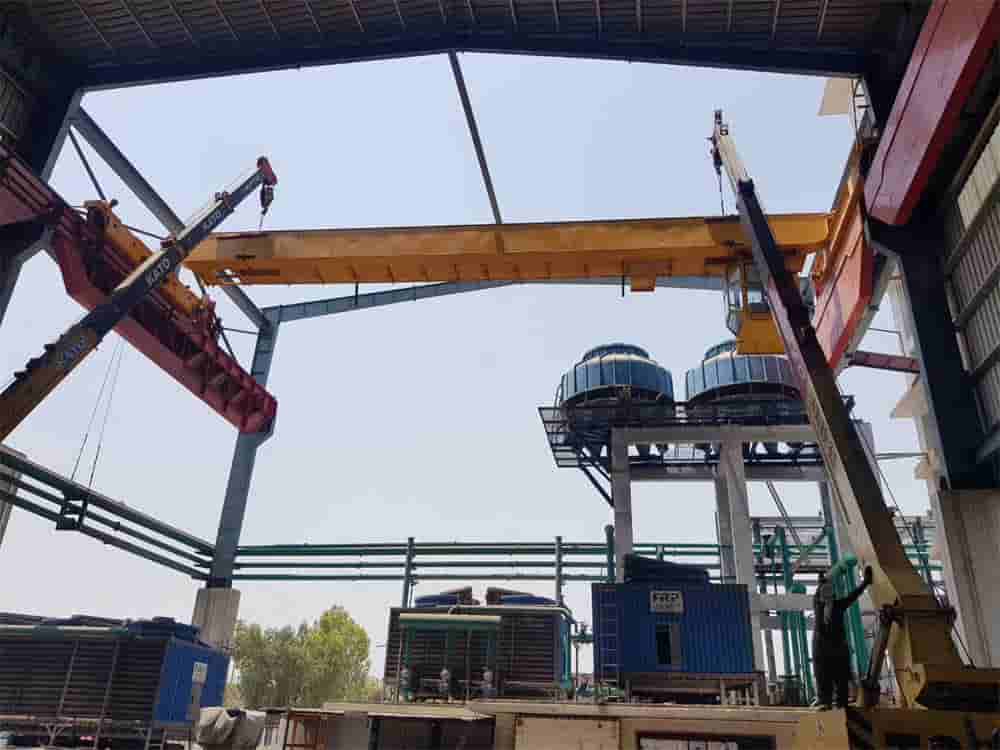
Pre-installation preparation is crucial and directly impacts the smooth progress of subsequent installation work. When using a mobile crane (such as a truck crane or tire crane) to install a bridge crane, the following basic requirements must be met: Sufficient clearance must be reserved within the plant walls or doors to allow the mobile crane to enter and exit the plant, while also ensuring that the crane’s structural components and parts can be transported into the plant. Furthermore, the boom length of the mobile crane must meet the required installation height for the main girder and trolley components of the bridge crane. The permitted lifting capacity at this height and the plant height must also be considered to ensure the boom’s operating height is adequate. These factors require a detailed assessment before installation to avoid situations such as temporarily removing the factory roof due to inconsideration.
The installation of a 3T electric single-girder overhead crane primarily involves the following key steps:
Track installation and calibration are the first and most fundamental steps in crane installation. The quality of track installation directly impacts crane performance and wheel/rail life. Tracks should be installed strictly according to the design drawings, ensuring that parameters such as gauge, elevation, straightness, and levelness meet standard requirements. Track joints must be smooth and level, with appropriate clearances, and both ends must have a good ground connection. After track installation is complete, a comprehensive calibration is required to confirm that all parameters meet the requirements before proceeding to the next step of installation.
Assembly of the main beam and end beams is the core of the installation process. The crane’s main beam is placed on parallel, horizontal tracks on the platform, and the end beams are bolted together to form a single, integrated bridge. During this process, particular attention must be paid to the cleanliness of the joints and the tightening torque of the bolts to ensure a secure and reliable connection. For split-frame cranes, on-site assembly must strictly follow the manufacturer’s assembly procedures to ensure accurate alignment and connection strength between the main beam and end beams. The installation of the trolley drive mechanism is crucial for ensuring proper crane operation. During installation, first adjust the wheel centerline, then install and adjust the reducer. Finally, connect the reducer to the motor via a coupling and drive shaft. Wheel installation must ensure that parameters such as vertical skew, horizontal skew, and alignment meet standards to prevent rail gnawing during operation. After the drive mechanism is installed, manually inspect the vehicle to ensure there are no obstructions before making electrical connections.
Electric hoists and lifting mechanisms require particular attention to safety and accuracy. Electric hoists should be installed according to the manufacturer’s installation instructions, ensuring all connections are securely fastened. Wire rope threading and winding must be correct, with the rope ends securely fastened and sufficient safety loops ensured. After installation, the hook should be inspected for rotational flexibility and the effectiveness of the anti-slip device. The position of the limiter must be precisely adjusted to ensure reliable protection at the upper and lower limits.
Electrical system installation includes the routing and connection of power cables, control circuits, and safety device circuits. Electrical equipment installation must comply with GB standards, ensuring reliable grounding, good insulation, and adequate protection. The control box should be installed in a location that is easily accessible and safe from impact. All electrical connections must be secure and reliable, especially cables in moving parts. Cables should be of sufficient length and properly suspended to prevent stress and wear.
Post-installation commissioning and acceptance are equally important. Before commissioning, check the tightness of all mechanical components and the correctness of the electrical system wiring. The commissioning process should adhere to the principles of “no-load first, then load,” “low speed first, then high speed,” and “manual first, then automatic.” During the no-load test run, check the operating direction, speed, and braking performance of each mechanism for proper operation. Load tests should be conducted in stages, testing performance at 1/4, 1/2, 3/4, and rated load, followed by a static load test at 1.25 times the rated load and a dynamic load test at 1.1 times the rated load.
During the commissioning process, special attention should be paid to the setting and verification of the following parameters:
Safety device commissioning is the final step in ensuring safe crane operation. 3T electric single-girder overhead cranes must be equipped with a weight overload protection device that automatically shuts down when overloaded. Furthermore, travel limits, emergency stop buttons, and electrical interlocks on each motion mechanism must be individually tested to ensure proper and reliable function.
After installation and commissioning are complete, professional technicians should conduct an acceptance inspection in accordance with relevant standards. This inspection includes checking documentation, appearance quality, safety devices, and performance tests. Only cranes that pass the inspection can be put into operation. It is important to emphasize that crane installation and commissioning must be performed by professionals. Users are prohibited from installing, modifying, or repairing cranes without authorization to ensure safety.
For 3T electric single-girder overhead cranes with low headroom designs, special attention must be paid to verifying headroom dimensions and checking the hoist’s operating clearance during installation to ensure they meet design requirements. European-style cranes, due to their compact structure, require more precise adjustments during installation to maximize their space advantages. Regardless of the type of crane, detailed records should be kept during the installation process; these records will serve as an important basis for future maintenance and regular inspections.
Safe operation and proper maintenance of 3T electric single-girder overhead cranes are crucial for ensuring the long-term, stable operation of the equipment, as well as for protecting operator safety and extending its service life. Strictly adhering to operating procedures and implementing an effective maintenance system can significantly reduce failure rates, improve work efficiency, and prevent accidents.
3T electric single-girder overhead cranes must be operated by personnel who have received professional training and obtained the appropriate qualification certificates. Operators must fully understand the equipment’s structural performance, operating procedures, safety regulations, and emergency response procedures before assuming their duties. There are two main ways to operate a crane: ground-based pushbutton control and remote control. Regardless of the operating method, basic safety operating procedures must be followed.
Pre-operation inspections are the first line of defense against accidents. Operators should perform the following checks before each use of the crane:
Strictly adhere to safety procedures during operation. According to the directional symbols on the pushbutton switch, press the button correctly. This controls the hoist’s movement by energizing and deenergizing the relay in the control box. Operation should be smooth to avoid sudden starts or stops that could cause the load to swing. When moving the hoist, ensure hand-eye coordination and accurately control the force and timing of the pushbutton switch to ensure the relay in the control box accurately engages and deenergizes, thus precisely controlling the hoist’s movements. During operation, always monitor the hoist’s movement and load. If any abnormality is detected, stop operation immediately to ensure the safety of personnel and equipment.
Operators must undergo professional training and be familiar with the equipment’s performance and operating procedures. They must always maintain a clear mind and avoid operating when fatigued or mentally disturbed. Furthermore, to better respond to emergencies, operators must be prepared to implement emergency measures at all times to prevent accidents.
When working with multiple personnel, ensure that each operator is clear of their responsibilities and tasks and maintains good communication and collaboration with other personnel to ensure smooth operation. Operators should also thoroughly understand the work site and ensure that there are no unauthorized personnel or obstacles in the work area to minimize safety risks.
Contact our crane specialists
Send us a message and we will get back to you as soon as possible.