In industrial manufacturing and logistics, electric single-girder overhead cranes are critical material handling equipment, whose performance and reliability directly impact production efficiency. For customized requirements in the 1-10 ton load range, technical solutions must balance structural strength and operational efficiency, and the selection process involves multi-dimensional parameter matching. Different operating environments place varying demands on the equipment’s protection level, operating speed, and control accuracy, while rising safety standards and energy efficiency indicators further drive technological iteration. From main girder material selection to drive system configuration, every technical detail must be deeply integrated with the user’s actual production scenarios to create a solution that is both economical and forward-looking.
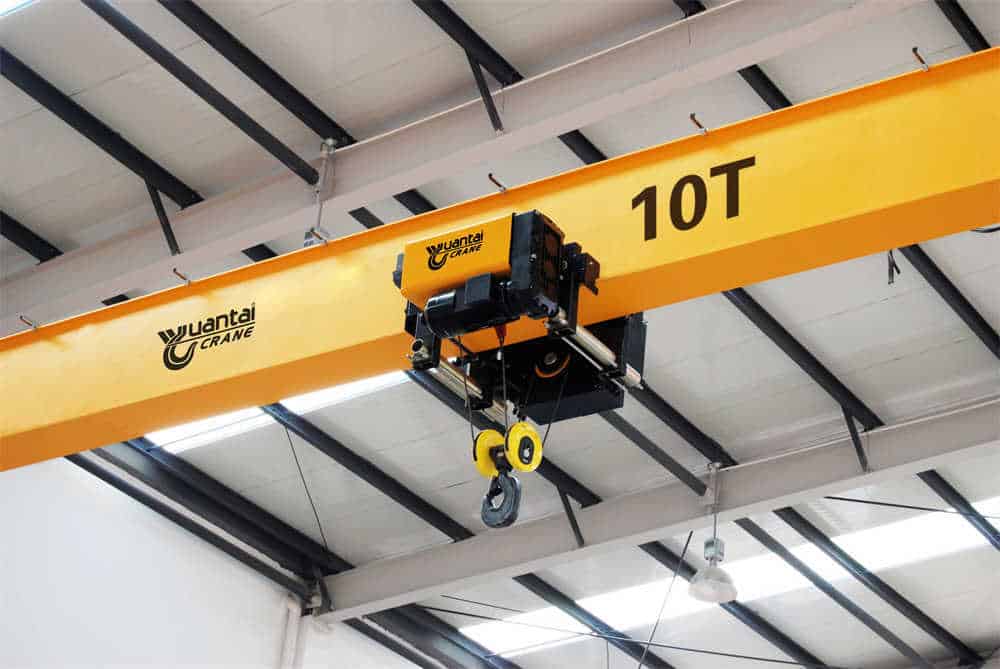
As an indispensable material handling equipment in the industrial sector, the design and implementation of customized solutions for electric single-girder overhead cranes must be based on a deep understanding and precise grasp of the actual application scenarios. First, during the project requirements analysis phase, the crane’s primary usage frequency—that is, the number of operating hours per day, month, or even year—must be carefully analyzed and clarified. This directly impacts the equipment’s load level and intensity of use. Secondly, load characteristics are also key factors in determining crane performance. These factors include maximum load capacity, the weight of frequently handled items, and the frequency of occasional heavy-load operations. These factors all influence the crane’s structural design, motor power selection, and safety device configuration. The duty cycle, which considers factors such as the length of continuous operation and the timing of planned maintenance outages, is crucial for evaluating a crane’s durability and maintenance costs.
When setting goals, it’s important not only to consider the crane’s performance indicators, such as lifting speed, operating speed, accuracy, stability, and noise, but also to consider the project’s investment budget and expected payback period to ensure a balanced balance between equipment performance and economic benefits. For example, in a manufacturing workshop, due to the rapid pace of the production line, the number of crane cycles per hour becomes a key factor in determining production efficiency, so motor power selection requires particular attention when selecting a crane. Warehousing and logistics centers, on the other hand, place even higher demands on crane speed and stability to ensure fast and accurate storage and retrieval of goods, reduce the risk of damage, and improve overall logistics efficiency.
Furthermore, when drafting requirements documents, it’s important not only to detail current operating requirements but also to proactively anticipate potential load increases or process changes resulting from future business development, allowing for sufficient margin for future crane expansion. Furthermore, given the ongoing evolution of industrial equipment and technological innovation, the future maintainability and upgrade potential of the equipment should be fully considered to ensure the effectiveness and sustainability of long-term investments.
Table: Electric single-girder bridge crane project requirements list (performance and working conditions)
| Demand Category | Key parameters | Typical value/range | Influencing factors | Industry application scenarios | Design considerations |
| Frequency of use | Daily operating hours | 8-16 hours | Equipment wear and maintenance cycle | Manufacturing and logistics centers | Motor heat dissipation design and lubrication system optimization |
| Load characteristics | Maximum load | 1-20 ton | Structural strength and safety factor | Heavy industry, ports | Main beam cross-section size and wire rope selection |
| Duty cycle | Continuous operation time | 4-8 hours non-stop | Motor temperature rise and brake performance | Automobile manufacturing, steel mills | Insulation grade, thermal protection device |
| Speed requirements | Lifting speed | 0.5-15 m/min | Production efficiency, energy consumption | Warehousing and Logistics | Frequency conversion control, acceleration curve |
| Accuracy requirements | Positioning error | ±5-50 mm | Sensor configuration, control system | Precision assembly | Encoder resolution, anti-sway algorithm |
| Environmental conditions | Temperature range | -20℃ to +50℃ | Material properties, electrical component life | Outdoor work, cold storage | Protection grade (IP), low temperature lubricant |
| Scalability requirements | Reserve for future load growth | 20%-50% margin | Structural redundancy, foundation bearing | Expansion factory | Main beam stiffness calculation and track load-bearing design |
Table: Comparison of economic efficiency and technical indicators of electric single-girder bridge cranes
| Indicator Type | Basic Configuration | High-performance configuration | Cost difference (%) | Life cycle (years) | Applicable scenario cases |
| Motor power | 7.5kW | 15kW | +40 | 8 vs 12 | High-frequency handling (automobile production line) |
| Control method | Relay control | Variable frequency vector control | +120 | 5 vs 10 | Precision positioning (electronics warehousing) |
| Protection level | IP54 | IP65 | +25 | 10 vs 15 | Dust environment (cement plant) |
| Main beam material | Q235B steel | High-strength alloy steel | +60 | 12 vs 20 | Heavy load condition (shipyard) |
| Track Type | P24 Light Rail | QU80 heavy rail | +180 | 7 vs 15 | Large-span workshop (aircraft manufacturing) |
| Safety devices | Basic limit switch | Laser collision avoidance + load monitoring | +200 | 6 vs 10 | Human-machine mixed operation area (assembly workshop) |
| Maintenance cycle | 500 hours/time | 1000 hours/time | -30 | _ | Continuous production environment (chemical plant) |
When determining a crane’s lifting capacity, the maximum load weight and potential additional loads must be fully considered. Taking into account the weight variations of objects under different operating conditions and the potential effects of dynamic loads, the 1-10 ton range should be divided into multiple load classes to ensure the crane can meet lifting requirements in various operating conditions. When selecting the dynamic load factor, reference should be made to the relevant provisions of the national recommended standard GB/T 3811, “Crane Design Specifications.” For typical industrial environments, the dynamic load factor is generally between 1.1 and 1.3 to ensure the crane’s safety and stability under dynamic conditions. Lifting height is another key parameter and should be determined based on the actual clearance dimensions of the factory building. Typical configurations generally range from 6 to 18 meters. For special operating conditions, such as those requiring the lifting of higher or lower objects, special consideration should be given to the multiple wire rope windings and compensation mechanisms to ensure the crane can provide sufficient lifting height during the lift.
For special working environments, such as corrosive environments, high-temperature workshops, or low-temperature environments, appropriate measures must be taken to ensure the crane’s normal operation and service life. In corrosive environments, to protect the crane from corrosion and damage, H-beams can be used as structural materials and treated with epoxy zinc-rich primer for corrosion protection, ensuring a minimum IP54 protection level. In high-temperature workshops, heat-resistant cables and insulation are required to prevent overheating and performance degradation or damage to electrical components. In low-temperature environments, a gear oil heating system is required to prevent gear oil from solidifying due to low temperatures. Furthermore, for environments with explosive hazards, explosion-proof motors and electrical components that meet ATEX or IECEx certification requirements must be used to ensure production safety.
To ensure the crane’s safety performance, a series of measures are required. A dual braking system is standard, with the main brake using an electromagnetic disc and the auxiliary brake using a hydraulic push rod to improve braking efficiency and reliability. The hoisting mechanism must be equipped with an overload limiter and height limiter to prevent accidents caused by overloading and hoisting objects that are too high. The operating mechanism should also be equipped with an audible and visual alarm to alert nearby personnel to safety. Furthermore, the electrical system should have an emergency stop circuit with a response time of no more than 0.5 seconds to quickly halt operation in an emergency. These measures together constitute a key guarantee for crane safety performance.
When evaluating the suitability of a crane model, in addition to considering the equipment’s purchase cost, it’s also necessary to comprehensively calculate its lifecycle costs. This includes installation and commissioning costs, energy consumption, and maintenance costs. For example, while variable frequency control requires a higher initial investment, it can significantly reduce electricity costs over the long term. Similarly, optimizing structural components can reduce deadweight and lower the cost of building load-bearing modifications. Therefore, comprehensive trade-offs and cost-benefit analysis are necessary during the technology selection process to achieve the optimal choice.
Box-beam structures, with their superior load-bearing capacity and exceptional rigidity, are the preferred design option for heavy cranes over 6 tons. This structural form ensures stable performance even under extreme operating conditions, such as heavy lifting and frequent starts and stops. Single-beam designs offer a maximum span of 22.5 meters, significantly improving operational efficiency. Truss-beam structures, with their light weight and compact footprint, offer significant advantages in applications with height restrictions. To comply with international standards, such as the European DIN 15018 specification, stringent beam deflection requirements are imposed, stipulating that it must not exceed 1/800 of the span. A pre-cambering process is used to compensate for any deformation, ensuring the accuracy and stability of the main beam. Furthermore, the end beams are cast in a one-piece process, ensuring their strength and durability. The wheel treads have a hardness of HRC45-50, meeting high-strength requirements while ensuring excellent wear resistance over long-term use.
The drive system configuration is carefully designed to meet varying power requirements. For low-power applications below 7.5kW, a highly efficient and stable conical rotor motor is selected, characterized by its compact size, high starting torque, and high operating efficiency. For high-power applications, a three-phase asynchronous motor with eddy current braking is used to ensure stability and safety during heavy-load starting and braking. This motor not only provides strong traction but also effectively suppresses the impact of falling loads on the mechanical structure. For the operating mechanism, a variable frequency speed control solution is recommended. This advanced frequency conversion technology enables a wide speed adjustment range (1:10) and guarantees positioning accuracy within ±5mm, significantly enhancing the crane’s intelligence and operating efficiency. The hoisting mechanism is equipped with a planetary reducer, achieving a transmission efficiency of up to 94%, minimizing energy loss and promoting energy-saving and environmentally friendly operation. Furthermore, noise levels are kept below 75dB, ensuring a comfortable working environment for operators.
As a core component, the PLC control system not only features a standardized Profibus-DP communication interface but also supports efficient data exchange with a host computer, enabling remote monitoring and intelligent management. In remote control mode, it utilizes advanced 2.4GHz frequency-hopping communication technology, offering strong anti-interference capabilities and stable signal transmission performance, fully complying with the requirements of the IEC 60204-32 international standard. Furthermore, the powerful intelligent diagnostic system not only records up to 2,000 fault messages but also supports vibration spectrum analysis, providing robust data support for equipment maintenance. Hoisting Mechanism Optimization
For hoisting mechanism optimization, the wire rope utilizes an advanced 6×36WS+IWRC structure. This structure offers an extremely high safety factor (no less than 5), ensuring sufficient strength and durability even under extreme operating conditions. The hook is made of DG20CrMo alloy steel, which undergoes a quenching and tempering process after forging, significantly enhancing its tensile strength and wear resistance. The pulley block utilizes a nylon bushing design, which reduces weight by up to 40% compared to traditional bronze bushings, reducing energy consumption and extending service life. Furthermore, the pulley block features a lubrication-free cycle of over 10,000 hours, further reducing maintenance costs and downtime, making the entire lifting system more economical, efficient, and reliable.
At the hardware level, a modular design concept is adopted, designing key components such as motors, reducers, and brakes as independent units with standard interfaces to facilitate maintenance, upgrades, and fault isolation. This standardized interface design ensures seamless connectivity and efficient integration between hardware components. At the control level, motion control and safety monitoring functions are separated and interconnected via the CAN bus, ensuring real-time and reliable information transmission. This design enables the system to quickly respond to various commands during operation and monitor device status in real time, thereby promptly identifying and addressing potential issues. At the data level, a digital twin model of the device is established, mapping physical state parameters in real time. Real-time data collection and updating of device status information enable synchronization between the physical device and the digital twin.
To achieve modularity, scalability, and maintainability of the system, we separate functions such as condition monitoring, fault diagnosis, and energy efficiency management into independent service modules. Each service module can be independently deployed, upgraded, and maintained, improving system scalability and availability. To ensure system openness and integrability, a RESTful API is used to support third-party system integration. This interface design approach establishes unified standards and specifications, ensuring smooth communication and data exchange between different systems. To standardize and normalize data, we use JSON Schema as the data exchange format. This format is easy to read and understand, highly readable, and ensures accurate and reliable data exchange between different systems. To enable rapid system deployment and upgrades, we employ a containerized deployment solution. This packaged application and its runtime environment together, enabling rapid deployment and isolation, reducing system upgrade time to within two hours.
A time-series database was selected to process the massive amount of sampled data from sensors. Its unique compression technology can compress data to 1/10th of its original size, significantly improving data processing efficiency and reducing storage costs. A relational database stores device inventory information and maintenance records, ensuring data integrity and consistency. It also supports complex SQL queries, enabling users to gain multi-dimensional data insights. Furthermore, edge computing nodes were introduced to perform local data pre-processing, significantly reducing the amount of data transmitted to the cloud. According to statistics, this reduced cloud transmission volume by 60%, further optimizing system performance and reducing communication costs.
To ensure the safety of the equipment during operation, we have implemented a number of protective measures. First, the opening dimensions of the mechanical guard strictly adhere to the ISO 13857 safety distance standard, effectively preventing the risk of mechanical injury from operator error or accidental contact. Second, the electrical cabinet is equipped with an advanced arc fault protection device. In the event of a short circuit, this device instantly activates and disconnects the faulty circuit within 50ms. Its short-circuit breaking capacity is up to 50kA, greatly ensuring the stability and safety of the electrical system. Furthermore, to prevent potential collisions during operation, we have implemented an anti-collision system based on laser scanning technology. Its detection range can be flexibly adjusted between 0.2 and 8 meters according to actual needs, ensuring that the equipment can stop or avoid obstacles in a timely manner.
In the control system design, we use a two-out-of-two voting mechanism for critical control loops. This means that the corresponding action is executed only when two independent detection points simultaneously issue the same command. This design reduces fault detection time to less than 100ms, significantly improving system reliability and safety. To ensure production continuity, a hot backup function is implemented between the master and slave PLCs (Programmable Logic Controllers). Switchover time is strictly controlled within one scan cycle, ensuring that if the master PLC fails, the backup PLC can immediately take over control and maintain stable production line operation. Furthermore, an emergency power supply system is equipped to provide at least 15 minutes of safe operation time for critical equipment in the event of an emergency, fully complying with and exceeding the requirements of EN 50171.
For equipment monitoring, we utilize an advanced distributed fiber-optic temperature measurement system for real-time monitoring of motor winding conditions. With a temperature accuracy of ±1°C, this system effectively prevents safety incidents caused by overheating. Furthermore, a vibration sensor network continuously monitors equipment vibration at a sampling frequency of up to 10kHz, strictly adhering to the ISO 10816-3 international standard to ensure that equipment operating conditions remain within controllable limits. To ensure the integrity and traceability of equipment operation data, we use WORM (Write Once Read Many) technology to store and manage log information, ensuring that all operation data cannot be tampered with or deleted without authorization, providing detailed and reliable first-hand information for subsequent fault diagnosis, performance analysis, and maintenance work.
During the installation process, track straightness deviation is a critical parameter. The allowable deviation must not exceed 2mm per 10 meters. Furthermore, misalignment at joints must be strictly controlled to less than 0.5mm to ensure smooth operation and safety of the equipment. After installation, a no-load test run will be conducted to thoroughly test the smooth operation of each mechanism and the accurate response of the limit switches at each actuation point. During the load test phase, the equipment will be loaded at 110% of the rated load for one hour. During this time, the static deflection of the main beam will be accurately measured to verify that its load-bearing capacity meets the design requirements.
For operators, training covers accurate hand signal recognition and mastery of emergency operation procedures. Maintenance personnel must be familiar with the maintenance cycles and replacement standards for various components, such as the regular grease replacement cycle and how to determine whether a wire rope has reached the end of its life. Furthermore, for electrical engineers, training also includes PLC program backup and recovery techniques and fine-tuning inverter parameters.
To ensure system stability and safety, potential technical risks must be identified and assessed. Structural resonance risk can be mitigated through modal analysis, ensuring that the system’s natural frequency is at least 20% away from the operating frequency. This can be achieved through optimized structural design and the selection of appropriate materials and processes. To address electrical interference, double-shielded cables should be used, with a grounding resistance of less than 4Ω, to effectively suppress electromagnetic interference and ensure stable system operation. For software systems, failure mode analysis should be conducted, covering 100% of safety-related functions to ensure timely response measures in the event of a failure.
To address potential risks and failures, appropriate response strategies and plans must be developed. For example, in the event of an overload, the system should be able to automatically switch to a safe mode and limit the operating speed to 50% of the rated speed to prevent equipment damage or safety incidents. In the event of a network outage, the local controller should be able to maintain basic functions to ensure continuous system operation. In addition, it is necessary to establish a reserve list of key spare parts, including wire ropes, contactors and other wearing parts, and ensure that the supply cycle is controlled within 72 hours so that spare parts can be replaced in time when they are damaged or worn.
Contact our crane specialists
Send us a message and we will get back to you as soon as possible.