Home → Hoist → Minimum Turning Radius of Electric Hoists: A Comprehensive Guide
Minimum Turning Radius of Electric Hoists: A Comprehensive Guide
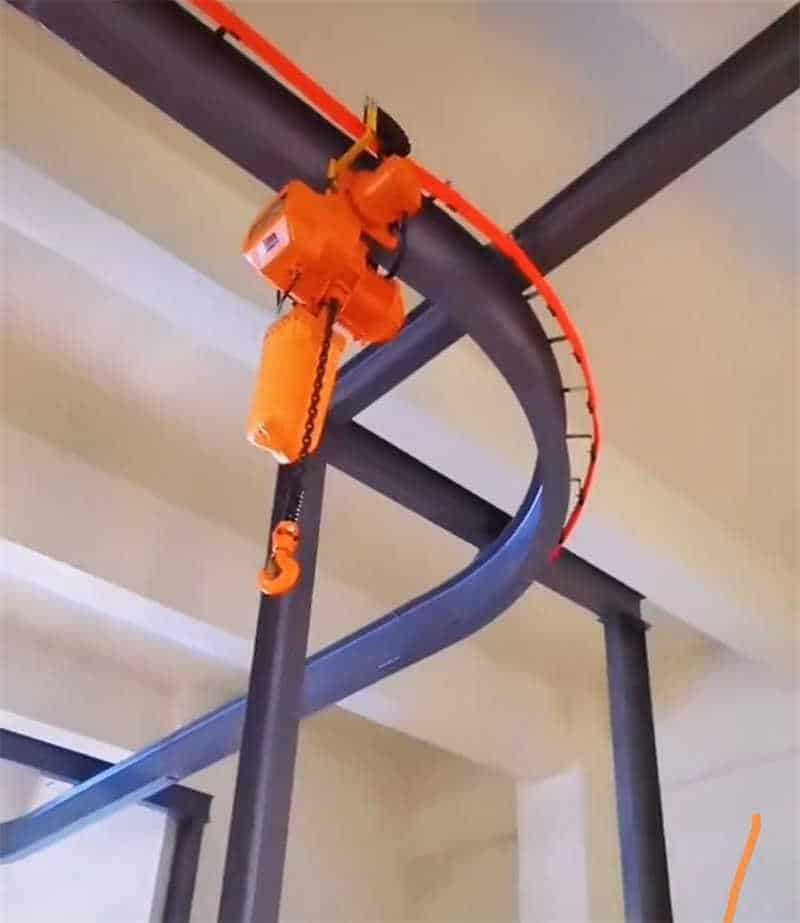
Electric hoists are essential lifting devices widely used in various industrial and construction settings. One critical parameter to consider when selecting and operating an electric hoist is its minimum turning radius, which determines the hoist’s maneuverability and suitability for specific work environments. This article provides an in-depth analysis of the minimum turning radius of electric hoists based on different models and lifting capacities.
General Minimum Turning Radius Ranges
The minimum turning radius of electric hoists varies significantly depending on their lifting capacity and design. Here’s a breakdown of typical ranges for common hoist models:
0.5-ton Electric Hoists: These compact hoists usually have a minimum turning radius of approximately 1.5 meters. Their small size makes them suitable for tight spaces, but their lifting capacity is limited.
1-ton Electric Hoists: The minimum turning radius for 1-ton hoists ranges from 1.5 meters to 4 meters, depending on the track design and operational requirements. This flexibility allows them to be used in a variety of settings, from small workshops to medium-sized construction sites.
2-ton to 3-ton Electric Hoists: These hoists typically require a minimum turning radius of 2 meters to 4 meters. Their increased lifting capacity comes with a slightly larger footprint, but they still offer reasonable maneuverability in most industrial environments.
5-ton Electric Hoists: For 5-ton hoists, the minimum turning radius generally falls between 2.5 meters and 5 meters. These hoists are designed for heavier loads and may require more space to operate safely.
10-ton and Above Electric Hoists (e.g., 10-ton, 16-ton, 20-ton): Larger hoists with higher lifting capacities usually have a minimum turning radius of 2.5 meters to 7.5 meters or more. Their size and weight necessitate ample space for turning and maneuvering.
Factors Influencing Minimum Turning Radius
Several factors contribute to the variation in minimum turning radius among electric hoists:
Lifting Capacity: As the lifting capacity increases, the hoist’s physical dimensions and weight also grow, requiring a larger turning radius to ensure stable and safe operation.
Track Design: The curvature, material, and installation method of the track significantly impact the hoist’s turning ability. For example, U-shaped tracks and I-beam tracks may have different minimum turning radius requirements.
Operational Environment: In confined spaces or scenarios demanding high flexibility, selecting a hoist with a smaller turning radius becomes crucial. Conversely, in open areas with fewer spatial constraints, a larger turning radius may be acceptable.
Specialized Designs for Enhanced Maneuverability
To address the need for greater maneuverability in tight spaces, some manufacturers have developed electric hoists with innovative designs that minimize the turning radius:
Ultra-Compact Electric Hoists: By incorporating advanced rotating mechanisms and horizontal guide wheels, certain manufacturers have achieved minimum turning radii as small as 200 millimeters to 1000 millimeters. These hoists are ideal for highly restricted environments, such as narrow aisles in warehouses or compact construction sites. However, it’s essential to ensure that the hoist’s lifting capacity aligns with the specific requirements of the application.
Conclusion
Understanding the minimum turning radius of electric hoists is vital for selecting the right equipment for your project. By considering factors such as lifting capacity, track design, and operational environment, you can choose a hoist that offers optimal maneuverability and safety. Additionally, exploring specialized designs with reduced turning radii can open up new possibilities for using electric hoists in challenging spaces. Always consult with a qualified professional to ensure that the selected hoist meets all relevant safety standards and operational requirements.
Contact our crane specialists
Send us a message and we will get back to you as soon as possible.