As essential equipment in modern industry, the safety performance of lifting machinery is directly linked to production efficiency and personnel safety. Cranes play a critical role in lifting and moving heavy objects in various industrial production, construction, and logistics scenarios. However, with increasing frequency of use and the increasing complexity of operating environments, safety issues surrounding lifting machinery are becoming increasingly prominent. To ensure the stable operation of lifting machinery in various operations and prevent potential safety risks, it is crucial to explore its general safety requirements. These requirements cover a wide range of aspects, from design and manufacturing to installation and commissioning, operation, operator qualifications, operating environment, safety device configuration, and maintenance, forming a comprehensive framework for lifting machinery safety management.
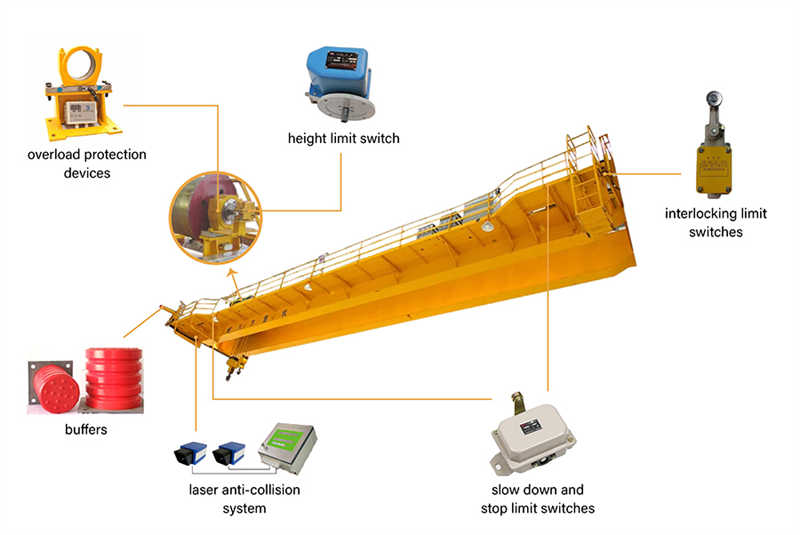
Safety management of lifting machinery is a systematic process that begins with the design and manufacturing stages and continues throughout the installation, commissioning, and operational lifecycle.
During the design and manufacturing stages, lifting machinery should comply with relevant national and industry safety standards to ensure structural strength, stability, and durability. Detailed mechanical analysis is required during the design process to ensure that safety requirements are met under all operating conditions. At the same time, material selection and processing quality must be strictly controlled to avoid safety hazards caused by material defects or improper processing. Furthermore, human factors must be considered to ensure easy, safe, and reliable operation.
Installation and commissioning are critical steps in the safe use of lifting machinery. During installation, ensure that all equipment components are correctly installed, securely connected, and pre-tightened as necessary. Furthermore, the equipment’s accuracy and stability must be rigorously inspected to ensure it remains stable during operation. During the commissioning phase, comprehensive testing of all equipment performance indicators, such as lifting height, operating speed, and braking performance, is required to ensure that all parameters meet design requirements. Furthermore, necessary no-load and loaded tests must be conducted to verify the equipment’s actual operating performance.
During operation, lifting machinery must adhere to strict safety operating procedures. Operators must be familiar with the equipment’s performance, understand safety precautions, and conduct necessary inspections before operation. Overloading is strictly prohibited to prevent equipment damage or personal injury caused by excessive loads. Furthermore, the equipment’s operating status must be monitored, and any abnormalities detected must be promptly shut down and inspected. Regarding maintenance, equipment should be regularly inspected and maintained to ensure performance and safety.
In short, the safety management of lifting machinery requires consideration and control from multiple aspects, including design and manufacturing, installation and commissioning, and operational processes. Only by strictly adhering to relevant safety standards and operating procedures can the safety and reliability of lifting machinery be ensured.
The quality and skills of operators directly impact the safe use of cranes. Therefore, clarifying and standardizing the requirements for crane operators is crucial for ensuring the efficient and safe operation of equipment.
Operators must undergo systematic training at a qualified professional training institution and successfully pass the corresponding qualification certification examination. This process ensures that operators have a comprehensive understanding of the basic theoretical knowledge of cranes, including but not limited to mechanical principles, electrical control, hydraulic transmission, and safety protection techniques; master operational skills such as driving, lifting, and commanding; and thoroughly understand and adhere to safety regulations, clearly understanding the operating requirements and taboos under various operating conditions. Only after undergoing rigorous assessment and obtaining a valid operator qualification certificate can operators be certified and engage in crane operation independently or legally.
Safety training is an important way to enhance operators’ safety awareness and operational skills. Training content should include safe operating procedures for cranes, accident case analysis, and emergency response methods. Through training, operators can master safe operating skills and improve their ability to respond to emergencies. Safety training also helps operators better understand safety regulations, enhance safety awareness, and reduce the occurrence of safety accidents.
During daily operations, operators must strictly adhere to safety operating procedures and must not arbitrarily change equipment parameters or perform any other illegal operations. Operators must also remain focused and observe changes in the equipment’s operating status and surrounding environment. If any abnormalities are detected, operations must be stopped immediately and appropriate safety measures implemented. Furthermore, maintaining good communication with relevant personnel is crucial. Operators must be able to clearly and accurately convey instructions and information, and collaborate closely with other personnel to ensure the smooth operation of the entire operation.
The operating environment of lifting machinery has a decisive impact on its safe use, efficient operation, and service life. To ensure that lifting machinery operates in optimal conditions, the following aspects require special attention:
The operating site should be flat, solid, and free of potholes, waterlogging, and other safety hazards. This means the surface should be smooth and level to ensure smooth and stable operation of the lifting machinery, preventing damage to the equipment or personal injury from bumps. The load-bearing capacity of the site is also a key consideration. Lifting machinery generates a certain amount of pressure during operation. If the site’s load-bearing capacity is insufficient, it may collapse or deform, causing damage to the equipment or casualties. Therefore, it is imperative to ensure that the site can withstand the weight and pressure of the lifting machinery to avoid any potential safety hazards. Furthermore, the operating area must be properly planned to ensure a safe distance between the equipment and personnel. During operation, personnel must be prevented from entering the operating area without permission to prevent accidents.
Good lighting conditions are crucial for the safe operation of lifting machinery. The work area should be adequately illuminated, such as high-mast lights and floodlights, to ensure operators can clearly observe the equipment’s operating status and changes in the surrounding environment. This helps operators better identify potential obstacles and hazards, enabling them to make accurate decisions and operate accurately. Furthermore, prominent safety signs at key locations are essential. These signs should be clear and easy to understand, drawing the operator’s attention. These signs may include instructions for using the equipment, safety precautions, and emergency procedures, providing operators with important safety tips and guidance.
During operation, lifting machinery may be affected by the surrounding environment. Therefore, necessary monitoring and protection of the surrounding environment are necessary. For example, in strong winds, windbreaks should be implemented to ensure the stability of the equipment. When nearby high-voltage power lines or flammable or explosive materials, appropriate protective measures must be implemented to prevent accidents caused by equipment failure or improper operation. These measures include maintaining a safe distance and installing protective equipment to prevent more serious consequences from accidents.
Safety devices play a vital role in lifting machinery. They are the core guarantee for ensuring that lifting machinery remains in a safe state during operation, preventing accidents and protecting personnel and equipment. The following are some requirements for lifting machinery safety devices:
Limiting devices are essential components of lifting machinery. Their primary function is to limit the range of motion of the lifting machinery, preventing it from exceeding the set operating range. This prevents excessive movement from causing equipment damage, personal injury, or accidents. For example, in a bridge crane, limiting devices may include travel limit switches and buffers. These devices require precise commissioning and configuration to ensure they function accurately and flawlessly during operation. Braking devices quickly and effectively stop the equipment when it needs to stop, preventing unexpected situations or operator errors from preventing it from stopping in time. The performance of braking devices is directly related to the safety of equipment and personnel, so their reliability and stability are crucial. To ensure the reliable performance of limiting devices and braking devices, they require rigorous testing and verification. Testing may include checking and adjusting the device’s accuracy, sensitivity, and stability, as well as actual measurement and verification of the equipment’s trajectory and braking distance.
Anti-tipping devices are specifically designed to prevent lifting machinery from losing balance and tipping due to various reasons during operation. These devices may include mechanical stabilizers, hydraulic stabilizers, or electronic stability control systems. The specific type and structure vary depending on the type of lifting machinery and the operating environment. Windscreens are designed to mitigate the effects of strong winds on the lifting machinery and maintain its stability. In strong winds, windscreens can reduce the force exerted on the equipment, preventing it from being blown over or over. To ensure the effectiveness of anti-tipping and windscreens, they must be set up and debugged according to the actual conditions of the equipment. This includes careful consideration and analysis of factors such as the equipment’s center of gravity, operating range, and wind speed to ensure that the devices function effectively at critical moments and protect the equipment and personnel. Furthermore, the setup and debugging of these devices must comply with relevant mechanical engineering and safety standards to ensure they meet industry regulations and legal requirements.
Guardians are a crucial component of lifting machinery safety. Their primary function is to protect operators from injury from moving parts. This includes various types of baffles, covers, railings, and more, the specific settings of which will vary depending on the structure and operation of the equipment. For example, bridge cranes may have guardrails, protective covers, and other devices that can effectively prevent accidents caused by operator error or equipment failure. An emergency stop device is a device that can quickly cut off the power supply to the equipment or take other measures to stop the equipment in an emergency. This device exists to enable swift action in the event of an emergency to prevent further escalation of the accident. In bridge cranes, the emergency stop button is usually located in an easily accessible location so that it can be quickly activated when needed. The installation and commissioning of these devices must strictly comply with relevant mechanical engineering and safety standards to ensure that they can function at critical moments and protect the safety of personnel and equipment. At the same time, these devices also need to be regularly inspected and maintained to ensure that they are in good working condition.
Maintenance is key to ensuring the long-term safe, stable, and efficient operation of lifting machinery.
Daily maintenance and inspection are fundamental to preventing failures and ensuring the safe operation of lifting machinery. Operators should conduct necessary inspections of the equipment before and after each operation, such as observing the wear of various components, checking the tightness of connectors, and testing the integrity of the hydraulic and electrical systems. Operators should also regularly clean the equipment from dirt and debris, such as dust and oil, to ensure it is clean and tidy, maintaining good condition.
During daily use, it is also important to carefully observe the equipment’s operating status. If any abnormality occurs, the equipment should be stopped and inspected immediately. Resolving the problem before resuming operation. Potential faults discovered should be repaired and addressed promptly to prevent them from escalating or worsening.
Regular maintenance and inspection are important means to ensure the long-term stable operation of lifting machinery. Maintenance personnel should develop a detailed maintenance plan based on the actual conditions of the equipment and perform necessary maintenance and inspections according to the plan. For example, lubrication of lubricated parts should be performed regularly, wearing parts should be replaced, and the equipment should be inspected and debugged regularly. Regular maintenance and servicing can promptly identify and eliminate potential equipment failures, extending the equipment’s service life.
During the maintenance process, safety precautions must be implemented to ensure safe operation. Furthermore, the equipment’s operating status must be assessed and recorded to provide a reference for subsequent maintenance work.
Maintenance record and file management are key to ensuring the orderly maintenance of lifting machinery. Maintenance personnel must carefully record the time, content, and results of each maintenance session and establish a corresponding file management system. Reviewing maintenance records and files allows users to understand the equipment’s maintenance history and current status, providing a reference for subsequent maintenance work. This also provides strong support for equipment troubleshooting and repairs.
During the record-keeping and maintenance process, records must be kept accurate and complete, and no alterations or omissions should be made. Any discovered failures and problems should be promptly recorded and addressed to prevent recurrence. Effective record and file management can improve the efficiency and quality of maintenance work and ensure the safe operation of lifting machinery.
Contact our crane specialists
Send us a message and we will get back to you as soon as possible.