At Dongqi Crane, the challenges and conversations we shared with our global partners throughout 2025 painted a clear picture of the modern industrial landscape. Whether in discussions with maintenance teams at automotive plants about reducing downtime, with engineers at wind turbine assembly sites about precision handling, or with logistics managers seeking to optimize warehouse flow, a common theme emerged: the demand for lifting solutions had evolved beyond mere capacity. It became a focused inquiry into reliability, safety, adaptability, and the total cost of operation over time.
We observed that the critical question was no longer simply if a hoist could lift a load, but how well it could integrate into increasingly sophisticated workflows, endure specific environmental demands, and contribute to a broader safety culture. The decisions made in selecting equipment resonated deeply through daily productivity, long-term planning, and operational resilience.
The following reflects our perspective, grounded in a year of collaboration across diverse sectors. It consolidates our observations on how different capacities of electric chain hoists were applied, which configurations delivered sustained value under specific conditions, and how key technical parameters interacted with practical needs. Our intent is to share this synthesized view, offering a framework that may inform your own evaluation process as you assess requirements against the available solutions in the market.
The industrial environment of 2025 presented a distinct set of dynamics that directly shaped demand and expectations for lifting equipment. Across the regions and sectors we engaged with, from Southeast Asia’s expanding manufacturing hubs to infrastructure renewal projects in North America, three interconnected forces were consistently at play, creating both challenges and opportunities for operational managers.
First was the pursuit of operational resilience. Following years of global supply chain re-evaluation, many businesses prioritized building robustness into their core operations. This translated into a heightened focus on equipment reliability and reduced lifecycle costs. The question shifted from finding the lowest initial purchase price to identifying solutions that promised minimal unplanned downtime, easier maintenance access, and longer service intervals. We saw increased interest in designs that facilitated quick component inspection and replacement, as minimizing production interruptions became a key metric of success.
Second was the nuanced integration of automation. While full-scale, lights-out factories captured headlines, the more widespread trend we observed was the strategic adoption of semi-automated processes. In these settings, human expertise remained central, but was augmented by equipment offering greater control, precision, and repeatability. This drove demand for features like variable speed control through inverters, precise positioning capabilities, and compatibility with remote control systems. The goal was not to replace the operator, but to empower them with tools that enhanced both safety and output consistency, particularly in complex assembly or precision handling tasks.
Third was the intensified focus on tailored solutions. Standard, off-the-shelf products continued to serve many applications well, but we noted a significant rise in requests for configurations addressing specific environmental or operational constraints. These included hoists built for outdoor use in corrosive coastal atmospheres, low-headroom designs for retrofitting into existing facilities with space limitations, and units certified for use in potentially explosive atmospheres. This trend underscored a broader industry move towards viewing equipment not as a standalone purchase, but as an integrated component of a larger, site-specific system.
Within this context, the role of the electric chain hoist evolved. Its inherent advantages—durability in diverse environments, relatively straightforward maintenance, and a compact footprint—aligned well with these market drivers. However, meeting the heightened expectations of 2025 required a product line with clear differentiation.
At Dongqi Crane, our positioning was developed in response to these observed needs. We structured our electric chain hoist range not as a one-size-fits-all offering, but as a spectrum of solutions calibrated for different core challenges:
This chapter’s overview of the 2025 landscape highlights that successful product selection began with a clear understanding of these underlying operational currents. The following data and analysis delve into how these broader trends manifested in tangible application patterns and technical preferences across our product line.
In 2025, the sales distribution of Dongqi Crane’s electric chain hoists did not merely reflect random customer preference; it revealed a clear, logical map of how different industries prioritize reliability, efficiency, and precision at varying scales of operation. The demand patterns we observed can be broadly segmented into three distinct tiers, each defined by a primary operational focus and a corresponding set of technical expectations.
Products in the 1 to 5-ton range consistently formed the backbone of our sales volume. This segment’s dominance is a direct reflection of its role as the essential utility in diverse operational environments. These hoists are the workhorses that maintain the daily rhythm of material flow, where adaptability and consistent performance are valued above specialized capabilities.
Within our product lineup, the 10-ton electric chain hoist occupies a unique and pivotal position. It serves as the definitive bridge between standardized, high-volume models and the custom-engineered solutions required for heavy industry.
In 2025, this model emerged as a linchpin for sectors where lifting operations are integral to core processes but must also adhere to strict schedules and safety protocols. Its applications are typically found in steel fabrication plants, larger-scale construction projects, and the logistics of energy sector components. The demand for this capacity indicates operations that have outgrown general-purpose equipment but are not yet in the domain of continuous, extreme-duty cycles. The pricing for this model reflects its enhanced construction, with a starting point significantly higher than the 5-ton category, acknowledging the step-change in engineering required for reliable performance at this scale.
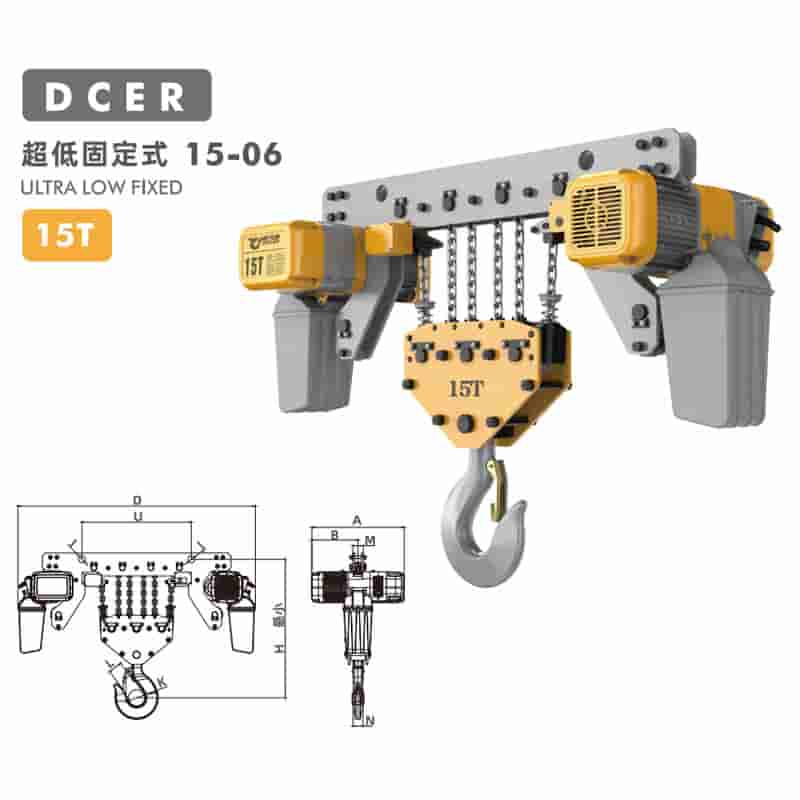
Hoists in the 15/16-ton and 20-ton capacity range represent the specialized tier of the market. Sales in this category are characterized not by volume, but by the high degree of customization and technical consultation involved in each project. These are not off-the-shelf products; they are engineered components of larger systems.
Beyond the raw capacity breakdown, the 2025 sales analysis points to two evolving customer priorities that cut across all tonnage categories:
| Core Capacity Range | Primary Market Role & Applications | 2025 Price Reference (USD) | Key Selection Drivers |
|---|---|---|---|
| 1 – 5 Ton | Foundational utility for daily material handling. Workshops, assembly, warehousing, light construction. | $200 – $2,000 | Versatility, reliability, cost-effectiveness for high-frequency use. |
| 10 Ton | Pivotal solution for core industrial processes. Steel fabrication, heavy construction, energy logistics. | $1,500 – $3,500 | Robust performance for significant loads, bridge to heavy-duty applications. |
| 15/16 – 20 Ton | Engineered solution for critical, high-value lifts. Shipbuilding, major infrastructure, power plant maintenance. | $2,000 – $6,500 | Customization (speed control, safety features), integration with heavy crane systems, total cost of ownership. |
In summary, the 2025 sales data clearly outlines a three-tiered structure for the electric chain hoist market: general-purpose, core industrial needs, and specialized customization. Each tier of equipment corresponds to different production scenarios and decision-making logics, while a common trend runs through them: an increasing emphasis on precise control and in-depth configuration. This provides a clear market context for our subsequent discussion of specific technical parameters and pricing structures.
The final procurement cost of an electric chain hoist is influenced by multiple configurable technical parameters, with “lifting height” being one of the most critical variables directly affecting price and design. The following information, based on the standard configurations of Dongqi products in 2025 and prevailing market pricing patterns, organizes the indicative price ranges for different tonnages across various lifting height ranges. These prices typically include the main unit, standard lifting chain, control device (such as a pendant push-button station), and other basic components, but do not cover costs for items like trolleys, rails, conductor bars, or special custom features. All prices are estimates based on the market conditions of that year, and actual quotations are subject to specific technical agreements.
This series emphasizes versatility and cost-effectiveness, typically supporting voltages like 380V/400V/415V, 50Hz, three-phase AC power.
This series employs more robust mechanical and electrical designs to meet the demands of heavy loads and higher duty cycles.
Important Note: The prices mentioned above are subject to significant variation due to the following factors:
While referencing price ranges, equipment selection requires a comprehensive technical assessment to ensure it meets specific operational needs, environmental conditions, and safety regulations.
Looking back at 2025, Dongqi’s electric chain hoist product line effectively addressed diverse market demands through clear hierarchical positioning. The data indicates that small- to medium-tonnage products formed the foundation ensuring market coverage and user base, while high-tech, high-value-added large-tonnage products were key drivers of brand value and technological innovation.
Looking ahead to subsequent years, several ongoing development directions are anticipated to continue influencing this sector: first, intelligent integration, involving equipment status monitoring, predictive maintenance, and connectivity with factory management systems through sensors and data interfaces; second, improved energy efficiency, through the use of higher efficiency motors and transmission designs to reduce long-term operating costs; and third, continuous advancements in ergonomics and safety, such as more intuitive control interfaces and enhanced safety redundancy design.
For any industrial project with vertical material handling needs, a successful equipment procurement plan begins with precise analysis of one’s own process requirements, followed by benchmarking against the technical solutions and total lifecycle costs offered by equipment manufacturers. The 2025 data and framework organized in this document can serve as an objective starting reference point for this benchmarking work. The final decision should be based on in-depth technical communication with equipment suppliers and thorough evaluation of the specific application scenario.
Contact our crane specialists
Send us a message and we will get back to you as soon as possible.