Home → News → Understanding Bridge Crane Selection: A 2025 Overview and Practical Guide
Understanding Bridge Crane Selection: A 2025 Overview and Practical Guide
When planning for material handling equipment, understanding the landscape of commonly used solutions can be a significant advantage. This document reviews the application patterns of our bridge crane product lines from the past year, presented in relative terms. The aim is not to focus on figures, but to share insights into which crane types are typically matched with different industrial needs. This information, combined with clear product descriptions, is intended to help you identify the most suitable starting point for your own project requirements.
Part 1: 2025 Product Application Patterns
Our crane series are designed to address distinct operational challenges. The relative frequency of their application last year provides a useful snapshot of current industrial priorities and the common solutions deployed to meet them.
1. HD Series (European-style Single Girder Bridge Crane)
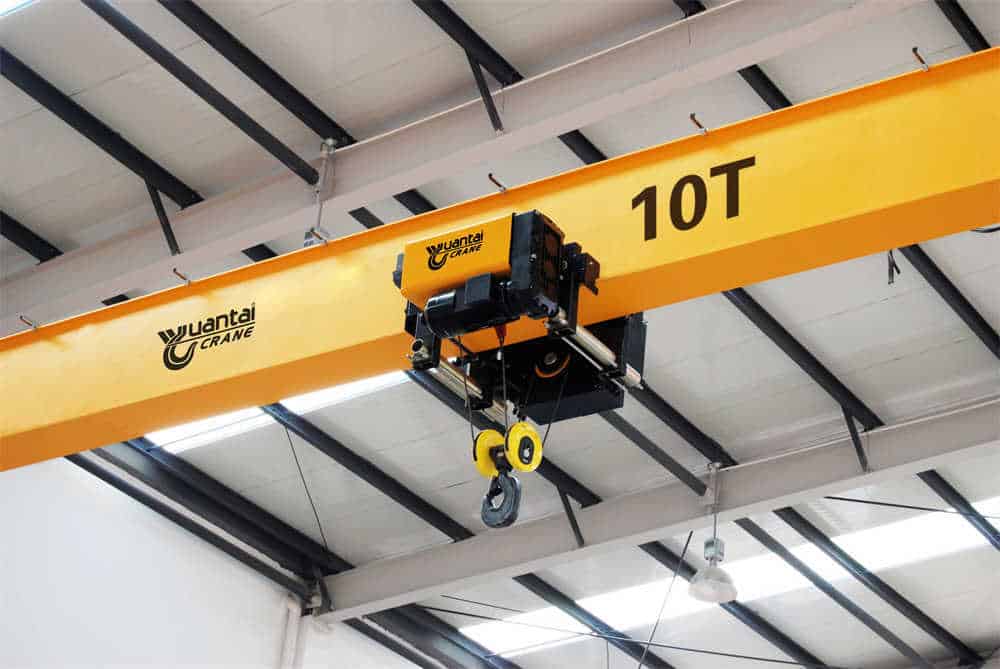
Relative Application Frequency: ~51% This crane model was the most frequently applied solution in our portfolio. Its significant share indicates a strong market preference for equipment that balances advanced functionality with operational economy. The HD crane incorporates design principles focused on efficiency, such as high-duty-cycle components, compact construction, and optimized weight-to-strength ratios. It is often chosen for its ability to handle medium-capacity loads with reliability while maximising the usable workspace underneath the crane due to its efficient headroom design. The use of quality components aims to reduce long-term maintenance, making it a prevalent choice for modern manufacturing facilities, assembly lines, and warehouses where uptime and total cost of ownership are key considerations.
HD 10 Ton single girder overhead crane
2. QD Series (General Purpose Double Girder Bridge Crane)
Relative Application Frequency: ~34% As a cornerstone of industrial lifting, the QD series maintained a substantial and steady application rate. This double girder crane is synonymous with robust performance for heavier loads and more demanding duty cycles. Its modular steel construction allows it to be configured for a wide range of capacities and spans, serving as a versatile and reliable workhorse. It is commonly found in environments like heavy fabrication workshops, steel service centres, foundries, and large-scale warehouse or dock settings where its inherent strength and stability are essential. Its continued high level of application underscores its role as a fundamental tool for core industrial material handling.
3. LD Series (Electric Single Girder Crane)
Relative Application Frequency: ~7% The LD series represents a practical and economical solution for standard-duty applications. Designed to common mechanical standards and compatible with standardised hoists, it offers a straightforward approach to light lifting tasks. With a typical capacity range of 1-16 tons and spans up to 22.5 meters, it suits various low-to-moderate frequency operations. Its value proposition often includes cost-effectiveness and shorter lead times. It is well-suited for general machine shops, storage areas, maintenance bays, and light assembly lines where the duty class is typically A3-A5. It is important to note that its design is not intended for high-intensity, continuous production environments.
4. LH & LX Series (Specialised Single Girder Cranes)
Relative Application Frequency: ~3.4% each These two series, while applied less frequently, serve specific and important niches.
LH Series (Double Girder): This crane is characterised by a straightforward double girder design that provides good stability and load capacity. It is often applied in settings that require handling denser materials like steel, construction products, or heavy palletised goods, but may not require the full specifications of a larger QD crane. It is a common sight in metal warehouses and logistics centres.
LX Series (Under-running Single Girder): This is a specialised solution for spatial constraints. As an underhung crane, its beam runs along tracks suspended from the roof structure, not on top of supporting rails. This makes it the primary choice for facilities lacking the floor-based runway columns to support a top-running crane, or where headroom is extremely limited. Its application is specific to light-capacity lifting in such retrofit or constrained environments.
5. QB Series (Explosion-Proof Double Girder Crane)
Relative Application Frequency: ~1.7% The QB series serves a critical, safety-mandated niche. Every application of this crane is driven by the non-negotiable requirement to operate in a classified hazardous area. It is a modified double girder crane where all electrical components and mechanical parts that could cause ignition—such as motors, controls, brakes, and gearboxes—are specially housed, encapsulated, or designed to prevent sparks and limit surface temperatures. Its use is strictly defined by safety standards for environments with potential explosive gases (Zone 1 or 2) or combustible dusts (Zone 21 or 22). Typical applications include chemical processing plants, pharmaceutical production areas, paint spray booths, grain handling facilities, and fuel depots.
Part 2: A Step-by-Step Guide to Selecting Your Bridge Crane
Navigating crane options can be simplified by methodically assessing your own operational reality. Here is a practical guide to align your needs with the appropriate crane type.
Step 1: Define Your Core Operational Parameters Start by gathering concrete information:
Lifting Requirements: Determine the maximum weight you need to lift, not an average. Estimate how many lifts are performed per hour or shift—this defines the duty cycle (e.g., light (A3), moderate (A4-A5), or heavy (A6-A7)).
Spatial Layout: Measure the required hook travel distance between supports (the span), the necessary lift height, and the area the crane must cover.
Facility Constraints: Check if your building has existing runway support columns or if the crane must be supported by the building’s roof structure. Note any severe limitations on headroom or floor space.
Step 2: Identify Your Working Environment This is a primary filter. Is the installation location:
A standard indoor workshop or warehouse?
Outdoors, or in a corrosive (e.g., chemical) or high-temperature area?
Formally classified as a hazardous area with potential explosive atmospheres (gas, vapour, or dust)? This must be confirmed by a site hazard assessment. If the answer is yes, your selection process immediately focuses on explosion-proof options like the QB series.
Step 3: Match Your Priority to a Crane Type Use the following matrix to guide your initial focus based on your needs from Steps 1 and 2.
If your top priority is…
Then strongly consider starting with…
Because it is typically applied for…
Modern efficiency, space optimization, and lower lifetime costs for medium-duty loads.
HD Series (European Single Girder)
Streamlined operations in manufacturing and logistics, where reducing energy use, maintenance, and maximizing clear height are valued.
Heavy load capacity, high durability, and severe, continuous service.
QD Series (General Double Girder)
Demanding core industrial processes in fabrication, metallurgy, and heavy logistics that require proven robustness and high performance.
Cost-effective, reliable lifting for standard, intermittent tasks with a defined budget.
LD Series (Standard Single Girder)
General workshop maintenance, light part handling, and storage applications where high-intensity use is not required.
Solving a spatial constraint: no floor supports or very low headroom.
LX Series (Underhung Crane)
Retrofitting existing buildings where installing supporting columns is impractical or too costly for light-capacity needs.
Handling dense materials (steel, coils) with a need for good stability in a simpler configuration.
LH Series (Double Girder)
Service centres, warehouses, and production areas handling heavy unit loads that benefit from a stable double girder design.
Operating in a safety-classified hazardous location. This is a mandatory requirement.
QB Series (Explosion-Proof)
Any operation in zones where flammable substances are present, as it is engineered to meet strict safety certifications to prevent ignition.
Step 4: Consult for Specification and Validation The initial matching is a starting point. The final specification requires detailed discussion with technical experts. Be prepared to discuss:
Exact load and duty cycle calculations.
Detailed layout drawings of your facility.
Control preferences (pendant, radio remote, cabin).
Any special attachments (magnets, grabs, vacuum lifters).
A qualified supplier can then validate your choice, provide precise sizing, and offer configuration options to finalise a crane that fits your operation perfectly.
Conclusion: From Insight to Informed Decision
The patterns of application in 2025 highlight a clear division: a strong trend towards efficient, modern single girder cranes for a wide array of industries, complemented by the enduring need for robust double girder cranes in heavy industry. Specialised solutions continue to play a vital role in addressing unique spatial and safety challenges.
This overview is intended to frame your initial thinking. By systematically assessing your load, duty, space, and environment, you can effectively narrow down the field of options. The most reliable path forward is to use this informed perspective as the basis for a detailed conversation with a technical advisor, who can help translate your specific requirements into a precise and effective material handling solution.
Contact our crane specialists
Send us a message and we will get back to you as soon as possible.