As a leading provider of material handling solutions, Dongqi Crane looks back on a dynamic and insightful 2025. The past year has been characterized by evolving customer needs across diverse industrial sectors, reflected clearly in our sales portfolio for gantry cranes. This document serves a dual purpose: to summarize the key trends observed in our 2025 sales data and to translate these insights into actionable guidance for potential clients. Understanding market movements is crucial for making informed investment decisions. By analyzing what industries prioritized last year, we can help you identify the equipment that best aligns with your operational requirements and strategic goals. All specific sales figures are presented in proportional terms (percentages) to provide a clear market picture while protecting commercial confidentiality.
The distribution of our gantry crane sales in 2025 paints a vivid picture of current industrial priorities. The data reveals a strong shift towards flexibility, cost-effectiveness, and specialized applications.
The most striking trend was the overwhelming dominance of Portable Gantry Cranes, which accounted for approximately 78% of our total units sold. This significant majority underscores a market-wide demand for versatility and economical lifting solutions. Following this, the MH-type Electric Hoist Gantry Crane represented roughly 11% of sales, indicating a steady demand for reliable, workshop-oriented lifting equipment. The MG-type Universal Gantry Crane, a workhorse for outdoor yards and heavier-duty applications, constituted about 8% of our sales. Lastly, the specialized Rubber-Tired Gantry (RTG) Crane for container handling made up nearly 3% of the annual sales, catering to the specific needs of port and logistics operations.
This breakdown is more than just numbers; it’s a narrative. The high percentage of portable gantry sales suggests that many businesses, from smaller workshops to larger plants managing maintenance areas, are seeking equipment that offers quick deployment, minimal installation requirements, and excellent value. The sustained interest in MH-type cranes highlights the continuous need for efficient, standardized lifting within manufacturing and assembly environments. The sales of MG-type cranes, though a smaller percentage, represent critical investments in core logistics infrastructure for material storage and transport. The niche yet essential presence of RTG sales confirms our role in serving the high-stakes container handling sector.
To understand these percentages, one must appreciate the distinct value proposition of each crane type.
Portable Gantry Cranes (Approx. 78% of Sales): The leader in our sales portfolio. These cranes are the epitome of adaptability. Typically constructed from lightweight but strong aluminum or steel profiles, they require no permanent foundation and can be easily assembled, disassembled, and relocated by a small crew. Their popularity stems from addressing common pain points: temporary lifting needs at construction sites, maintenance tasks in factories where fixed infrastructure is absent, loading/unloading in warehouses with limited space, and supporting repair work in automotive or machinery shops. The investment is relatively low, and the operational payoff in terms of saved time, reduced manual labor, and injury prevention is immediate and substantial. This category’s success in 2025 tells us that businesses highly prize operational agility.
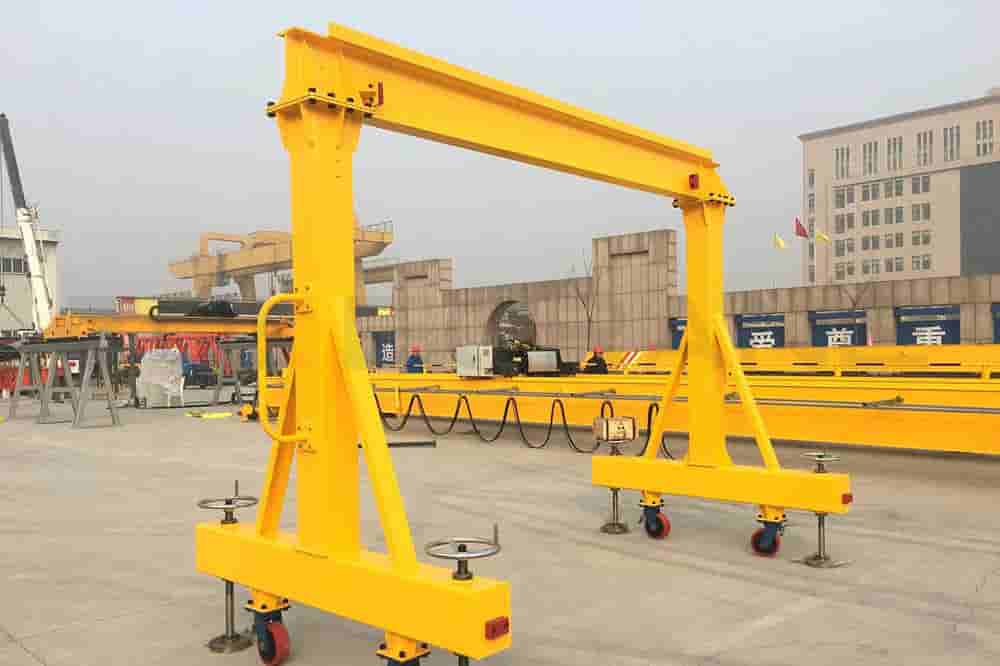
MH-type Electric Hoist Gantry Cranes (Approx. 11% of Sales): This category represents the backbone of many indoor and light outdoor material handling processes. Designed with a work classification of A3 to A5, these cranes are ideal for workshops, prefabrication facilities, small stockyards, and assembly lines. Clients can choose between a box-type girder, which offers excellent manufacturability and a clean appearance, or a truss-type girder, known for its superior wind resistance—a key consideration for semi-outdoor applications. Paired with reliable CD1 or MD1 electric hoists, these cranes provide a robust, cost-effective, and standardized solution for daily lifting tasks involving machinery parts, raw materials, or finished goods. Their consistent sales reflect their role as a fundamental tool for steady-state industrial production.
MG-type Universal Gantry Cranes (Approx. 8% of Sales): When the task involves heavier loads (typically 5 to 50 tons) and frequent operation in open areas like freight yards, bulk material storage sites, railway terminals, or port hinterlands, the MG-type is the go-to solution. As a double-girder gantry crane, it offers exceptional stability, longer span capabilities, and higher lifting heights. Its versatility is a key strength; it can be fitted with various specialized hooks or grabs to handle everything from steel coils and lumber to scrap metal and packaged goods. While representing a more significant capital investment and requiring proper runway construction, its sales percentage indicates that for businesses where material flow is central to operations, this crane is an indispensable productivity engine.
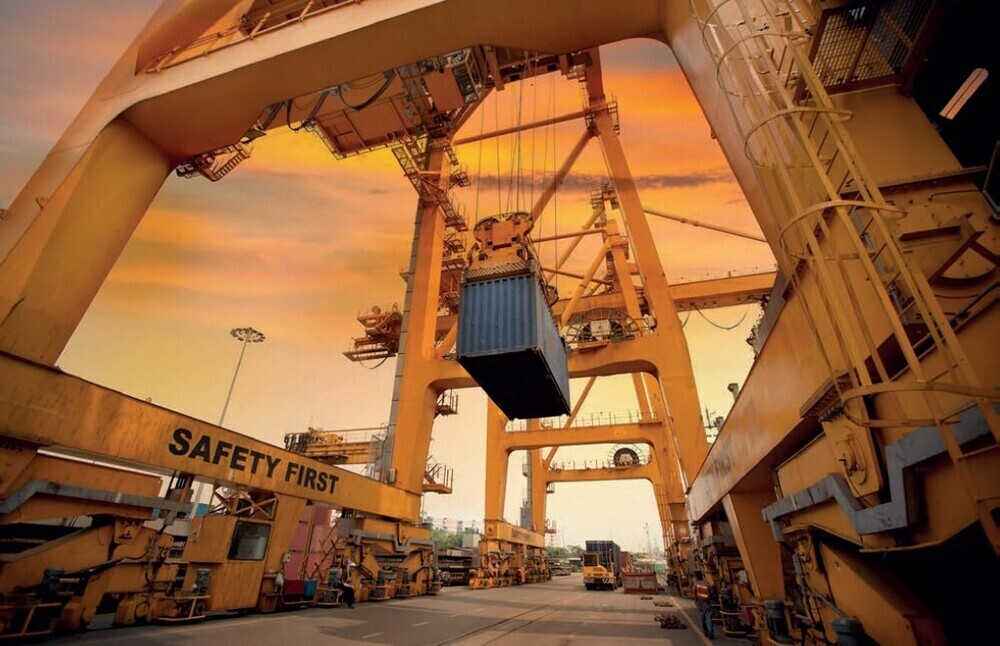
Rubber-Tired Gantry (RTG) Cranes (Approx. 3% of Sales): This is a specialized tool for a specialized job: moving, stacking, and loading standard shipping containers. Its primary domain is port container terminals and large inland intermodal yards. The ability to travel on rubber tires provides great mobility within a defined area, allowing it to stack containers several rows wide and multiple tiers high. While this category constituted a smaller segment of our unit sales, it is a high-value, critical asset for clients in the global logistics chain. Its application can also extend to large construction projects requiring precise placement of modular units or within heavy industries for handling oversized cargo.
The sales distribution points to several broader trends:
Choosing the right gantry crane is a strategic decision. Here is our advice, distilled from serving countless clients in 2025:
1. Define Your Primary Need with Precision:
2. Match the Crane Type to Your Application:
3. Prioritize Quality and Safety Beyond Price:
The initial purchase price is only one part of the total cost of ownership. Invest in equipment from a reputable manufacturer (with proper certifications like CE, ISO) that uses quality components, especially in the hoist, wire rope, and structural steel. This ensures longevity, reduces downtime for repairs, and, most importantly, safeguards your personnel and assets. The vast majority of our clients in 2025 emphasized reliability and safety compliance as non-negotiable factors.
4. Plan for the Entire Workflow:
Think about what happens before and after the lift. Do you need specialized slings or grabs? How will the moved material be stored or processed next? Ensuring your crane choice integrates seamlessly into your overall workflow prevents bottlenecks.
2025 was a year that highlighted the diverse and evolving landscape of material handling. At Dongqi Crane, we are proud to have provided solutions ranging from the simple and portable to the complex and specialized. The sales percentages tell a story of a market that values choice—from agile, on-demand lifting to powerful, fixed infrastructure.
For your upcoming projects, we encourage you to use this review as a starting point. Let your specific operational requirements, not just industry norms, guide your choice. Whether your needs align with the majority seeking portable flexibility or with the strategic few investing in specialized giants like the RTG, the correct crane is the one that solves your problem efficiently, safely, and reliably.
We are here to help you navigate these choices. Our technical team can assist in translating your site conditions and operational goals into a precise crane specification. Contact us for a consultation, and let’s build the optimal lifting solution for your success in the coming year and beyond.
Contact our crane specialists
Send us a message and we will get back to you as soon as possible.