Dongqi Crane 2025 Hoist Portfolio Review & Technical Selection Guide

HomeHoist → Dongqi Crane 2025 Hoist Portfolio Review & Technical Selection Guide

Dongqi Crane 2025 Hoist Portfolio Review & Technical Selection Guide

To Our Valued Clients and Partners,

The year 2025 has provided a clear lens through which to view the evolving priorities of the global material handling sector. At Dongqi Crane, our diverse product line serves as a barometer for industry trends, and the past year’s performance reveals a market that is becoming increasingly sophisticated in its specifications. The choices made by our clients reflect a strategic alignment between operational needs and the precise technical capabilities of each hoist type. This review aims to distill these insights, translating our experience and your collective decisions into a practical framework for future investment.


Part 1: Market Trends & Portfolio Performance Overview

An analysis of our 2025 sales distribution highlights a mature market where different product categories fulfill distinct operational roles. The proportional adoption underscores a move beyond basic lifting needs towards solutions that enhance productivity, precision, and process integration.

  • Electric Chain Hoists were the dominant choice, representing the clear majority of units sold, confirming their status as the universal solution for mechanizing repetitive tasks.
  • European-Style Hoists captured a strong and growing segment, reflecting investment in long-term efficiency and modern facility design.
  • Electric Wire Rope Hoists maintained a critical role, with a notable distinction in demand between models.
  • Manual Chain Hoists continued to serve their essential, specialized niche with steady relevance.

This distribution is not accidental; it is a direct reflection of industries matching specific technical requirements—such as duty cycle, precision, and control—to the right tool.

Part 2: Product Category Analysis: The “Why” Behind the Choice

1. Electric Chain Hoists: The Standard for Accessible Efficiency
Their overwhelming market share is a testament to their role in fundamental productivity improvement. Clients across manufacturing, warehousing, and general industry select them for their excellent balance of capability, ease of use, and cost-effectiveness for frequent light to medium-duty lifting. They are the definitive answer for operations seeking to eliminate manual handling where advanced speed control is not a primary concern.

Electric chain hoist and lifting equipment

2. European-Style Hoists: The Strategic Choice for Optimized Operations
The significant adoption of these hoists signals a focus on Total Cost of Ownership (TCO) and system integration. Customers choose them for their compact, low-headroom design (saving on structural steel), high-energy-efficiency motors, and superior control systems. They are increasingly the cornerstone of new, automated production lines and logistics centers where space, energy use, and precision directly impact profitability.
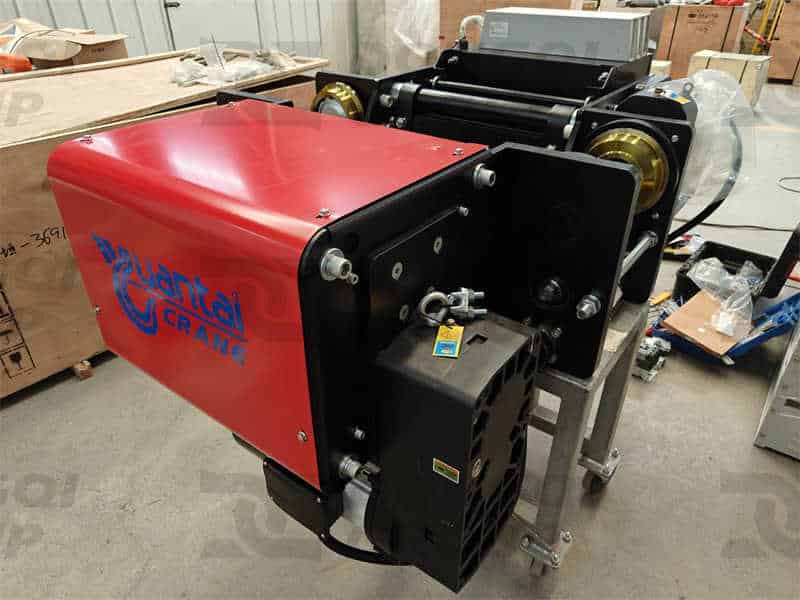
European style electric wire rope hoist

3. Electric Wire Rope Hoists: A Critical Distinction in Capability
Here, the market makes a sharp technical differentiation, which is crucial for proper selection:
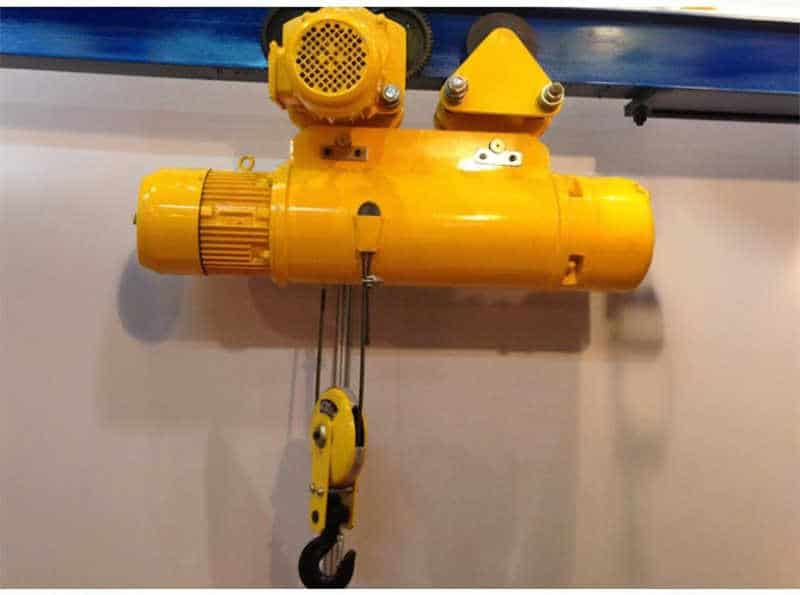
  • CD-Type (Single-Speed): These models, serving a stable portion of the market, are specified for general heavy-load handling where the primary need is reliable lifting and lowering at a constant speed. They are the robust workhorses for loading docks, standard workshop duty, and applications where precise in-air positioning is less critical.
  • MD-Type (Dual-Speed): Although representing a more focused segment, the MD-type is selected for its superior technical functionality. Its dual-speed capability—offering both a fast hoisting speed for productivity and a slow, precision micro-speed for exact positioning—makes it indispensable for applications like precision assembly, mold fitting (e.g., sand box closing in foundries), sensitive load placement, and any task requiring fine control. This technical advantage grants it a broader, more specialized application range despite a lower unit volume.
CD type 10 ton electric wire rope hoist

4. Manual Chain Hoists: The Unmatched Specialist
Their consistent role proves that some needs are best met with simplicity. They remain vital for maintenance, off-grid locations, final precision adjustment, or as a failsafe backup, valued for their portability, independence from power sources, and intrinsic safety.
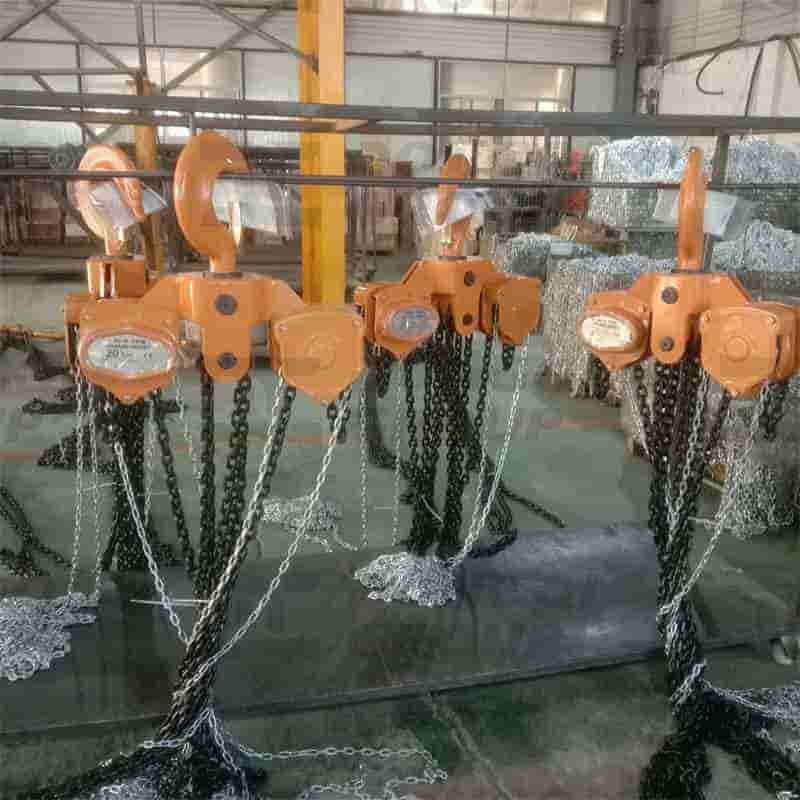
20 ton manual hoist

Part 3: A Technical Framework for Your Selection

Choosing incorrectly can lead to inefficiency, accelerated wear, or safety compromises. Use this framework, informed by 2025’s trends, to guide your decision.

Step 1: Define Your Application Profile
Answer these questions with operational data:

  • Duty & Load: Maximum weight, average lifts per hour, and daily operating hours.
  • Precision Requirement: Does the process require simple point-to-point movement or delicate, in-air positioning and alignment?
  • Environment: Is the workspace clean, dusty, hot, or corrosive?
  • Spatial Constraints: What are the exact limits for headroom and runway span?

Step 2: Match Your Profile to the Technically Correct Solution

  • Select Electric Chain Hoists for high-frequency, medium-capacity lifting where basic, reliable mechanization is the goal.
  • Choose European-Style Hoists when your project is driven by maximizing space, energy efficiency, and seamless process flow in a modern facility.
  • Opt for a CD-Type (Single-Speed) Wire Rope Hoist for straightforward, heavy-load lifting in standard industrial environments where speed control is not a priority.
  • Specify an MD-Type (Dual-Speed) Wire Rope Hoist when your operation involves heavy loads that require precise final placement. This is non-negotiable for tasks like machine tooling installation, delicate component assembly, foundry work, or any scenario where “close” is not good enough.
  • Rely on a Manual Chain Hoist for specialized, power-independent, or ultra-precise manual positioning tasks.

Step 3: Partner for a Lifecycle Perspective

  • Collaborate with a provider like Dongqi Crane, who offers the full spectrum of technologies, ensuring unbiased advice.
  • Insist on certified safety features (overload limiters, dual brakes) and compliance with global standards (FEM, ISO).
  • Evaluate the Total Cost of Ownership. Consider how factors like the energy savings of a European hoist or the reduced product damage enabled by an MD-type’s precision speed can justify a higher initial investment.

Conclusion: Precision as the Path Forward

The 2025 market demonstrates that the most astute equipment investments are those where technical capability is meticulously matched to application demand. The clear distinction between single-speed and dual-speed wire rope hoists is a prime example of this principle in action.

At Dongqi Crane, we are committed to providing not just equipment, but the expertise to navigate these critical technical choices. Our continued innovation across all product categories—especially in enhancing control precision and energy efficiency—is driven by your evolving challenges. We look forward to partnering with you to select the hoist that doesn’t just lift, but elevates your entire operational performance.

Sincerely,

The Dongqi Crane Team

  Contact our crane specialists


Send us a message and we will get back to you as soon as possible.

    Send Your Needs