As the core equipment for modern industrial material handling, electric single-girder bridge cranes are widely used in machinery manufacturing, assembly workshops, warehousing and logistics, etc., with their simple structure, convenient operation and low cost. This article will comprehensively introduce the technical parameters, design features, selection points, customization precautions and safety maintenance of 1~10 ton electric single-girder bridge cranes, and provide a systematic reference for users who plan to purchase or customize such equipment. Based on the latest industry standards and manufacturer data, we will deeply analyze the performance characteristics of cranes of different tonnages and spans to help you make reasonable choices according to actual working conditions. At the same time, we will compare the differences between traditional LD type and European design, and provide practical suggestions for customized solutions.
As an indispensable material handling equipment in industrial production, electric single-girder bridge cranes have a dominant position in the field of 1~10 ton small and medium tonnage lifting with their compact structure, flexible operation and economic efficiency. This type of crane usually consists of a main beam, end beam, electric hoist and electrical control system, and realizes material transportation in three-dimensional space by horizontal movement along the track and vertical lifting of the hoist. According to the main technical characteristics and design standards, 1-10 ton electric single-beam bridge cranes can be divided into multiple types, each type is designed for different application scenarios and user needs.
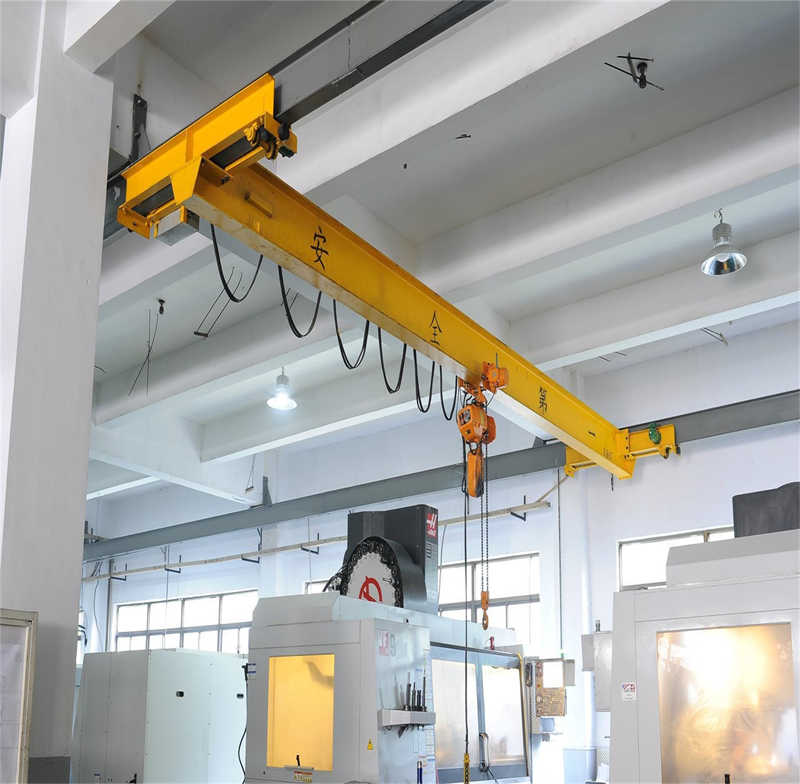
Table: Comparison of main types of 1-10 ton electric single-beam bridge cranes
| Type | Standard basis | Lifting capacity range | Span Range | Main Features | Applicable scenarios |
| LD | JB1306-2008 | 1-10 ton | 7.5-22.5m | Simple structure, economical and practical, easy maintenance | Mechanical manufacturing, assembly workshop, warehouse |
| LDA | Enterprise Standards | 1-10 ton | 7.5-22.5m | Optimized structure, good stability and long service life | Frequent operation environments such as machinery maintenance and mold manufacturing |
| European | FEM/ISO | 1-10 ton | 5-20m | Lightweight structure, energy-saving and efficient, stable operation | Modern production lines and places with high precision requirements |
| Special type | Related industry standards | 1-10 ton | Custom made | Special designs such as explosion-proof, high temperature resistant, and anti-corrosion | Chemical industry, metallurgy and other special industrial environments |
A deep understanding of the technical parameters and performance characteristics of 1-10 ton electric single-girder bridge cranes is crucial for equipment selection and subsequent use. These parameters not only determine the basic working capacity of the crane, but also directly affect the matching degree between the equipment and the workplace. A complete set of crane technical parameters should include lifting capacity, span, lifting height, working speed and other aspects. These parameters are interrelated and mutually restricted, and together constitute the technical feature framework of the crane.
As the most core technical indicator of the crane, the lifting capacity parameter directly reflects the lifting capacity of the equipment. 1-10 ton electric single-girder bridge cranes cover a lifting range from light to medium. Users can choose the appropriate tonnage level according to actual production needs. It is worth noting that the rated lifting capacity of the crane is not applicable under all working conditions. Factors such as hook position and lifting height may affect the actual lifting capacity. For example, the LDB 10-ton electric single-girder bridge crane takes into account the influence of different lifting point positions on the lifting capacity in its design to ensure safe and reliable operation under various working conditions^[2]. When selecting tonnage, users should not only consider the maximum weight of a single lift, but also reserve an appropriate safety margin. It is usually recommended to select a specification that is 20%-30% higher than the actual maximum lift weight to cope with sudden heavy loads and extend the service life of the equipment.
The span parameter refers to the distance between the center lines of the wheels of the two end beams of the crane, that is, the track spacing of the crane’s lateral movement. This parameter is closely related to the plant structure and directly affects the degree of matching between the crane and the building space. From the search results, the span range of 1-10 ton electric single-beam bridge cranes is quite flexible, ranging from a minimum of 4.5 meters to a maximum of 31.5 meters. Common specifications include 7.5 meters, 10.5 meters, 13.5 meters, 16.5 meters, 19.5 meters, 22.5 meters and other options. The LDB 10-ton electric single-beam bridge crane provides a customizable span from 7.5 meters to 31.5 meters. This flexibility enables the crane to adapt to plants and workshops of different sizes and layouts^[2]. It is particularly noteworthy that although the European electric single-beam crane has a more compact structure, its span range can also meet the needs of most industrial scenarios, with a typical span of 5 to 20 meters^[11][15]. When selecting the span, in addition to considering the current plant structure, possible expansion space for the production line should also be reserved to avoid the crane being unable to meet the use requirements due to later process adjustments.
The lifting height determines the maximum vertical distance that the crane can lift the heavy object. This parameter is closely related to the clearance height of the plant and the size of the object being hoisted. The lifting height of a 1-10 ton electric single-beam bridge crane is usually adjustable in the range of 3 to 12 meters, with 6 to 9 meters being the most common configuration^[2][8][15]. The lifting height not only affects the flexibility of the lifting operation, but also puts forward different requirements for the selection of the electric hoist. For example, when a particularly large lifting height is required, a wire rope electric hoist may be selected instead of a chain electric hoist because the former has better scalability in terms of height. When customizing the lifting height, users should comprehensively consider factors such as the factory clearance, the height of the hoisted object, and the required lowering depth to ensure that the crane can meet the use requirements without causing resource waste or inconvenience in operation due to being too high^[4][8].
The working speed parameters include the lifting speed, the running speed (trolley speed) and the trolley speed (if there is an independent trolley). These parameters jointly determine the working efficiency of the crane. The search results show that the lifting speed of 1-10 ton electric single-beam bridge cranes is mostly around 8 meters/minute, and the running speed is within the range of 20 meters/minute (about 20m/min), which may vary from manufacturer to manufacturer and model^[3][12]. For example, the running speed of the LD-A electric single-beam bridge crane is designed to be 20m/min, 30m/min, 45m/min and 75m/min, which is achieved through different reduction ratios (58.95, 39.38, 36.36, 15.88)^[3]. The choice of working speed should match the actual production rhythm, not the faster the better. Too high a speed may cause positioning difficulties and increase energy consumption, while too low a speed will affect production efficiency. For situations that require precise positioning or frequent start and stop, it is recommended to choose a drive system with variable frequency control or soft start function, which can achieve smooth operation and accurate positioning while ensuring production efficiency^[12].
Table: Main technical parameter range of 1-10 ton electric single beam bridge crane
| Parameter Category | Parameters | Parameter range | Remark |
| Basic parameters | Rated lifting capacity | 1-10 ton | Special tonnage can be customized, such as 2.8 tons, etc. |
| Effective span | 4.5-31.5m | European style is generally 5-20 meters | |
| Lifting height | 3-12m | Usually 6-9 meters | |
| Working class | A3-A5 | Determined by frequency of use | |
| Speed Parameters | Lifting speed | 8-12m/min | Double speed hoist can have fast and slow gears |
| Crane running speed | 20-75m/min | Commonly used 20-30m/min | |
| Trolley running speed | 10-30m/min | Refers to independent trolley mechanism | |
| Power parameters | Lifting motor power | 1.5-15KW | According to tonnage |
| Running motor power | 0.8×2-1.5×2KW | Usually dual motor drive |
Modern electric single-girder bridge cranes also have strict requirements for electrical control and safety protection. In terms of control methods, from traditional ground wired button control to wireless remote control operation, users are provided with a variety of options^[12][15]. Safety protection devices usually include lifting height limiters, travel limiters, overload protection, emergency stop buttons, and anti-collision systems, which together constitute the safety protection system of the crane^[10][12]. Especially for cranes of 10 tons and above, the load protection system is particularly important, which can effectively prevent overloading operations and ensure the safety of equipment and personnel^[12]. With the advancement of technology, some high-end cranes have also begun to adopt intelligent control systems to realize functions such as operating status monitoring, fault diagnosis, and preventive maintenance reminders, which greatly improves the safety and maintainability of the equipment^[4][10].
The selection of electric single-girder bridge cranes is a comprehensive decision-making process that combines technical and economic factors, and requires consideration of many factors and their interrelationships. Reasonable selection can not only ensure that the crane meets current production needs, but also adapt to possible future production expansion, while optimizing the return on investment. Based on the industry practices and actual needs of users in the search results, we systematically sorted out the key factors and decision-making process for the selection of 1-10 ton electric single-girder bridge cranes.
The determination of lifting capacity is the basis for crane selection and the fundamental factor to ensure operational safety. Users need to analyze in detail the weight of all materials that need to be lifted in the production process, considering not only the weight of conventional objects, but also the maximum weight objects that may appear, and reserve appropriate safety margins. The LDB 10-ton electric single-girder bridge crane mentioned in the search results is clearly designed for “most material handling needs in industrial production” and can meet relatively large lifting requirements^[2]. It is worth noting that some special industries may have special tonnage requirements outside the standard, such as the non-standard tonnage of 2.8 tons mentioned in the search results^[5][16]. When determining the lifting capacity, it is recommended to use a safety factor of “heaviest object weight × 1.3”, which can not only avoid long-term full-load operation of the equipment, but also cope with occasional extraordinary weight requirements. At the same time, users should understand that the rated lifting capacity of the same crane at different working levels may be adjusted, and frequent full-load use will reduce the overall service life of the equipment^[4][7].
The span selection should be accurately measured based on the actual structure of the factory and the layout of the equipment. The span of the crane refers to the distance between the center lines of the two sides of the track, which is directly related to the position of the factory column. The span ranges of different types of cranes in the search results vary greatly: the applicable span of the LD type is usually 7.5~22.5 meters^[14], while the span parameter of the European single-beam bridge crane is 5-20 meters^[15]. It is particularly noteworthy that the span of the LDB10-ton electric single-beam bridge crane can be customized between 7.5 meters and 31.5 meters. This flexibility enables it to adapt to workshops of various sizes^[2]. When there are columns or other obstacles in the factory, it may be necessary to consider a crane with a cantilever design to increase the operating coverage. The span also needs to consider the wheel pressure distribution of the trolley running mechanism. Too large a span may cause the wheel pressure to exceed the bearing capacity of the factory’s load-bearing structure. In this case, professionals should be consulted to evaluate the load-bearing capacity of the factory structure^[6][8].
The determination of the lifting height requires comprehensive consideration of multiple factors such as the height of the hoist, the height of the hoisted object, and the safe obstacle clearance height. Insufficient lifting height will cause the crane to fail to meet the use requirements, while excessive lifting height will not only increase costs but may also cause inconvenience in operation. Search results show that the commonly used lifting height of 1-10 ton electric single-beam bridge cranes is between 6 meters and 9 meters^[2][8], but can be adjusted to 3-10 meters as needed^[15]. When actually determining the lifting height, the formula of “factory net height-hoist and hoist height-safety clearance (≥500mm)” can be used for preliminary estimation. For situations where work needs to be done deep below the ground, such as basements or tunnels, special attention should be paid to whether the lowering depth meets the requirements. Some electric hoists can provide a double drum design to achieve a greater lifting height while maintaining the total height unchanged. This design is particularly practical in factories with limited height [4] [11].
The working level is an important parameter that reflects the workload of the crane and is determined by two main factors: load status and busyness. The working level is divided into eight levels from A1 to A8. The larger the number, the heavier the work. The 10T bridge crane design case mentioned in the search results uses the A5 working level, which is a medium frequency of use [12]. Users should accurately evaluate the working level based on actual usage. Underestimation will lead to premature failure of the equipment, while overestimation will cause unnecessary cost increases. The following factors need to be considered when evaluating the working level: average number of operations per hour, ratio of maximum load to rated load, daily working hours, etc. Generally, machining workshops are suitable for A3-A5 levels, assembly workshops are suitable for A5-A6 levels, and frequently used warehousing and logistics may require A6 and above [7] [12]. The correct choice of working level directly affects the durability of electrical components and mechanical structures, and is the key to ensuring the long-term reliable operation of the crane.
The choice of operation mode is related to the convenience of operation and the efficiency of personnel allocation. Modern electric single-girder bridge cranes mainly provide two modes: ground operation (button control) and control room operation. Ground operation is divided into two forms: wired button and wireless remote control. Ground operation has low cost and intuitive operation, but the operator needs to move with the crane, which is suitable for occasions with a small operating range and infrequent movement; while control room operation provides a better field of view and operating environment, which is suitable for large span and high frequency operation conditions, but the cost is high and the deadweight is increased^[14]. In recent years, the popularization of wireless remote control technology has brought revolutionary changes to crane operation. The operator can observe the lifting process in the best position while avoiding the risk of wire entanglement, which is particularly suitable for precise lifting operations in complex environments^[11][12]. When choosing an operation mode, the operator’s habits and training costs should also be considered to ensure that the selected method can be used efficiently.
The selection of electric hoists is one of the decisive factors for crane performance. Currently, there are two basic types of hoists on the market: CD1 (normal speed) and MD1 (dual speed), as well as the more advanced European electric hoist^[3][15]. The selection of hoists should take into account the following factors: lifting capacity, lifting height, working speed, frequency of use, and special environmental requirements. For occasions that require precise positioning, such as mold installation and equipment maintenance, the low speed gear of the MD1 two-speed hoist can achieve millimeter-level positioning accuracy; while for ordinary material handling, the CD1 normal speed hoist can usually meet the requirements^[3]. European electric hoists adopt a modular design and have the characteristics of compact structure, light weight, energy saving and high efficiency. Although the initial investment is high, the long-term operating cost is low, which is suitable for occasions with high energy efficiency and space requirements^[5][11]. The protection level of the hoist should also be paid attention to. In dusty environments, IP54 or above protection level should be selected. In humid environments, anti-corrosion design needs to be considered. In explosion-proof occasions, special explosion-proof hoists must be selected^[4][6].
Brand and price are economic factors that cannot be ignored in the selection process. The search results show that the prices of cranes of different manufacturers and types vary greatly: the price of a European electric single-beam crane starts at about RMB 43,500, the price of an LD 3-ton single-beam crane is about RMB 28,000, and the price of a 10-ton single-beam crane is about RMB 62,000^[5][16]. The price difference reflects the differences in materials, craftsmanship, configuration and brand value of the products. When comparing prices, users should comprehensively examine factors such as the product’s configuration list, quality assurance and after-sales service, rather than just focusing on the initial purchase cost. Products from well-known brands usually have better reliability and a more complete after-sales service system. Although the initial investment is higher, the failure rate in long-term use is low, and repair parts are easy to obtain, and the total cost of ownership may be more economical^[4][5][16]. It is recommended that users choose products with a good market reputation and a complete after-sales service system within their budget, and require suppliers to provide clear warranty commitments and spare parts supply guarantees.
The customization of electric single-girder bridge cranes is a systematic project involving multiple disciplines and multiple links. A successful customization solution can perfectly meet the actual needs of users, improve material handling efficiency, and avoid unnecessary functional redundancy and cost waste. Based on the industry practice and crane design principles of the search results, this section will introduce in detail the key points of the full process customization of 1-10 ton electric single-girder bridge cranes from demand analysis to final acceptance, helping users to effectively participate in the customization process and obtain the most suitable lifting equipment for their own working conditions.
The starting point of the customization process is a detailed demand analysis. The quality of work at this stage directly determines the rationality and practicality of the subsequent design. Users need to comprehensively sort out the current and possible future lifting needs, including but not limited to: maximum lifting weight, working frequency, operating range, accuracy requirements, and special environmental factors. The construction plan of the electric single-girder bridge crane mentioned in the search results emphasizes that the design and selection must first “determine the crane’s lifting weight, span, lifting height and other parameters according to actual use needs.” For example, for a workshop that needs to carry 10 tons of goods, has a span of 20 meters and a lifting height of 6 meters, a crane with corresponding parameters should be selected^[8]. In the demand analysis phase, it is recommended to use a combination of standardized questionnaires and on-site surveys to collect the following key information: architectural drawings of the factory (marking column positions, elevations, roof structures, etc.), maximum weight and size of objects to be hoisted, work rhythm requirements, existing process flow layout, etc. These data will provide an objective basis for determining the parameters of the crane and avoid improper configuration caused by subjective assumptions. It is particularly noteworthy that demand analysis should not only consider current production needs, but also appropriately reserve future development space to ensure that the crane can still meet the use requirements after production line expansion or process changes^[6][8].
After clarifying the needs, the crane supplier will design the technical solution based on the parameters provided by the user and the actual working conditions. This process involves multiple links and rigorous technical considerations to ensure that the final design solution can not only meet the user’s operating needs, but also ensure the safe and efficient operation of the equipment.
First, the technical team of the crane supplier will conduct an in-depth analysis of the various parameters provided by the user, including key indicators such as lifting weight, working level, working environment, operating radius and hoisting height. These parameters are the basis for designing the crane. Based on these data, technicians will preliminarily determine the type and specifications of the crane, such as bridge crane, gantry crane, tower crane, etc., and further refine the size and performance requirements of each component.
In the preliminary design stage, engineers will study the mechanical structure, electrical control system, hydraulic system, lubrication system and other parts in detail to ensure that the crane has stable performance and good operability while meeting user needs. For example, for bridge cranes, engineers need to carefully design the bridge structure to ensure its strength and stability; for tower cranes, they need to consider factors such as counterweight balance and wind load.
Contact our crane specialists
Send us a message and we will get back to you as soon as possible.