Gantry cranes are essential heavy-duty handling equipment in modern industrial production. The manufacturing quality of their bridge structures is directly related to the safety, reliability, and service life of the entire machine. Based on relevant national and industry standards, this article systematically outlines the key technical requirements for gantry crane bridge manufacturing, covering a comprehensive range of specifications, including material selection, structural design, dimensional accuracy, welding processes, assembly quality, surface treatment, and inspection and testing. These technical requirements serve as both production guidelines that manufacturers must follow and an important basis for user product quality acceptance. Strict adherence to these technical requirements ensures that gantry crane bridges maintain excellent performance and a long service life under various operating conditions.
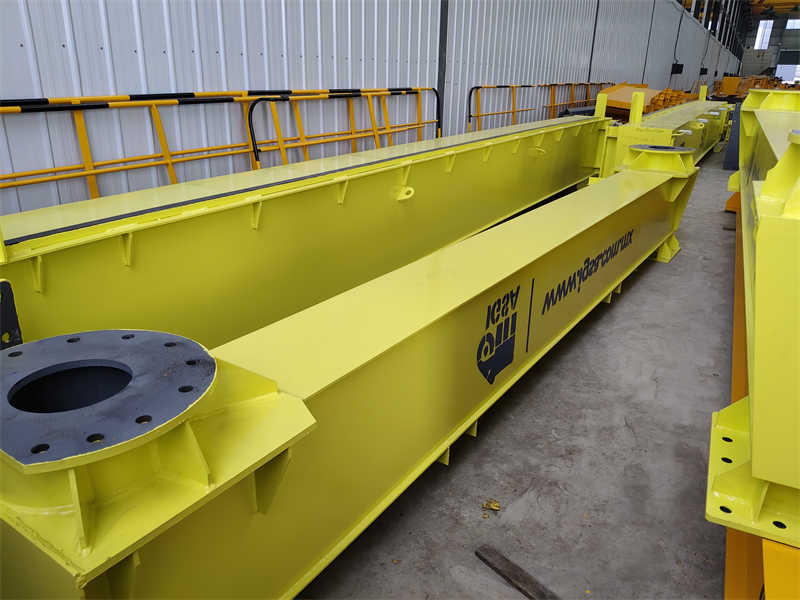
The material selection and structural design of gantry crane bridges are fundamental to ensuring their load-bearing capacity and long-term stability. They must comply with relevant national standards and the requirements of the specific operating environment.
As the core load-bearing component of a gantry crane, the bridge’s material properties directly determine the safety and reliability of the entire machine. Regarding steel selection, primary load-bearing components such as main beams and end beams should preferably be constructed from low-alloy, high-strength structural steel in accordance with GB/T 1591 or carbon structural steel in accordance with GB/T 700. Grades of steel should be at least Q235B or higher. For heavy-duty cranes or large-tonnage cranes, Q345B or higher is recommended to ensure sufficient strength and toughness. Steel must be accompanied by a quality certificate upon arrival and undergo re-inspection as required, including chemical composition analysis and mechanical property testing. In particular, compliance with low-temperature impact toughness standards at -20°C must be ensured. Plate thickness should be accurately calculated based on the design load, but the minimum thickness must not be less than 6mm. The plate thickness of primary load-bearing components should generally be no less than 8mm, and the negative thickness deviation must not exceed the allowable value in national standards.
In terms of structural design, a reasonable mid-span camber must be established for the main beam of a box-type bridge. The standard stipulates a camber of 0.7/1000 to 1/1000 of the span L, with the maximum camber limited to within L/10 of the mid-span. This pre-arch design offsets the downward deflection of the crane under load, ensuring that the main beam deflection under rated load does not exceed L/700 and that the deformation completely disappears after unloading. Permanent deformation is not permitted. For large-span gantry cranes, web waviness control must also be considered. The waviness height per meter should not exceed 4mm to ensure local stability of the web.
Environmental adaptability is also a key consideration for bridge structures. For corrosive environments such as coastal areas or those with high humidity, weathering steel or a design with increased corrosion allowance should be used, with the plate thickness increased by an additional 1-2mm. In seismic-resistant areas, bridge structures must undergo seismic calculations to ensure structural integrity under earthquakes. For gantry cranes operating outdoors, the bridge design must also consider the impact of wind loads. Especially for cranes over 20 meters in height, wind pressure should be calculated based on the local 50-year return period, and wind-resistant and anti-slip devices should be installed.
Standardization and compliance require that bridge designs comply with the basic requirements of national standards such as GB/T 3811-2008 “Crane Design Code” and GB 6067-1985 “Safety Regulations for Hoisting Machinery.” Furthermore, design documentation must include complete structural calculations, strength analysis reports, fatigue verification reports (for work level A6 and above), and stability analysis, among other technical support documents. All designs must be reviewed and approved by authorized engineers, taking into account both manufacturability and cost-effectiveness. The structure must be optimized and weight reduced while ensuring sufficient strength, rigidity, and stability.
Controlling the dimensional accuracy and geometric tolerances of gantry crane bridges is crucial for ensuring bridge assembly quality and operational performance. All tolerance requirements specified in national standards and industry specifications must be strictly adhered to. Precise dimensional control not only impacts the manufacturing quality of the bridge itself but also directly affects the smooth operation of the crane’s operating mechanism and the wear of the track system. Therefore, rigorous monitoring is required throughout the entire manufacturing process.
Regarding main beam dimensional tolerances, the height deviation of box-type main beams must be controlled within ±2mm, and the width deviation must not exceed ±3mm. The verticality tolerance of the main beam web must not exceed 3mm throughout its entire height, and the angular deviation between the web and the upper flange must be controlled within 90°±0.5°. Main beam straightness requirements are particularly stringent: in the horizontal plane, the straightness deviation must not exceed 1mm per meter of length, and must not exceed L/2000 (L is the span) over the entire length, with a maximum deviation of no more than 10mm. Straightness deviation in the vertical plane is also strictly controlled to ensure smooth crane operation. The waviness of the main beam is also a key quality control focus. The height of the web waviness per meter should not exceed 4mm, and the top waviness should not exceed 3mm.
Upper camber control is a core technical requirement for main beam manufacturing. The actual camber curve of the main beam after manufacturing should be smooth and consistent with the theoretical camber curve. The deviation between the measured camber at the midspan and the theoretical camber should not exceed ±0.1L/1000, and the peak camber position should be within the range of L/10 at the midspan. Controlling the lateral deflection (horizontal deflection) of the main beam is equally important. The lateral deflection value should be less than L/2000 and the maximum should not exceed 10mm. The lateral deflection should be directed toward the walkway. For long-span gantry cranes (L>30m), the impact of sunlight temperature differences on camber measurement must also be considered. Measurements should be conducted early in the morning or on cloudy days to reduce measurement errors caused by thermal deformation.
The manufacturing accuracy of the end beam is also crucial. The length deviation of the end beam should be controlled within ±2mm, and the width deviation should not exceed ±1.5mm. The flatness tolerance of the bent plate on the end beam (the portion connecting to the main beam) must not exceed 0.5mm. The perpendicularity deviation between the bent plate and the end beam web must not exceed H/200 (H is the end beam height), with a maximum of 3mm. The diagonal difference between the centerlines of the bent plates on the end beams must be strictly controlled. For crane spans S ≤ 26m, the diagonal difference must not exceed 5mm; for crane spans S > 26m, the diagonal difference must not exceed S/5000, with a maximum of 10mm. This requirement ensures the accurate positioning of the four sets of wheels and prevents “track gnawing” during crane operation.
Overall accuracy requirements after bridge assembly include: The main beam and end beams must be connected using high-strength bolts or welding. After connection, the perpendicularity deviation between the two beams must not exceed H/300 (H is the main beam height). The trolley track gauge deviation must be controlled within ±2mm, and the height difference between the two tracks within the same section must not exceed 3mm. Track straightness deviation must not exceed 1mm per 2m and 7mm over the entire length. The parallelism deviation of the tracks on the two main beams shall not exceed 5mm, the height difference and lateral misalignment at the track joints shall be less than 1mm, and the joint gap shall be controlled within the range of 2±0.5mm.
Table: Main geometric tolerance requirements for gantry crane bridge
| Inspection items | Allowable deviation value | Measurement method | Related standards |
| Main beam camber | (0.7-1)L/1000 | Wire method or level | GB/T 10183 |
| Main beam lateral bending | ≤L/2000, and ≤10mm | Steel wire method | DB41/T 1676 |
| Web verticality | ≤3mm full height | Hanging Wire Method | JB/T 5663 |
| Diagonal difference | ≤5mm(S≤26m) | Steel tape measure | GB/T 10183 |
| Trolley gauge | ±2mm | Total Station | GB 10183.1 |
| Track straightness | ≤1mm/2m | Steel wire method | GB/T 10183 |
Dimensional stability requirements for bridge manufacturing are also crucial. After welding, the bridge should undergo an aging treatment to eliminate internal stresses. The bridge should be left in place for at least 24 hours, followed by a precision retest. Before shipment, the bridge undergoes pre-installation testing, including unloaded camber testing (deviation from theoretical camber should not exceed ±10%), wheel diagonal testing, and trolley track accuracy testing, to ensure that it can quickly meet operational requirements after on-site installation. For large bridges intended for segmented transport, trial assembly should be performed in the factory, with matching marks at the joints to ensure on-site installation accuracy.
The welding quality of gantry crane bridges directly determines the structural integrity and load-bearing capacity, necessitating the establishment of stringent welding procedures and quality control systems. Welding, as the most critical process in bridge manufacturing, impacts not only the product’s appearance but also the crane’s safety and service life. Therefore, comprehensive control across multiple aspects, including personnel, equipment, materials, and processes, is crucial.
Welding procedure qualification (WPS) is the primary step in welding quality control. Before formal production begins, manufacturers must conduct a systematic welding procedure qualification (WPS) in accordance with the GB/T 12467-2009 “Quality Requirements for Fusion Welding of Metallic Materials,” covering all joint types and base material thicknesses. The welding positions of the qualification test plates should include all welding positions, including flat, horizontal, vertical, and overhead welding, particularly including T-joints and corner joints, typical of bridge structures. The welding procedure qualification report (PQR) should detail key parameters, including welding parameters, preheat temperature, interpass temperature, and heat input control range. These parameters will serve as guidelines for on-site welding. When welding steel plates thicker than 25mm, strict preheating and interpass temperature control are essential. Preheating temperatures are generally between 100-150°C, with interpass temperatures not exceeding 230°C. This reduces residual stress and embrittlement in the heat-affected zone.
Regarding welder skill requirements, all welders involved in bridge welding must hold a special equipment welding operator certificate issued by the quality and technical supervision department. The project code should match the actual welding work. Before taking up this position, welders must pass an additional factory-wide examination. The welding positions on the test plates must match the actual welding positions in the structure. They can only begin operations after passing nondestructive testing and mechanical property testing. During the welding process, welders must strictly adhere to the “three inspections” system: self-inspection, mutual inspection, and specialized inspection. After each weld, slag and spatter must be promptly removed and a visual inspection conducted. For critical welds, the welder’s code should be stamped 50mm from the weld to ensure quality accountability.
A comprehensive control system must be established for welding material management. Welding rods, welding wires, and fluxes must have quality certification documents and undergo acceptance and re-inspection as required. Welding material storage areas should maintain a temperature of no less than 5°C and a relative humidity of no more than 60%. Welding rods must be baked as required before use. Low-hydrogen welding rods are generally baked at 350-400°C for 1-2 hours and can be removed upon use. Welding rods not used within 4 hours must be re-baked. Welding wire surfaces must be cleaned of oil and rust. Submerged arc welding fluxes must be baked at approximately 250°C for one hour before use. The selection of welding materials should adhere to the principle of “equal strength matching.” For Q345B material, ER50-6 welding wire or E5015 welding rod are preferred; for Q235B material, ER49-1 welding wire or E4303 welding rod are acceptable.
Specific technical requirements for welding operation control include: T-shaped welds between the web and flange plates of the main beam should be welded using submerged arc automatic welding or CO₂ gas shielded welding, ensuring a penetration depth of at least 90% of the plate thickness and a weld reinforcement height between 0 and 3 mm. The welding sequence for the four longitudinal welds of the box-type main beam should follow the principle of symmetry. Typically, the following sequence is used to minimize welding distortion: “First weld two adjacent fillet welds on the same side (① and ②), then flip the workpiece and weld the other two fillet welds (③ and ④), and finally complete the cap welds for all welds.” For butt welds of steel plates thicker than 16 mm, a bevel should be cut and multi-pass welding techniques should be used, with each weld width not exceeding four times the electrode diameter. The circumferential weld connecting the main beam to the end beam should be backed off in sections, each approximately 300 mm long, to reduce welding stress.
Weld quality inspection is divided into two levels: visual inspection and non-destructive testing. All welds must undergo a 100% visual inspection. Surface defects such as cracks, slag inclusions, pores, and undercuts (deep exceeding 0.5mm) must be eliminated. The weld-to-base metal transition should be smooth, with no abrupt shape changes. Regarding non-destructive testing (NDT), butt welds and full penetration welds of T-joints between main beams and end beams should undergo ultrasonic testing (UT) in accordance with JB/T 10559, with a minimum inspection rate of 20% and a quality grade of no less than Class II. For particularly important load-bearing welds, such as the welds connecting the main beam to the outriggers and the rail pressure plate welds, spot radiographic testing (RT) should also be conducted, with a minimum inspection rate of 10% and a quality grade of no less than Class II. When defects exceeding the standard are discovered, additional testing should be conducted at both ends of the defect, extending the weld length by 50mm. If the additional testing still fails, all joints welded by the welder during that shift should be tested.
Controlling weld deformation is a challenging issue in bridge fabrication. Targeted control measures should be taken for different forms of deformation: For angular deformation, the reverse deformation method can be used, and the workpiece can be bent or tilted at a certain angle in the opposite direction of the deformation before welding; for wave deformation, positioning welds and temporary reinforcement plates should be arranged reasonably to increase structural rigidity; for longitudinal shrinkage deformation, it can be controlled by optimizing the welding sequence and reducing heat input. After welding, if the deformation exceeds the allowable range, mechanical correction or local heating correction methods can be used for trimming, but the heating temperature should be controlled between 600-800℃ (the steel plate will be dark red), overburning is strictly prohibited, and the same part should not be heated and corrected more than twice. For low-alloy high-strength steel (such as Q345), it should be cooled slowly after heating correction to avoid water cooling that will cause the material to degrade in performance.
Surface treatment and anti-corrosion protection for gantry crane bridges are critical to ensuring long-term product durability, especially for cranes operating outdoors. High-quality surface treatment not only significantly extends the bridge’s service life and reduces maintenance costs, but also enhances the product’s appearance and reflects the manufacturer’s craftsmanship. Depending on the crane’s operating environment, anti-corrosion requirements can be categorized into three levels: general, heavy, and special, requiring differentiated protection strategies.
Surface pretreatment is the foundation of a quality anti-corrosion coating system. Surface scale, rust, oil, and other impurities must be thoroughly removed from the steel surface. Before coating, bridge components should be shot blasted or sandblasted to a cleanliness level of Sa2½ (very thorough blast cleaning) as specified in GB/T 8923.1-2011. The surface should be free of visible grease, dirt, scale, rust, paint coating, and impurities. Any remaining traces should be limited to minor discoloration in the form of dots or streaks. The surface roughness should be controlled within the Ra40-70μm range to enhance the mechanical bond between the coating and the substrate. After pretreatment, components should be primed within 4 hours to prevent re-oxidation or contamination. Internal cavities or complex structural areas that are difficult to shot blast should be power-polished to St3 grade, meaning they must undergo thorough hand and power tool rust removal. The surface should be free of visible grease and dirt, and virtually free of loosely adhered scale, rust, paint coating, and impurities.
The coating system design should be carefully selected based on the crane’s operating environment and service life. Generally, a composite coating system consisting of a primer, intermediate coat, and topcoat is used for bridge corrosion protection, with a total dry film thickness of at least 200μm. A zinc-rich primer with a zinc content of at least 80% and a dry film thickness of 60-80μm is typically used as the primer, providing cathodic protection. An epoxy micaceous iron intermediate coat with a dry film thickness of 100-150μm is used as the intermediate coat, providing a shielding effect and increasing the coating thickness. A polyurethane or fluorocarbon topcoat with a dry film thickness of 50-70μm can be used as the topcoat, providing both weather resistance and aesthetics. For highly corrosive environments (such as coastal areas and chemical plants), a heavy-duty anti-corrosion coating system should be used, with a total dry film thickness increased to 250-300μm. Glass flakes may be added to enhance corrosion resistance. It is particularly important to ensure that the coating system is compatible. Products from different manufacturers should not be mixed. It is best to use matching products from the same manufacturer to avoid adverse reactions between different coatings.
Hot-dip galvanizing is another effective corrosion protection method, particularly suitable for small and medium-sized bridge components. The hot-dip galvanizing layer thickness should be at least 80μm. After galvanizing, passivation treatment or a topcoat (also known as a “zinc-coating” process) can be used to further enhance corrosion resistance. Galvanized parts should also receive additional protection by spraying zinc or applying a zinc-rich primer. It is important to note that if a topcoat is required for galvanized parts, a specialized coating with good adhesion to the zinc layer, such as epoxy zinc phosphate primer, must be selected.
Coating process control directly impacts the final coating quality. The painting environment should be controlled between 5°C and 35°C, with relative humidity not exceeding 85%. The steel plate surface temperature should be at least 3°C above the dew point. Before painting, check the paint type, model, and color to ensure they meet the requirements. Mix and condition the paint according to the product instructions. Two-component paints should be mixed and used immediately. Expired paint is strictly prohibited. The application method should be selected based on the paint’s characteristics and the component’s shape. Airless spray is recommended for large, flat surfaces, while brush or roller coating can be used for complex areas. The interval between coats should strictly follow the product instructions. Too short an interval may prevent the basecoat solvent from fully evaporating, while too long an interval may affect intercoat adhesion. After each coat, check the wet film thickness. The dry film thickness should be measured using a magnetic thickness gauge. The measurement points should be evenly distributed, with particular emphasis on critical areas (such as corners and welds).
Special areas require special attention. For corrosion protection, the friction surfaces of high-strength bolted joints can be treated with inorganic zinc-rich paint or thermal aluminum spraying, with a friction coefficient of at least 0.40. A secondary derusting and recoating should be performed within a 50mm radius of the weld to ensure coating integrity. Enclosed spaces, such as the inner cavity of box beams, should be equipped with rust-proof ventilation holes and coated with moisture- and heat-resistant paint to ensure corrosion resistance and durability. Areas prone to stress concentration, such as joints and corners, should be reinforced with reinforcements, such as adding reinforcing ribs or using high-strength materials for localized reinforcement, to prevent structural damage caused by stress corrosion. Furthermore, for hard-to-reach areas, such as bolted joints and the backs of welds, special treatments such as zinc-rich paint can be used to enhance corrosion resistance.
During construction, welding procedures must be strictly controlled to avoid stress concentration or cracking caused by welding defects. Residual stress that may occur after welding can be eliminated through heat treatment or vibration relief to improve fatigue strength and corrosion resistance of the joints. During installation, high-strength bolted joints should maintain strict torque and preload control to ensure an appropriate gap between the bolt and the hole wall to prevent stress concentration and premature failure caused by overtightening or undertightening.
For the treatment of special parts, in addition to the above-mentioned anti-corrosion measures, other protective measures should be taken according to actual conditions, such as installing protective covers, regular inspections and maintenance, etc., to ensure the stability and safety of the entire structure.
Contact our crane specialists
Send us a message and we will get back to you as soon as possible.