This design scheme provides a systematic design for the double-girder gantry crane trolley, comprehensively considering the current research status domestically and internationally, structural design, mechanism calculation, safety standards, and practical application requirements. The double-girder gantry crane serves as essential loading and unloading equipment in modern industrial and mining enterprises, railway stations, ports, and construction sites. The trolley design directly impacts the performance and reliability of the entire machine. The following sections provide a detailed elaboration from the aspects of design key points, structural analysis, mechanism calculation, material selection, and safety specifications.
The double-girder gantry crane trolley is the core component of the entire machine, primarily responsible for the vertical hoisting and horizontal movement of goods. According to industry trends and current research, modern crane design is developing towards high efficiency, intelligence, and modularity. This design is based on typical parameters of 150-ton capacity and 20-meter span, adopting a modular design concept to improve the commonality of standard parts, facilitating production organization and maintenance.
Basic Design Parameters:
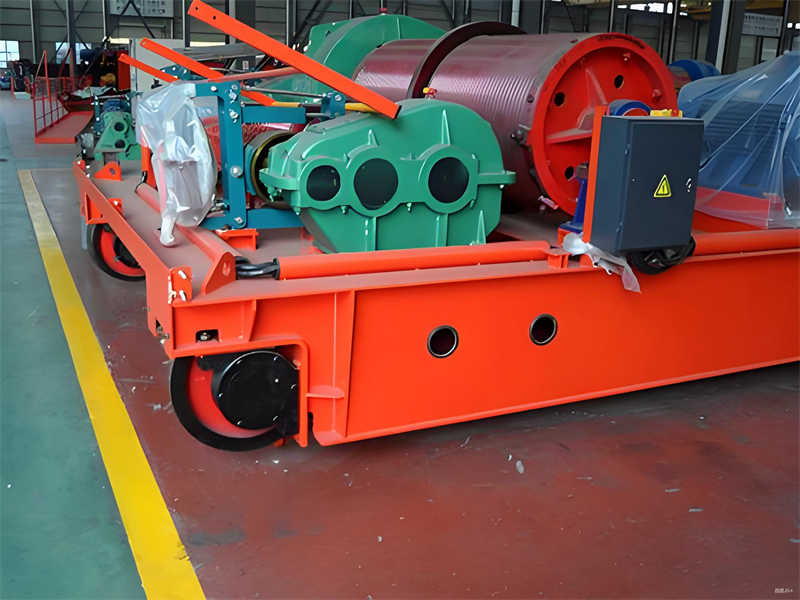
The trolley design must meet three typical working condition requirements: single trolley under full load, dual trolleys in tandem lift (if using a dual trolley structure), and stability requirements under dynamic loads. Especially under the dual trolley tandem lift condition, it is necessary to ensure synchronous operation of the two trolleys and even load distribution to avoid additional torque on the main girder.
The design process follows a “calculation-design-verification” cycle. First, basic parameters are determined based on usage requirements, then mechanism layout and component selection are performed, and finally, strength, stiffness, stability, and other aspects are verified to ensure design rationality. It is worth noting that to simplify the production process, some designs can directly adopt the structure of universal 5t-50t overhead crane trolleys, but large tonnage (e.g., 150 tons) requires customized design.
The structural design of the double-girder gantry crane trolley needs to comprehensively consider load-bearing capacity, travel stability, maintenance convenience, and appearance coordination. The trolley structure mainly consists of the frame, hoisting mechanism, travel mechanism, and safety protection devices. The overall layout must be compact and reasonable, ensuring no interference in the movement of various mechanisms.
Frame Design:
The frame serves as the skeleton of the trolley, bearing all loads and transferring them to the main girder. This design uses a welded steel box-section structure, characterized by high stiffness and strength. The frame is arranged with two load-bearing beams transversely, connected at both ends through end beams to form an integral frame structure. The height of the load-bearing beams is determined to be 800-1000mm based on the span and lifting capacity, with web thickness not less than 20mm (for 150-ton class), and top/bottom flange thickness of 25-30mm. To improve local stability, transverse stiffeners are installed inside the box beam every 1.5 meters, with additional reinforcement ribs added at the pulley block support locations.
The frame is connected to the main girder through wheel assemblies, using QU70 steel rail as the trolley travel rail. The wheel diameter is selected based on wheel pressure calculation. Typically, for a 150-ton class trolley, the wheel diameter is not less than 630mm, forged from 42CrMo alloy steel, with surface hardness reaching HB300-380 after quenched and tempered heat treatment. Wheel bearings are selected as double-row spherical roller bearings, which can automatically compensate for skewing caused by frame deformation.
Special Design for Dual Trolleys:
When using a main and auxiliary dual trolley configuration (e.g., 100t+100t=200t tandem lift), special attention must be paid to coordinated control and load distribution between the two trolleys. The two trolleys should maintain synchronous operation, with the spacing determined based on the size of the lifted object, typically not less than 1/3 of the span. Calculations show that when the dual trolleys are at the mid-span position, the main girder bending moment reaches its maximum, requiring reinforced frame design at this time. The dual trolley structure also requires mechanical and electrical interlocking devices to prevent single trolley overload.
Protection and Attachments:
The distance from the trolley canopy to the conductor bar is designed as 0.97 meters, and the distance to the railing is also maintained at 0.97 meters, ensuring maintenance space and electrical safety. The distance from the flange to the top plate of the main girder is 1.8 meters, facilitating installation and maintenance. Removable guardrails are installed on both sides of the trolley, with a height not less than 1 meter, and toe boards at the bottom to prevent tools from falling. The canopy is made of corrugated steel plate, which is both aesthetically pleasing and enhances local stiffness.
The hoisting mechanism is the core component of the crane trolley, directly related to the safety and work efficiency of the entire machine. For the 150-ton class double-girder gantry crane, the hoisting mechanism needs to meet the working requirements of low speed under heavy load and high speed under light load, ensuring operational efficiency under different conditions.
Drive System Layout:
A parallel shaft arrangement is adopted. The motor is connected to the reducer via a highly flexible coupling, and the reducer output shaft drives the drum rotation through a gear coupling. This layout is compact, has high transmission efficiency, and is easy to maintain. The motor is selected from the YZP series metallurgical crane dedicated variable frequency motor, with insulation class F and protection class IP54. The power is determined based on the lifting capacity and speed calculation (150 tons approximately requires 2×75kW dual motor drive). The reducer is selected as the QJS type medium-hardened gear reducer. The speed ratio is determined based on the hoisting speed calculation. The input and output shafts are arranged in parallel, facilitating connection with the motor and drum.
Drum and Pulley Block:
The drum is made of 16Mn steel plate, rolled and welded. The diameter is determined based on the wire rope diameter (typically 20-25 times the wire rope diameter). The length must accommodate the entire wire rope winding neatly and leave not less than 3 dead wraps. Spiral grooves are provided at both ends of the drum to guide the orderly arrangement of the wire rope. The pulley block is made of cast steel structure. The pulley diameter is not less than 25 times the wire rope diameter. Bearings are selected as double-row spherical roller bearings to reduce friction resistance.
Wire Rope Selection:
Determined according to the GB/T3811-2008 standard calculation, for a 150-ton lifting capacity, multiple wire ropes are typically used to share the load. Select non-rotating multi-strand wire ropes with a tensile strength grade above 1870MPa, such as 36×K7 structure, with a single rope diameter not less than 28mm. The wire rope ends are fixed on the drum via clamps, with each rope tensioned independently to ensure even force distribution.
Braking System:
A two-stage braking system is installed for safety: primary braking is the hydraulic thruster brake integral to the motor; secondary braking is a disc brake installed on the reducer input shaft. The dual braking system ensures the load can be safely stopped even if any single brake fails. The braking torque of the brake is not less than 1.5 times the rated torque. During the static load test, the braking slippage should not exceed 1/100 of the drum rotation amount.
Hook Assembly:
The main hook uses a 150-ton class forged hook, made of DG20Mn material, with a trapezoidal cross-section for high strength and light weight. The hook is connected to the crossbeam via thrust bearings, allowing free rotation to prevent wire rope twisting. The hook assembly is equipped with safety attachments such as anti-roping devices and pulley guards.
The design of the trolley travel mechanism must ensure that the crane trolley can move smoothly and accurately along the main girder rails, without creeping, slipping, or skewing. Considering the large tonnage characteristics of the double-girder gantry crane, the travel mechanism typically adopts a centralized drive or independent drive method.
Drive Method Selection:
For the 150-ton class trolley, independent drive is recommended, where the driving wheels on each side are driven by an independent drive unit. This method offers high transmission efficiency, flexible layout, and can effectively compensate for wheel skew caused by frame deformation. Each drive unit includes a motor, brake, reducer, and wheel assembly, connected by universal couplings to compensate for installation errors.
Motor and Reducer Selection:
The travel motor is selected from the YZR series wound rotor asynchronous motor. The power is determined based on the travel resistance calculation (150-ton class approximately requires 2×11kW). The reducer is selected as the QJ type crane dedicated reducer. The speed ratio is determined based on the required travel speed. The brake is selected as a hydraulic thruster brake, installed on the reducer input shaft, ensuring safe and reliable braking.
Wheels and Rails:
The wheel diameter is selected based on wheel pressure calculation. Typically, for a 150-ton class trolley, the wheel diameter is not less than 630mm. The wheel material is 42CrMo alloy steel, with tread surface quenched to hardness HB320-380, and depth not less than 15mm. The rail is selected as QU70 type, with hardness slightly lower than the wheels to reduce contact fatigue. Wheel bearings are selected as double-row tapered roller bearings, capable of withstanding large radial and axial loads.
Anti-Skew Measures:
Large-span trolley travel is prone to skew. The following measures are taken in the design: (1) Install horizontal guide wheels to maintain a constant gap between the trolley and the rail; (2) Use variable frequency speed control to ensure synchronous operation of motors on both sides; (3) Design the frame with sufficient stiffness to reduce skew caused by deformation.
Anti-Collision Protection:
Buffers (polyurethane or hydraulic buffers) are installed at both ends of the trolley to absorb impact energy. Limit switches and anti-collision devices are also installed to automatically decelerate and stop when approaching the end of the rail.
Table: Main Parameters for 150-ton Double-Girder Gantry Crane Trolley Travel Mechanism
| Parameter Name | Value | Remarks |
|---|---|---|
| Drive Method | Independent Drive | Independent drive on each side |
| Motor Power | 2×11kW | YZR series |
| Reducer Model | QJ560 | Crane dedicated |
| Wheel Diameter | Φ630mm | 42CrMo material |
| Rail Model | QU70 | High-strength crane rail |
| Travel Speed | 20-30 m/min | Variable Frequency Drive control |
The electrical control system for the modern double-girder gantry crane trolley has evolved from traditional relay control to an intelligent control system based on PLC + frequency converters, greatly improving travel smoothness, positioning accuracy, and energy efficiency.
Control Architecture:
The system adopts a distributed control architecture, consisting of the main PLC, frequency converters, sensors, and operator interfaces. The PLC serves as the control core, processing various input signals and outputting control commands; frequency converters drive the motors of each mechanism, enabling stepless speed control; sensors monitor the operating status of each mechanism in real time; operator interfaces include both cabin control and ground remote control.
Variable Frequency Speed Control Technology:
The hoisting mechanism uses vector control frequency converters to achieve constant torque control, ensuring high torque output at low speeds and precise stopping at high speeds. The travel mechanism uses VF control frequency converters,配合 braking units, to achieve smooth starting, braking, and speed regulation. The selection of frequency converters must consider the crane’s duty cycle, typically chosen as heavy-duty type, with a capacity one or two grades higher than the motor’s rated power.
Synchronous Control (Dual Trolleys):
When using a dual trolley structure, the two sets of hoisting and travel mechanisms must be strictly synchronized. The control system uses encoders to detect the position and speed difference of the two trolleys in real-time. The PLC performs PID calculations and adjusts the frequency converter output to ensure synchronization accuracy within 10mm. Load balancing detection is also set up; when the load difference between the two hooks exceeds 10% of the rated value, an alarm is triggered and unbalanced operation is stopped.
Safety Protection System:
Multiple safety protections are implemented: (1) Overload limiter, which cuts off hoisting power when the load exceeds 105% of the rated capacity; (2) Height limiters, preventing hook overwind; (3) Travel limiters, restricting the trolley’s travel range; (4) Emergency stop buttons, quickly cutting off power in dangerous situations. All safety devices are in independent circuits, directly cutting off the power supply without going through the PLC.
Monitoring and Diagnostics:
The system is equipped with a touch screen display, showing real-time parameters such as load, height, and travel position, and recording operational data and fault information. It has self-diagnostic functions to identify abnormal states like overload, overspeed, and motor overheating, providing handling suggestions.
Strength Calculation and Finite Element Analysis
As a key load-bearing component, the double-girder gantry crane trolley must undergo detailed strength, stiffness, and stability calculations to ensure it meets safety requirements under various working conditions. Modern design methods have evolved from traditional manual calculations to a combination of computer-aided design and finite element analysis.
Load Combination Analysis:
According to GB/T3811-2008 “Design Rules for Cranes”, the trolley structure needs to be calculated for the following three load combinations:
Key Part Calculations:
Finite Element Analysis:
Use software like SolidWorks or ANSYS to create a 3D model of the trolley, perform meshing, and set boundary conditions. Analyze stress distribution and deformation under typical working conditions, focusing on:
Fatigue Strength Check:
The trolley structure requires fatigue life assessment, especially at welds and stress concentration areas. Based on Miner’s linear cumulative damage theory, calculate the fatigue damage degree under different stress ranges; the total damage degree should be less than 1. For high-stress cycle areas, such as pulley support seats, measures like improving weld quality grade and optimizing transition fillets can be used to extend fatigue life.
Stability Analysis:
Compressed components of the trolley structure (e.g., box girder webs) require local stability checks. Calculate critical buckling stress based on plate and shell theory, ensuring working stress is below the critical value. If necessary, set longitudinal and transverse stiffeners to improve stability.
The manufacturing quality of the double-girder gantry crane trolley directly affects its performance and safety reliability. This section provides detailed instructions on the manufacturing process, assembly procedure, and commissioning methods for the 150-ton class crane trolley, ensuring design intent is accurately translated into the actual product.
Material Selection and Pretreatment:
Main load-bearing structural components use Q345B low-alloy high-strength steel, which offers excellent comprehensive mechanical properties and good weldability. Upon arrival, steel plates undergo ultrasonic testing to ensure no internal defects. Before cutting, shot blasting pretreatment is performed to remove mill scale and achieve Sa2.5 cleanliness, followed by the application of a weldable shop primer.
Welding Process:
Main welds of the box girders use submerged arc automatic welding with K-type or V-type grooves, ensuring penetration rate not less than 80%. Fillet welds between stiffeners and webs use CO₂ gas shielded welding to reduce thermal deformation. All welds undergo visual inspection and non-destructive testing (ultrasonic or radiographic), with the testing proportion for main load-bearing welds not less than 20%. After welding, main structural components undergo overall stress relief annealing to eliminate welding residual stress.
Machining Process:
Key mating surfaces, such as wheel bearing seat mounting surfaces and reducer mounting surfaces, require milling, achieving a surface roughness of Ra3.2. Wheel axle holes are machined with CNC boring machines, with coaxiality error not exceeding 0.05mm. The mating surfaces of gear couplings are ground, ensuring contact area not less than 80%.
Assembly Procedure:
Commissioning Methods:
Anti-Corrosion Treatment:
After surface treatment reaches Sa2.5 level, apply epoxy zinc-rich primer (80μm) + epoxy mica iron intermediate coat (100μm) + polyurethane topcoat (60μm), with a total dry film thickness not less than 240μm. Friction surfaces (e.g., wheel treads, brake wheels) are not painted. All internal cavities of box girders are injected with anti-rust wax to prevent internal corrosion.
Acceptance Standards:
Acceptance is carried out according to GB/T14405-2011 “General Purpose Overhead Traveling Cranes” and GB/T14406-2011 “General Purpose Gantry Cranes”. Main indicators include:
A scientific and reasonable maintenance system is key to ensuring the long-term, safe, and stable operation of the double-girder gantry crane trolley. Based on practical crane usage experience, this section provides a systematic maintenance plan and common fault handling methods to maximize equipment service life.
Daily Inspection System:
Lubrication System Management:
Adopt a combination of centralized lubrication and manual lubrication:
Key Component Life Management:
Establish a replacement cycle table for key components, for example:
For the maintenance of the double-girder gantry crane trolley, in addition to the daily inspections and maintenance mentioned above, the equipment’s operation manual and relevant maintenance standards should also be followed to ensure long-term stable operation of the equipment. When a fault occurs, promptly identify the cause and take appropriate repair measures to avoid minor issues escalating and affecting the normal operation and service life of the equipment.
In the maintenance of the double-girder gantry crane trolley, special attention should also be paid to the life management of the following key components:
Based on the actual usage and equipment condition, and while following the equipment operation manual and relevant maintenance standards, the maintenance should also focus on personalized needs. Develop a reasonable maintenance plan to ensure the long-term stable operation of the equipment.
Contact our crane specialists
Send us a message and we will get back to you as soon as possible.