As an indispensable and important equipment in modern industry, the detailed description of the technical specifications of the electric double-beam bridge crane is crucial to ensure the accuracy of equipment selection, installation, operation and maintenance. This manual is not only a comprehensive and accurate description of the equipment, but also a key basis for users to understand the performance of the equipment and optimize production efficiency. From the basic product overview to the analysis of the complex electrical control system, to the detailed installation and commissioning, operation and maintenance guide, each part carries the important mission of ensuring the efficient and stable operation of the equipment. By reading this manual in depth, you will be able to fully grasp the technical essence of the electric double-beam bridge crane and provide strong support and guarantee for your production operations.
As an indispensable and important material handling equipment in modern industrial production, the electric double-beam bridge crane has been widely used in many industries due to its high efficiency and reliability. The main components of this crane include bridge, electric drive system, hook and related safety protection facilities. The bridge realizes lateral movement along the track through the electric drive system, while the hook completes the vertical lifting and lowering of the goods through lifting and lowering movements. This design enables the electric double-beam bridge crane to flexibly handle and stack various goods, greatly improving production efficiency.
The design of the crane is compact and easy to operate, making it a key component in modern production lines. It uses advanced materials and technologies to ensure the stability and durability of the equipment during long-term use. In addition, the electric double-beam bridge crane also has a high level of automation and can adapt to various complex production environments and work requirements.
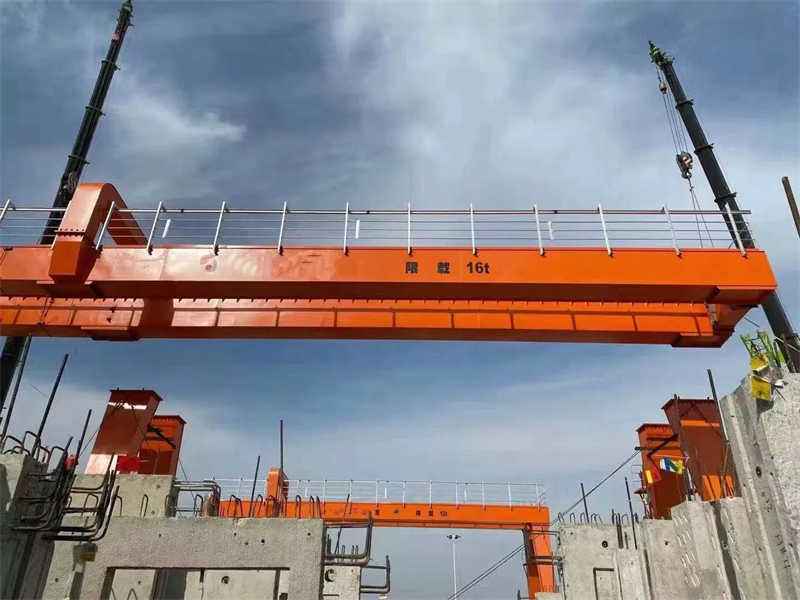
The electric double-beam bridge crane is an important equipment widely used in various industrial scenarios, mainly used for the lifting and handling of heavy goods. The compact structural design and easy operation of this crane make it a key component in modern production lines. In steel mills, electric double-beam bridge cranes are used for the handling of bulk goods such as steel billets and steel coils. In the steel production process, these goods need to be accurately transported to the designated location, and this crane can provide efficient handling services to ensure that the goods are not damaged during transportation. In addition, in shipyards, this crane can be used for processes such as segment assembly and hull hoisting. In the shipbuilding process, the hull needs to be accurately hoisted into place, and this crane can provide strong lifting capacity and stable operating performance to ensure the smooth progress of the lifting process. In addition to steel mills and shipyards, electric double-beam bridge cranes also play an important role in the fields of machinery manufacturing and warehousing and logistics. In the field of machinery manufacturing, this crane can be used for equipment installation, commissioning and other processes. In the field of warehousing and logistics, this crane can be used for cargo handling, storage and other links. The high level of automation and intelligent control system of this crane make it one of the indispensable core equipment in these fields.
As an efficient and reliable material handling equipment, the electric double-beam bridge crane has been widely used in many industries with its strong lifting capacity, stable operating performance and advanced technical characteristics. This crane adopts advanced materials and technologies to ensure the stability and durability of the equipment during long-term use. Its compact design and easy operation make it a key component in modern production lines. In addition, the electric double-beam bridge crane also has a high level of automation and can adapt to various complex production environments and work requirements. The intelligent electrical control system of this crane makes the operation easier and more accurate, greatly improving work efficiency and safety. At the same time, its high-efficiency drive system can ensure the stability and safety of goods during the handling process. Compared with the same type of lifting equipment, the electric double-beam bridge crane has a higher cost-effectiveness and longer service life. This enables it to bring more economic benefits and convenience to manufacturers during long-term use.
The technical specification is an important basis for the design and manufacture of electric double-beam bridge cranes. It details the key information such as the structure, performance, parameters and safety requirements of the product. For users, the technical specification is not only a compass for purchasing suitable products, but also an important reference for subsequent installation, commissioning, operation and maintenance. Through the technical specification, users can understand the product’s performance parameters such as lifting capacity, running speed, etc.; structural features such as bridge design, drive system, etc.; safety requirements such as operating procedures, maintenance points and other important information. This information is crucial for users to purchase suitable products and subsequent use and maintenance.
The main beam and end beam of the electric double-beam bridge crane are its core structural components, and they jointly undertake the main function of lifting operations. As the load-bearing core, the design of the main beam directly affects the load-bearing capacity and work efficiency of the crane. In terms of structure, the main beam is made of high-strength steel, such as Q345B or Q460, etc., and through advanced welding technology and sophisticated calculation models, it ensures that it can maintain stable mechanical properties when bearing huge hook tension and cargo weight, without deformation or fracture. Reinforcement plates are usually set inside the main beam to further improve its bending and shear resistance. The end beam is used as a bridge connecting the main beam and the track, and is designed with a precise roller device. The contact surface between these rollers and the track is optimized to ensure that the crane runs smoothly and unimpeded along the track, reduce friction and wear, and ensure operation accuracy.
The hoisting mechanism is one of the core components of the electric double-beam bridge crane. It realizes the vertical lifting and lowering of the hook through components such as motors, reducers, and brakes. The operating mechanism is responsible for the lateral movement of the crane on the track, and is usually composed of a motor, a driving wheel, a driven wheel and a track. The design of these mechanisms has been strictly calculated and tested to ensure their stable and reliable performance. The motor in the lifting mechanism provides a power source for the electric double-beam bridge crane, and transmits power through the reducer, so that the hook can move up and down in the vertical direction. The brake controls the lifting movement when necessary to ensure safety and stability. The motor in the operating mechanism also provides a power source for lateral movement, and the lateral movement of the crane is achieved by moving the driving wheel and the driven wheel on the track. At the same time, these mechanisms are also equipped with various sensors and control systems to ensure their stable and reliable performance.
The electrical control system is the “brain” of the electric double-beam bridge crane. It is responsible for receiving operating instructions, controlling the coordinated actions of various components and monitoring the operating status. The system adopts advanced PLC control technology and has a high level of automation and intelligence. It is also equipped with a variety of protection devices, such as overload protection, short circuit protection, and pressure loss protection, to ensure the safe operation of the crane. As the core control device, PLC accurately controls the working status of each actuator according to the instructions issued by the operator through the console. At the same time, the system also has a complete fault diagnosis function, which can promptly alarm and provide corresponding treatment suggestions when a fault occurs, helping maintenance personnel to quickly locate and solve the problem.
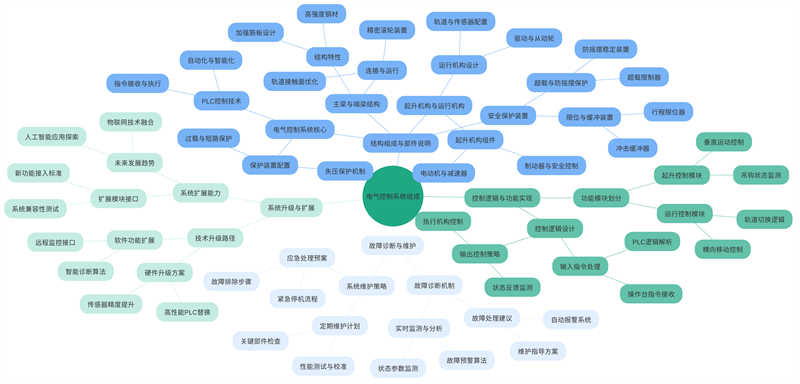
In order to ensure the safe operation of the electric double-beam bridge crane, it is also equipped with a variety of safety protection devices. These devices include but are not limited to limiters, buffers, overload limiters, anti-sway devices, etc. They can monitor various parameters and states in real time during the operation of the crane, and immediately trigger protection measures once abnormal conditions are found, effectively avoiding accidents. For example, the limiter can prevent the crane from exceeding the preset safe position during operation; the buffer can absorb the impact force of the crane during operation; the overload limiter can prevent the crane from overloading; the anti-sway device can prevent the sling from swinging in the air, etc. The existence of these safety protection devices makes the electric double-beam bridge crane safer and more reliable during use.
The lifting capacity of electric double-beam bridge crane is a key parameter customized by users according to actual needs. It covers a wide range, ranging from several tons to hundreds of tons, to meet the needs of cargo handling and lifting in various industrial scenarios. The working level is an indicator used to measure the intensity and frequency of crane work. It is usually divided into multiple levels such as A1 to A8, each of which corresponds to a specific load state and operating efficiency. When purchasing, users need to combine the actual use conditions, such as the weight of the hoisted cargo, the operation time, the operation intensity and other factors, to select the appropriate lifting capacity and working level to ensure that the crane has good economy and stability while meeting the operation requirements.
The span refers to the distance between the two ends of the crane main beam. This parameter is mainly limited by the spatial layout of the operation site, and also takes into account factors such as cargo size and handling efficiency. The lifting height refers to the distance from the lowest position to the highest position of the hook. This height needs to be comprehensively calculated and set based on factors such as cargo size, operation space and operation process. In terms of operating speed, the operating speed of an electric double-beam bridge crane includes the lateral moving speed and the vertical lifting speed of the hook. The selection of these speed parameters directly affects the handling efficiency of the entire system. The selection of these parameters needs to be considered comprehensively with factors such as the spatial layout of the work site, cargo size, and handling efficiency to ensure that the crane has efficient and stable operating performance while meeting the operational requirements.
Table: Main technical parameters of electric double-beam bridge crane
| Parameter Category | Parameters | Description/Scope | Influencing factors |
| Lifting capacity and working level | Lifting capacity | From several tons to hundreds of tons | Cargo weight, operation time, and operation intensity |
| Work Level | Multiple grades from A1 to A8 | Crane work intensity and frequency | |
| Span, lifting height and operating speed | Span | Determined according to the spatial layout of the work site | Work site space layout and cargo size |
| Lifting height | Comprehensive calculation based on cargo size, operating space, etc. | Cargo size, work space, and work flow | |
| Running speed | Including lateral moving speed and vertical lifting speed | Work site space layout, cargo size, and handling efficiency | |
| Motor power and power supply requirements | Motor power | Related to lifting capacity, operating speed and working environment | Lifting capacity, operating speed, working environment |
| Power Requirements | Stability and reliability are key | Crane specifications and performance requirements | |
| Environmental adaptability and durability | Environmental adaptability | Consider temperature changes, humidity differences, corrosive environments, etc. | Equipment performance, working environment |
| Durability | Key components are durability tested and optimized | High performance levels during long-term use |
Table: Electric double-beam bridge crane purchase considerations
| Considerations | Description | Influence |
| Lifting capacity requirements | Determined according to the actual weight of the hoisted cargo | Crane lifting capacity and stability |
| Working Level Requirements | Choose according to factors such as operation time and operation intensity | Crane load status and operating efficiency |
| Work site space layout | The selection of parameters that affect the crane’s span, operating speed, etc. | Crane handling efficiency and adaptability |
| Cargo size and weight | The selection of parameters affecting lifting height, running speed, etc. | Crane operation capacity and safety |
| Power stability and reliability | Ensure the normal operation and service life of the crane | Power supply configuration and protection measures for cranes |
| Environmental conditions | Consider the impact of factors such as temperature, humidity, and corrosiveness on equipment performance | Environmental adaptability and durability of cranes |
| Economical and cost-effective | Comprehensive consideration of factors such as usage requirements and budget | Return on investment and long-term benefits of cranes |
| After-sales service and technical support | Ensure timely repair and maintenance of cranes to extend their service life | Crane after-sales service quality and technical support capabilities |
The motor power of an electric double-girder bridge crane is closely related to its lifting capacity, operating speed and working environment. Generally speaking, the greater the motor power of a crane, the higher its lifting capacity and operating speed. The stability and reliability of the power supply are also one of the key factors to ensure the normal operation of the crane. During the purchase and use process, users need to reasonably configure the power supply equipment according to the specifications and performance requirements of the crane, and take effective protection measures, such as installing a voltage stabilizer, uninterruptible power supply, etc., to ensure the normal operation and service life of the crane.
At the beginning of the design, the electric double-girder bridge crane fully considered the various complex factors in different working environments, such as temperature changes, humidity differences, and corrosive environments. The impact on equipment performance. By adopting advanced protection technology and material selection, the reliability and stability of the crane in different environments are ensured. At the same time, in order to further improve the durability of the crane, the manufacturer will also conduct strict durability testing and optimization design of its key components to ensure that the whole machine maintains a high performance level during long-term use. Therefore, users can safely use electric double-girder bridge cranes in various complex environments, making them an important partner for improving production efficiency and ensuring operational safety.
Before installing the electric double-beam bridge crane, detailed preliminary preparation and strict condition inspection must be carried out. First, according to the building structure and operation requirements, the installation position and track layout of the crane must be determined to ensure its stability and applicability; check the straightness and levelness of the track to avoid unstable operation or tilting of the crane due to track problems; prepare necessary installation tools and materials, such as cranes, wrenches, screwdrivers, cables, etc.; perform appearance inspection and performance tests on various components of the crane to ensure that they are intact and meet the design requirements.
The installation of the electric double-beam bridge crane requires certain steps and precautions. First, accurately assemble the main beam and end beam into a bridge structure according to the design drawings, and ensure that it is placed stably on the predetermined track; according to the design requirements, gradually install key components such as the lifting mechanism, operating mechanism, and electrical control system. During the process, pay attention to whether the installation position of each component is accurate and whether the tightness meets the requirements; after all components are installed, the whole machine is debugged and tested. During the installation process, attention should be paid to key factors such as the installation position and tightness of each component, the correctness of the wiring of the electrical circuit, and the insulation performance.
Debugging and trial operation are key links to ensure the normal operation of the electric double-beam bridge crane. During the debugging process, the electrical control system needs to be functionally tested and parameter adjusted. Functional tests are used to verify whether the control instructions of each component can be executed accurately and without error. Parameter adjustments are used to optimize the operating parameters of each component according to the actual operating results; functional verification and sensitivity tests are performed on the safety protection devices such as the crane’s limiters and buffers to ensure that these devices can function quickly and effectively in an emergency; during the trial operation, the overall operating status of the crane needs to be continuously observed, and various performance indicators need to be checked to see if they meet the design requirements. At the same time, attention should be paid to discovering potential problems and handling them in a timely manner.
Before operating an electric double-beam bridge crane, a comprehensive and detailed inspection and safety confirmation must be carried out. First, conduct a comprehensive inspection of the mechanical structural components of the crane, including but not limited to the integrity and firmness of key components such as the main beam, end beam, operating mechanism, hook device, etc., to ensure that there are no defects such as cracks, deformation, wear, etc., and confirm whether the lubrication condition of each component is good. Secondly, conduct a comprehensive inspection of the electrical system, including motors, controllers, cables, wiring terminals and other equipment, to ensure that the wiring is correct and there is no looseness, aging or damage. At the same time, check whether various protection devices such as overload protection, short-circuit protection, limit switches, etc. are sensitive and reliable. In addition, it is necessary to verify whether the spatial layout of the operation site is reasonable, whether the size and weight of the cargo match the performance parameters of the crane, whether the cargo handling route is coordinated with the operation trajectory of the crane, and confirm whether there are any obstacles or dangerous factors that may affect safety in the operation area.
The operation process of an electric double-beam bridge crane should follow rigorous steps and specifications to ensure the safety and efficiency of the operation. Before lifting operations, operators must carefully select appropriate slings and slings according to the weight, size, nature and handling requirements of the goods. When hanging the sling, be sure to ensure that the connection between the sling and the sling is firm and reliable, without slippage or looseness, and pay attention to the load-bearing capacity of the sling and the sling should be greater than the weight of the goods to ensure safety during the operation. Before starting the crane, the operator should confirm the operating status of the crane again, including the tightness of each component, the integrity of the electrical circuit, etc. During the operation, strictly follow the operating instructions to avoid illegal operations. During the cargo lifting stage, pay attention to the balance of the cargo to avoid swinging or tilting of the cargo. During the movement, pay close attention to the location and route of the cargo to avoid collisions with other equipment or obstacles. During the descent, operate slowly to ensure that the cargo lands smoothly. When the cargo reaches the designated location, the operator should stop the operation of the crane immediately and disconnect the sling and the sling as soon as possible. When multiple people work together, strengthen communication and collaboration to ensure the smoothness and safety of the operation process.
During the lifting operation, emergency situations such as electrical failure, mechanical failure or operating error may occur due to various reasons. In order to ensure the safety of personnel and equipment, detailed emergency handling measures must be formulated. When encountering an emergency, the operator should stop the operation of the crane immediately. If possible, the power supply should be cut off as soon as possible to prevent accidental startup or electrical failure from causing a larger accident. Take necessary protective measures to prevent cargo or equipment from causing harm to personnel. When dealing with an emergency, it should be reported to the relevant departments and personnel as soon as possible for handling. When reporting, the location, cause, current situation and measures taken of the accident should be detailed. At the same time, operators should be regularly trained and drilled in emergency handling to improve their ability to deal with emergencies. Through training and drills, operators can become more familiar with the correct methods and steps for handling emergencies. This helps to make correct judgments and handle them quickly when an emergency really occurs.
As an indispensable lifting equipment in modern industrial production, the stability and safety of the performance of electric double-beam bridge cranes are of great significance to improving production efficiency and ensuring the safety of the working environment. In order to ensure that such equipment can effectively serve production activities for a long time, it is particularly important to formulate and implement a comprehensive and detailed maintenance plan.
Daily inspection and maintenance are the basic work of electric double-beam bridge crane management, mainly including the inspection of the tightness of the connection of each component to ensure that all bolts, nuts and other connectors are not loose or fall off, especially for the fasteners of high-speed running parts and heavy-loaded parts. The inspection should be strengthened to prevent the connection from failing due to vibration or impact load, which will cause mechanical failure or safety accidents. At the same time, regular inspection of electrical circuits is also very important, including wear and corrosion inspection of all wiring terminals, switch cabinets and connecting wires in the control cabinet to ensure that the wiring is firm and reliable, and the insulation performance is good, thereby effectively reducing the incidence of electrical failures.
In addition to the hardware level inspection, the sensitivity and reliability of the safety protection device are also one of the focuses of daily maintenance. For example, limit switches, emergency stop buttons, overload protection devices, etc., these devices play a key role in preventing excessive use of equipment and avoiding safety accidents. It is necessary to ensure that these safety components can act quickly and accurately in abnormal situations to maximize the safety of equipment and personnel. In addition, since dust, oil and other factors in the working environment may cause wear and corrosion of various parts of the crane, regular cleaning and lubrication are particularly necessary. By regularly cleaning the surface of the components and applying grease or lubricating oil, friction resistance can be effectively reduced, the life of the equipment can be extended, and performance degradation and failures caused by wear of parts can also be reduced.
In addition to the above-mentioned daily inspections and maintenance, in order to ensure the long-term and stable operation of the electric double-beam bridge crane, a set of regular maintenance and overhaul plans must be formulated. This plan should include regular replacement and repair of various parts of the crane, functional testing and parameter adjustment of the electrical control system, sensitivity testing and functional verification of the safety protection device, etc. By implementing this plan, potential problems can be discovered and dealt with in a timely manner, thereby extending the service life of the crane and improving work efficiency.
Specifically, for each component of the crane, such as wire rope, pulley block, reducer, etc., it is necessary to replace and repair it regularly according to the prescribed cycle. For worn or damaged parts, they need to be replaced in time to ensure the normal operation of the crane. For the electrical control system, functional testing and parameter adjustment need to be performed regularly. This includes checking and testing each electrical component to ensure that its performance meets the requirements; adjusting and optimizing the parameters of the control system to improve its control accuracy and stability. Through regular maintenance and overhaul work, potential problems can be discovered and dealt with in time, thereby extending the service life of the crane and improving work efficiency.
In addition to the above content, it is also necessary to master the common troubleshooting and solutions of electric double-beam bridge cranes. This includes understanding the fault phenomenon and cause, analyzing the mechanism and process of fault generation, taking corresponding maintenance measures and replacing damaged parts. By mastering the troubleshooting and solutions of these common faults, the normal operation of the crane can be quickly restored and the time of production interruption can be reduced.
At the same time, it is also necessary to establish a fault recording and analysis mechanism. By recording and analyzing the fault phenomenon, cause, solution, etc., a reference basis can be provided for subsequent equipment improvement and maintenance. By constantly summing up experience and lessons, the reliability and stability of the equipment can be further improved.
Operators of electric double-beam bridge cranes must have the corresponding qualifications and safety training experience. They need to have a deep understanding of the structural principles, operating methods and safety regulations of the crane, and have the ability to troubleshoot and solve common problems. In order to ensure that the operator’s skill level meets the requirements, they should also receive safety training and assessment regularly to improve their safety awareness and operating skills. At the same time, operators must also comply with the corresponding safety operating procedures and prohibitions to ensure that no safety regulations are violated during operation.
In order to ensure the safe operation of electric double-beam bridge cranes, strict safety operating procedures and prohibitions must be formulated. First, overloading operations must be prohibited to ensure that the load capacity of the crane meets the lifting requirements and avoid equipment damage or safety accidents caused by overloading. Secondly, it is prohibited to walk or stay under the crane to prevent accidental injuries caused by the fall of the sling or equipment failure. In addition, it is also prohibited to change the structure and performance parameters of the crane without authorization to ensure that the original design and manufacturing standards of the equipment are complied with. For violations of safety operating procedures, severe punishment and education and guidance should be carried out to make operators fully aware of the serious consequences of illegal operations and ensure the strict implementation and implementation of safety operating procedures.
In addition to operator qualifications and safety training, safety operating procedures and prohibitions, necessary equipment safety protection measures must be taken. These measures include setting up obvious safety warning signs and warning lights on the crane to remind people around to pay attention to safety. Install protective covers and guardrails at key locations to prevent accidental contact from causing equipment damage or personal injury. Equip operators with necessary safety protection supplies, such as protective clothing, protective glasses and protective gloves, to provide necessary protection. The implementation of these safety protection measures can further improve the safety and reliability of the crane.
Contact our crane specialists
Send us a message and we will get back to you as soon as possible.