As the core equipment in modern industrial material handling systems, electric single-beam cranes are widely used in machinery manufacturing, logistics warehousing, assembly production lines and other fields with their compact structure, flexible operation and high cost performance. This article will systematically introduce the main models and characteristics of electric single-beam cranes, the application scenarios of special customized models, the technical considerations for model selection and the key points of safety maintenance, and provide a comprehensive selection guide for engineering and technical personnel and purchasing decision makers.
The model system of electric single-beam cranes reflects the differences in their design concepts, structural characteristics and application scenarios. According to domestic mainstream standards and manufacturers’ practices, electric single-beam cranes can be divided into several main types, each of which has its own unique technical characteristics and applicable environment. As the most basic and most common model, LDA electric single-beam crane is a classic product designed and manufactured in accordance with JB/T1306 standards. The main beam of this model usually adopts I-beam or welded box beam structure. The electric hoist runs along the lower flange of the main beam, driven by the end beam, and the track is supported on the workshop column or load-bearing wall. The rated lifting capacity of LDA cranes ranges widely, generally from 1 to 20 tons, with a maximum span of 22.5 meters and working levels from A3 to A5, which can meet most conventional material handling needs. The core advantage of this model is its extremely high cost-effectiveness. Compared with traditional double-beam cranes, the procurement cost can be reduced by 30%-50%, and the modular design is adopted. The on-site installation cycle only takes 3-5 days, which greatly shortens the preparation time for the equipment to be put into use. For this reason, LDA cranes have become the first choice for scenes such as mechanical manufacturing workshops, logistics warehouses and equipment assembly lines.
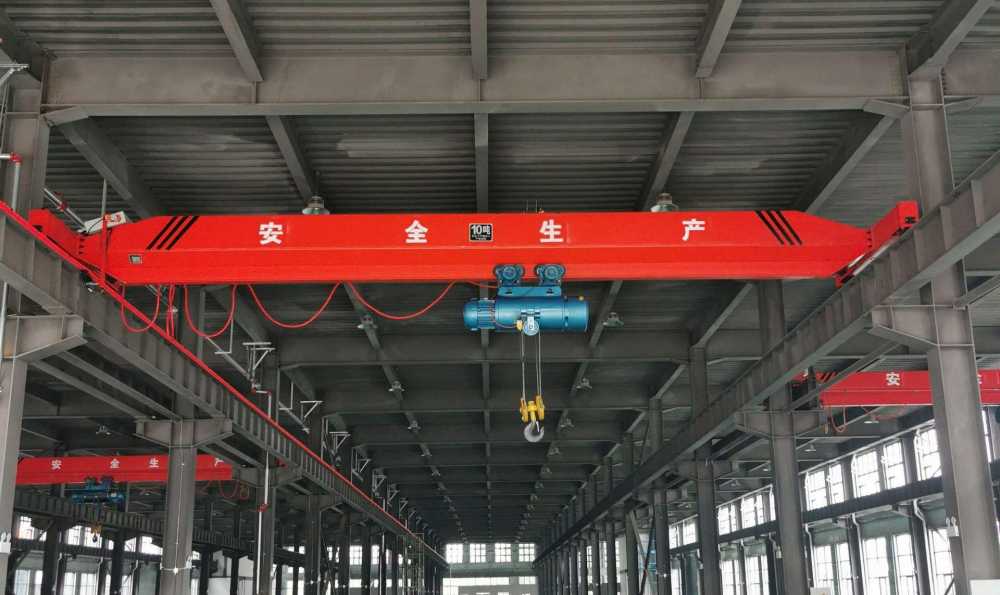
LDX/LDE European single-beam cranes represent a more advanced design concept and are high-end products in the domestic market in recent years. European cranes are characterized by “small size, light weight and small wheel pressure”. Through optimized design, the limit distance from the hook to the wall is minimized, and the clearance height also reaches the lowest level in the industry. LDX cranes inherit the technical essence of European lifting equipment and adopt a unique structural design. Their deadweight is 30%-40% lighter than traditional cranes, and their energy consumption is reduced by about 25%. They are particularly suitable for workshops with high requirements for space utilization. The LDE type is a double-hoist single-beam crane, designed and manufactured according to the JB/T1306-2008 standard. It can be used with two sets of electric hoists in the form of CD1, MD1, etc., and has more flexible and diverse functions. The advantages of European cranes are not only reflected in the structural parameters, but also in the precision-made operating mechanism, which makes the equipment quieter and more accurate in positioning, especially suitable for occasions with strict requirements on the working environment.
The main difference between the LX type electric single-beam suspension crane and the LD type crane is the installation method. Its main beam is directly suspended on the roof structure of the factory building, without the need to set up additional pillars, saving ground space. The load range of this type of crane is usually 0.5-5 tons. By hanging and fixing the crossbeam on the building’s walking track (I-beam), the position and span of the walking track can be freely set according to actual needs. This feature makes the LX type crane particularly suitable for scenes that require flexible layout, such as production lines. Its main beam mostly adopts a box beam structure designed by computer optimization, which has high rigidity and light weight, and can effectively reduce the track load. In terms of power supply, the LX crane uses highly flexible flat cables and has grounding protection function, which improves safety and aesthetics.
In terms of special environment applications, explosion-proof electric single-beam cranes are specially designed for hazardous environments, mainly including two series: LB explosion-proof electric single-beam cranes and LXB explosion-proof electric single-beam suspension cranes. These models are mainly used in environments containing flammable and explosive gases, such as chemical plants, oil depots and other hazardous places. The characteristic of explosion-proof cranes is that their electrical equipment and all parts that may come into contact with gases are specially designed for explosion-proof, including explosion-proof motors, explosion-proof control boxes and explosion-proof junction boxes. The lifting capacity range of the LB type is 1-10 tons, while that of the LXB type is 0.5-5 tons, which can meet the needs of explosion-proof places of different sizes. The manufacture of these cranes strictly follows the national explosion-proof electrical equipment standards to ensure safe and reliable operation in hazardous environments.
In addition to the above mainstream models, there are also some special-function electric single-beam crane variants on the market. Single-beam grab crane is one of them. It is equipped with a grab device and is specially used for handling bulk materials such as grains, ore, coal, etc. In addition, although the names of LH electric hoist bridge crane and QD hook bridge crane are different, they also belong to the category of single-beam crane in structure. The lifting capacity of LH type can reach 5-32/10 tons, while QD type covers a wider range of 5-50/10 tons or even 75/20-100/20t. These types of cranes are usually used in industrial places that require a larger lifting capacity or a higher working level, such as steel enterprises, heavy machinery manufacturers, etc.
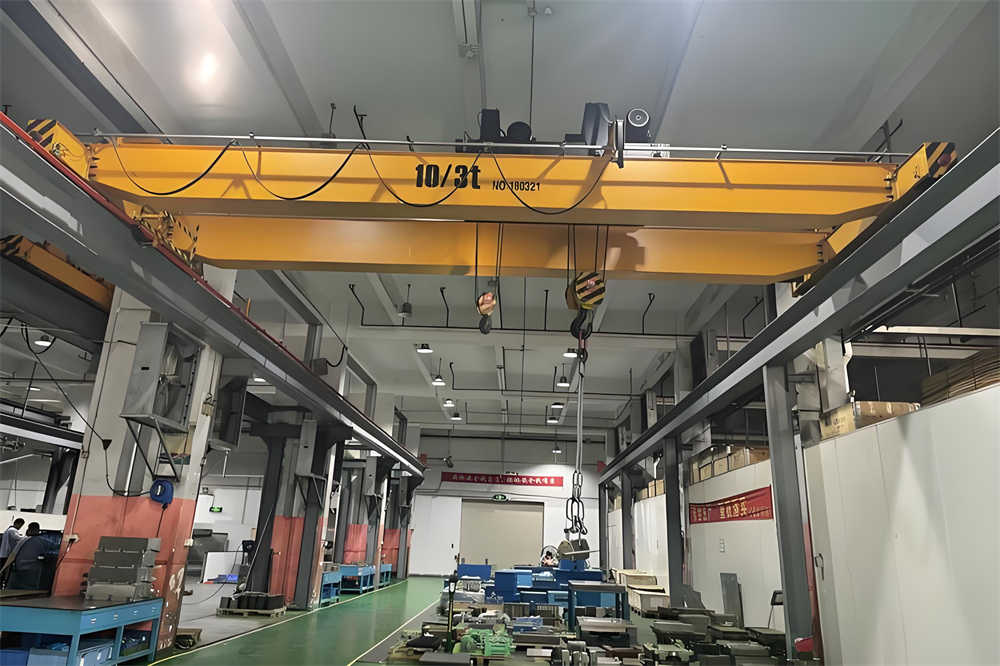
In addition to the standardized electric single-beam crane models, there are also a series of special customized models and imported brand models on the market. These products are usually designed for specific working conditions or special needs, reflecting the technological innovation and customized service capabilities of the crane industry. A deep understanding of these models will help users make more accurate equipment selection decisions under special working conditions. The LDP electric single-beam crane is a relatively special customized model, developed and manufactured by Tianjin Crane Equipment General Factory in the late 1980s. This type of crane is equipped with an imported German AS hoist and an angle trolley, and adopts a welded box-shaped main beam structure. Its uniqueness lies in that the trolley track is arranged on the web and side of the main beam, rather than the traditional lower flange operation method. This design makes the LDP crane separately classified in the JB/T1306-1994 standard. The LDP products currently available on the market include an off-center trolley structure, such as the customized LDP 2-ton off-center trolley electric single-beam crane provided by a manufacturer in Shanghai, which adopts a 3t box beam structure and is suitable for workshops with special space layouts. This off-center design can effectively utilize the side space of the plant and realize the material handling function without hindering the layout of ground equipment.
The LDC electric single-beam crane represents another special structural type. It also uses a welded box-shaped main beam, but its lower flange plate is designed to be wider and thicker, and the electric hoist runs directly on the lower flange plate. This structure eliminates the traditional trolley frame, making the entire crane more compact and lightweight. The EKKE electric single-beam crane of Germany’s DEMAG company and the CXT electric single-beam crane of Finland’s KONE (Kone Crane) company both adopt this design type. The advantages of the LDC type and similar products are simple structure, light weight, and easy maintenance. They are particularly suitable for occasions with strict requirements on clearance height and not too heavy handling tasks. It is worth noting that the LDP type and LDC type are not common in actual applications, and usually need to be specially ordered from manufacturers with corresponding production qualifications according to project requirements.
Internationally renowned brand crane manufacturers have also launched electric single-beam crane models with their own characteristics. These products usually incorporate advanced design concepts and manufacturing processes. Konecranes’ CXT electric single-beam crane is a typical example. As a world-leading crane manufacturer, Konecranes’ CXT crane is designed to meet the material handling needs of different manufacturing processes and can be flexibly applied to various links from component loading and unloading to assembly and transportation. This type of crane performs well in various operation processes such as steel coil handling, unwinding, and storage, and its safety and work efficiency have been strictly verified. Konecranes also continues to invest in research and development, adding a variety of intelligent functions to CXT and other series cranes, such as anti-sway systems, precise positioning systems, and remote monitoring systems, which greatly improves the performance of the equipment in various application scenarios. Although these high-end functions increase the initial investment cost, for large enterprises with high production efficiency requirements and strict safety standards, the long-term comprehensive benefits are significant.
In addition to the Konecranes CXT model, other international brands such as the EKKE model of Demag (DEMAG) in Germany and the CXT model of Konecranes in Finland are also well-known products in the field of electric single-beam cranes. These imported models usually have the following common characteristics: compact and lightweight design, high-performance electrical system, low failure rate and rich safety protection devices. The advantages of imported brand cranes are their globally unified production standards and perfect after-sales service system, but correspondingly, their prices are usually 30%-50% higher than similar domestic products, and the delivery time is relatively long. For users with limited budgets but who want to obtain quality close to imported products, the “European” crane models (such as LDX/LDE) provided by some leading domestic manufacturers are an ideal compromise.
Gantry and semi-gantry electric single-beam cranes constitute another special customized product branch. Although the names of MH electric hoist gantry cranes (according to JB/T5663.2 standard) and LH electric hoist bridge cranes (according to JB/T3695 standard) are slightly different, they both belong to the category of single-beam structure lifting equipment. These models are particularly suitable for temporary lifting operations in outdoor open-air venues or newly built factories (where the driving track has not yet been installed). Gantry cranes run on ground tracks through two-side legs, without relying on the upper structure of the factory building, and the application scenarios are more flexible. Some manufacturers also offer a semi-gantry design, where one side of the outrigger runs on the ground track and the other side is suspended on the track above the plant. This hybrid form is particularly suitable for situations where one side of the plant is close to a wall or has other obstacles. Factors that need to be considered for customized gantry cranes include: wind resistance (outdoor use), outrigger height adjustment range (adapt to uneven ground) and electrical protection level (rain and dust proof).
Table: Comparison of special customized electric single beam crane models
| Model | Structural features | Typical Applications | Advantages |
| LDP | Welded box girder with rails on the web and sides | Special space layout factory | Offset hanging design saves space |
| LDC | Wide and thick lower flange plate, hoist runs directly | Light to medium load conditions, low clearance requirements | Simple structure, easy maintenance |
| CXT type (Konecranes) | Modular design, intelligent functions | Precision manufacturing, steel coil handling | High precision, safe and reliable |
| MH type (door type) | Ground outrigger support, outdoor operation | Open-air site, temporary lifting | Not dependent on plant structure |
When customizing an electric single-beam crane, users need to fully communicate with the manufacturer about the following parameters: lifting weight and working level (considering dynamic load coefficient), span and lifting height, installation method of the running track (suspended or supported), control method (ground operation, remote control or cab), environmental conditions (temperature, humidity, explosion-proof requirements), and whether special functions such as variable frequency speed regulation, precise positioning, etc. are required. Professional crane manufacturers can provide the most optimized customization solutions based on these parameters, while meeting functional requirements and controlling costs. It is worth noting that the delivery time of customized models is usually 30%-50% longer than that of standard models, and more detailed on-site measurements and scheme designs are required. These factors should be fully considered during the project planning stage.
The selection of electric single-girder cranes is a comprehensive technical decision that requires comprehensive consideration of many factors, including process requirements, plant conditions, frequency of use, budget constraints and other multi-dimensional parameters. Scientific and reasonable selection can not only ensure the safety and efficiency of lifting operations, but also optimize investment costs and extend the service life of equipment. As the two most basic parameters of cranes, lifting weight and span directly determine the specifications and prices of equipment. Users first need to clarify the maximum lifting weight requirements, which should be determined based on the actual weight of the hoisted materials and reserve appropriate safety margins. From the search results, the lifting weight ranges of different models of electric single-girder cranes vary greatly: LDA type is 1-20 tons, LX type is 0.5-5 tons, LB type is 1-10 tons, and QD type can even reach 100/20 tons. For special cases where it is occasionally necessary to lift slightly overrated loads, some manufacturers can provide “overload design” versions, but the price will be increased accordingly and may affect the life of the equipment. The span refers to the horizontal distance between the center lines of the wheels of the two end beams of the crane. In theory, the larger the span, the greater the height and deadweight of the main beam, and the higher the price. The span of a standard crane is usually 1.5 meters or 3 meters. Although non-standard spans can be customized, the cost will increase by about 15%-30%.
The working level is a parameter that is easily overlooked but crucial in the selection process. It reflects the frequency of use and load status of the crane. The working level is determined by two factors: the load spectrum (the ratio distribution of the actual lifting weight to the rated lifting weight) and the number of working cycles (the number of actions per hour). The common working levels of electric single-beam cranes are A3-A5, where A3 represents light use (such as maintenance workshops and installation sites), A4 represents medium use (such as machining workshops and assembly lines), and A5 represents heavy use (such as busy storage and logistics centers and metallurgical workshops). For each level increase in the working level, the main metal structural parts of the crane (such as the main beam and end beam) need to be strengthened in design, and the electric hoist and operating mechanism must also be upgraded accordingly, and the price will naturally rise. Users should objectively evaluate their own use needs and do not blindly pursue high working levels, but also avoid the situation of “a small horse pulling a big cart”, otherwise it will cause the equipment to fail prematurely and even cause safety accidents.
Factory conditions have a decisive influence on crane selection, mainly in terms of headroom and track support. Headroom refers to the distance between the highest position of the hook and the lowest obstacle in the factory (usually the roof structure). European cranes (LDX/LDE models) have obvious advantages in this regard. The limit distance from the hook to the roof is the smallest, and the headroom is the lowest, which is particularly suitable for low factories. Track support methods are divided into two types: support type and suspension type: the track of the support crane (LDA/LD and other models) is installed on the bracket on the factory column or load-bearing wall, which has a large bearing capacity but occupies more space; the track of the suspension crane (LX and other models) is directly suspended on the lower chord of the factory frame, saving ground space but requiring the upper structure of the factory to have sufficient strength. For new factories, it is recommended to consider crane selection during the architectural design stage in order to optimize the factory structure and reduce costs; for renovation projects, it is necessary to entrust professional institutions to check the bearing capacity of the factory structure to ensure safety.

Environmental conditions are also a key consideration in selection. In ordinary industrial environments with normal temperature and dryness, standard LDA or LDX cranes can meet the needs; however, in special environments with high temperature, high humidity, dust or corrosive gases, special configurations need to be considered. Explosion-proof environments (such as chemical plants and oil depots) must use LB or LXB explosion-proof electric single-beam cranes, whose electrical components and mechanical parts are specially designed to effectively prevent explosion accidents. For high-temperature workshops such as metallurgy and casting, cranes need to be equipped with heat insulation devices and high-temperature protection electric hoists; for seaside or corrosive environments, stainless steel or models with special anti-corrosion treatment should be selected. In addition, cranes used outdoors also need to consider wind and rain protection measures, and usually need to be equipped with accessories such as rail clamps and rain covers.
The choice of drive and control methods directly affects the use experience and price of the crane. Traditional electric single-beam cranes mostly use centralized drive (one motor drives both wheels at the same time through the long shaft), while modern European cranes generally use independent drive (each wheel on both sides is driven by a motor). The independent drive system has a compact structure, is easy to maintain, and is easy to realize advanced functions such as variable frequency speed regulation. There are three main control methods: ground handle control, remote control and cab control: ground control has the lowest cost, but the operator needs to move with the crane; remote control improves operational flexibility, and the price increases by about 5%-10%; cab control is suitable for large tonnage or occasions that require precise positioning, and the price increase can reach 15%-25%. In recent years, intelligent crane technology has developed rapidly, and some high-end models have begun to be equipped with intelligent functions such as automatic positioning, anti-sway, and remote monitoring. Although expensive, they are worth the money for some automated production lines.
From an economic perspective, the life cycle cost (LCC) should be an important basis for selection decisions. The LCC of a crane includes multiple components such as initial purchase cost, installation cost, energy consumption, maintenance cost, downtime loss and final disposal cost. Although the initial investment of a European crane (LDX/LDE) is 20%-30% higher than that of a traditional LDA type, its lightweight design can reduce the cost of the plant structure, its energy-saving characteristics can reduce long-term electricity bills, and its ease of maintenance can reduce maintenance costs. Users should find a balance between initial investment and long-term operating costs based on their budget and service life requirements. Generally speaking, for applications with high usage frequency (>10 times/hour) and long expected life (>10 years), it is more economical to choose a higher-configuration European model; while for low-frequency, temporary projects, the standard LDA model may be a more affordable choice.
The safe operation and standardized maintenance of electric single-beam cranes are key links to ensure long-term stable operation of equipment and extend service life. Many crane accidents are caused by neglect of safety regulations or improper maintenance. Therefore, it is crucial to establish a scientific safety management and maintenance system. Daily inspection of electric single-beam cranes is the first line of defense to prevent accidents and should be performed by trained full-time personnel. Daily inspections mainly include status assessments of key components such as power systems, brakes, wire ropes or chains, hooks and safety devices. The power system inspection covers the status of power supply cables, collectors (or busbars) and switch boxes to ensure that there are no problems such as insulation damage and poor contact; the brake inspection needs to verify its starting and braking performance to ensure that there is no abnormal noise and slippage; the wire rope/chain inspection focuses on wear, broken wire, deformation, etc., and must be replaced immediately if it exceeds the scrap standard; the hook inspection includes defects such as rotation flexibility, opening degree changes and surface cracks; the safety device includes the verification of limit switches, overload limiters, emergency stop buttons and other functions. It is particularly noteworthy that the key to the power switch box must be managed by designated personnel to prevent non-professionals from misoperating.
Regular professional maintenance is a necessary measure to ensure that the electric single-beam crane is in good technical condition. Depending on the frequency of use and the working environment, the cycle and content of regular maintenance should be adjusted. Generally speaking, after every 200 hours of use, a comprehensive inspection of the electrical device and control system should be carried out, and the hook should be carefully checked for cracks or cold deformation. Regular maintenance of the mechanical part includes: inspection and replacement of reducer lubricating oil (usually every 6 months or 2500 hours of work), wheel bearing lubrication (every 3 months), wire rope lubrication (weekly to monthly depending on the frequency of use), etc. Regular maintenance of the electrical system includes: motor insulation resistance detection (annual), contactor contact inspection and cleaning (every 3-6 months), limit switch sensitivity test (monthly), etc. For explosion-proof electric single-beam cranes (LB/LXB), special attention should be paid to the cleanliness and integrity of the explosion-proof joint surface to ensure that its explosion-proof performance is not damaged. Regular maintenance records should be properly preserved to form equipment health files to provide data support for predictive maintenance.
The maintenance and replacement standards of key components are particularly important for the safe operation of cranes. As the core component of the crane, the electric hoist must be regularly maintained, inspected and lubricated by a dedicated person to avoid accidents. In terms of maintenance, the maintenance cycle of the electric hoist should be set scientifically and reasonably according to its frequency of use and working environment. It is generally recommended to inspect the electric hoist daily to ensure that its surface is clean and free of debris accumulation to maintain good heat dissipation performance. At the same time, regularly check whether the wires and cables of the electric hoist are damaged or aging. If found, they should be replaced in time to prevent electrical system failure. For lubrication, the lubricating oil of the electric hoist should be selected according to its model and instruction manual, and replaced regularly. It is generally recommended to replace the lubricating oil every six months to one year, but under high load, high temperature or harsh environment, the lubrication cycle should be appropriately shortened. When replacing the lubricating oil, the rotating parts such as bearings and gears should be thoroughly cleaned to ensure that there are no impurities left to ensure the lubrication effect. During use, the parts of the electric hoist may fail or be damaged due to wear, fatigue and other factors. For parts that have reached the wear limit or have serious problems such as cracks and deformation, they should be replaced in time to ensure the safe operation of the electric hoist. At the same time, wearing parts such as pins, bearings, etc. should also be replaced in time according to their wear conditions.
Contact our crane specialists
Send us a message and we will get back to you as soon as possible.