As an important equipment in industrial production, the performance of the end beam of the LD10t-22.5m single-beam crane is directly related to the safety and efficiency of the lifting operation. With the increase of service life, the end beam of this type of crane gradually exposed problems such as structural aging and insufficient load-bearing capacity, which seriously affected the stable operation of the production line. In order to meet this challenge, we proposed a targeted end beam transformation plan. The plan aims to comprehensively improve the load-bearing capacity, safety and operating efficiency of the crane by optimizing the end beam structure, strengthening material selection and fine construction process. After the transformation is completed, it can not only effectively solve the existing problems, but also provide a solid guarantee for the long-term stable operation of the crane, thereby promoting a significant improvement in production efficiency.
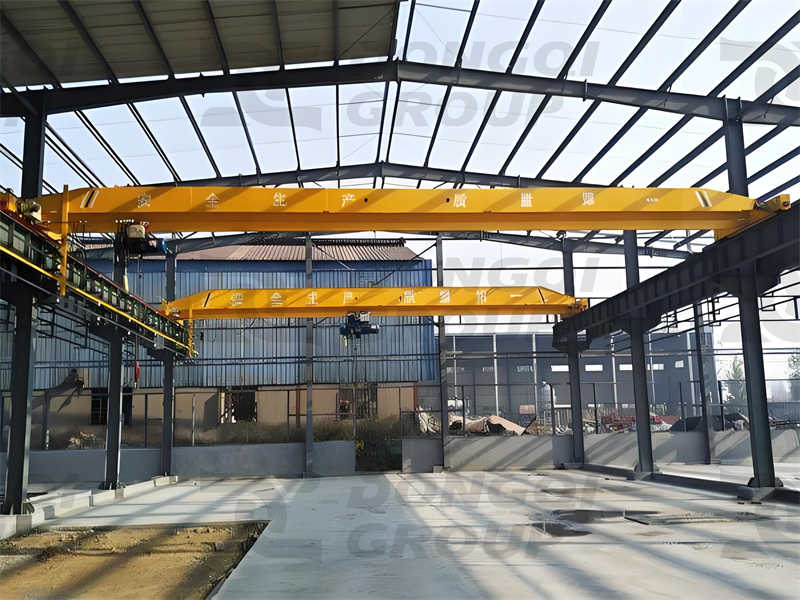
As an indispensable and important lifting equipment in the industrial production environment, the stability and efficiency of the performance of the LD10t-22.5m single-beam crane directly affect the work rhythm and safety of the entire production line. With the continuous increase in production load and the continuous extension of the service life of the equipment in recent years, some parts of the crane have gradually shown structural and functional aging problems, especially in the end beam part.
As an important part of the single-beam crane, the end beam is responsible for carrying and transferring the weight of the cargo while maintaining the stability and balance of the entire crane. However, after long-term high-intensity workload and the influence of the natural environment, the end beam of the LD10t-22.5m single-beam crane showed significant signs of structural aging, including but not limited to cracks in the welding parts, strength reduction due to steel fatigue, and wear affecting its original geometric dimensional accuracy. These problems not only reduce the carrying capacity of the end beam itself, but also pose a potential threat to the stability and safety of the entire machine, which may cause production stagnation, equipment damage and even safety accidents.
In order to effectively solve these problems and ensure that the LD10t-22.5m single-beam crane can operate stably, safely and efficiently in a high-load production environment for a long time, we decided to carry out a comprehensive and in-depth transformation and upgrading of the end beam. The core objectives of the renovation project are mainly focused on three aspects: first, to significantly improve the load-bearing capacity of the end beams by adopting higher-strength materials, optimizing structural design, and improving welding processes, so that they can withstand greater weight loads without structural damage; second, through refined design and application of advanced manufacturing technology, the structure of the end beams is lightweighted to improve its dynamic stability, reduce energy consumption, and extend the service life; third, the existing control systems and safety protection devices are upgraded to be intelligent so that they are more in line with the safety standards and regulatory requirements of modern industrial production, and effectively prevent performance bottlenecks and safety hazards caused by equipment aging.
The existing end beam structure is mainly constructed with traditional welded steel structure. This design method was considered feasible at the beginning of the project based on the load-bearing requirements and technical level at that time. However, with the continuous innovation of production technology and the continuous growth of production load, the existing end beam structure gradually exposed some problems. First, under high-load operating conditions, fine cracks appeared at the weld joints of the end beam, which not only weakened the integrity of the structure, but also posed a potential threat to the safety performance of the crane. In order to deeply analyze these problems, we conducted a detailed end beam structure evaluation. During the evaluation process, we found that the existing design has many deficiencies, such as low design redundancy, which makes it difficult to ensure sufficient structural safety under extreme working conditions; at the same time, the stress concentration phenomenon is obvious, especially at key connection parts and welding interfaces, where long-term high-intensity loads lead to excessive local stress, which further accelerates the accumulation of fatigue damage. Therefore, it is necessary to optimize and improve the existing end beam design to improve its load-bearing capacity, safety performance and service life.
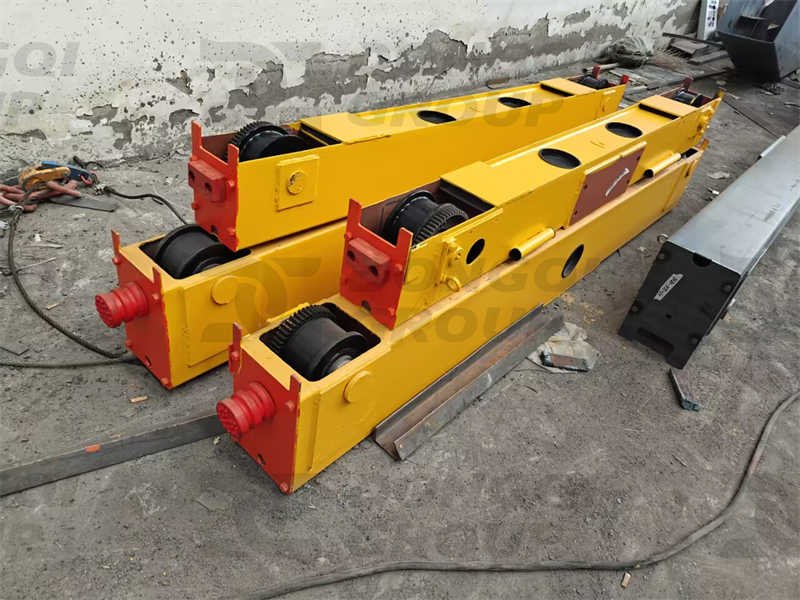
During long-term use, the load-bearing capacity of the end beam has been significantly reduced, causing the crane to shake and vibrate during high-load operation, which not only affects the accuracy and efficiency of the operation, but also poses a threat to the safety of the operator. In addition to structural problems, the guide wheels and bearings of the end beam have also been severely worn due to long-term high-intensity operation, resulting in unstable operation, increasing the frequency of failures and maintenance costs. These problems not only affect the normal operation of the production line and reduce production efficiency, but also increase the cost and workload of equipment maintenance.
Based on the latest safety standards and compliance requirements, we conducted a comprehensive safety inspection of the existing end beams. The inspection results show that some end beam structures no longer meet the current standards and pose safety hazards. In particular, in terms of welding quality and material selection, key improvements are needed to meet higher safety requirements.
In view of the problems of insufficient stability and limited load-bearing capacity of the existing end beam structure, we have proposed a comprehensive and scientific structural optimization design scheme. Through in-depth analysis and research on the end beam structure, we decided to add multiple reinforcing ribs at key locations to improve the rigidity and strength of the entire structure. At the same time, we optimized the welding process and sequence, adopted advanced welding technology, ensured the quality of welds, and improved the sealing and corrosion resistance of the end beam. In addition, upgrading the guide wheels and bearings is also one of the focuses of this transformation. We use materials with better wear resistance and higher stability to make guide wheels and bearings to reduce the wear rate, reduce the maintenance frequency, and improve the overall operation efficiency and stability of the system.
In terms of material selection, we carefully selected alloy steel materials with high strength and excellent corrosion resistance to ensure that the modified end beam can withstand greater load pressure and maintain good performance in harsh environments. In order to further improve the fatigue resistance and wear resistance of the material, we heat-treated and strengthened the key parts. Through these strengthening measures, we ensure that the modified end beam can meet higher load requirements and longer service life.
In order to ensure the smooth progress of the renovation project, we have developed a detailed construction process planning. Starting from the preparatory work before construction, including material procurement, tool and equipment preparation, personnel organization, etc., to the specific construction links such as the dismantling and cleaning of the end beams, the installation and commissioning of the new end beams, and the final follow-up work such as quality inspection and acceptance, each step has been carefully arranged and deployed. We have also developed an emergency plan to deal with possible emergencies.
Before officially starting the renovation project, we carried out a comprehensive and detailed cleaning and rectification of the construction site. First, we removed all debris and equipment that were not related to the renovation to ensure the cleanliness and spaciousness of the construction environment. At the same time, a thorough safety inspection of the construction area was carried out to eliminate any possible safety hazards. In order to ensure the safety of the construction process, we conducted comprehensive safety education and skills training for all construction personnel involved in the renovation. Through the training, the safety awareness and operating skills of the construction personnel were improved to ensure that they could strictly abide by the safety operating procedures during the construction process. We also formulated detailed safety plans and emergency measures to deal with possible unexpected situations.
When disassembling the existing end beam, we used professional disassembly tools and methods. First, we carefully analyzed the structure and connection method of the end beam and selected appropriate tools and equipment for disassembly. In order to ensure the smoothness and safety of the disassembly process, we adopted a step-by-step disassembly method to gradually decompose the end beam into various components. During the disassembly process, we strictly followed the operating procedures to avoid damage or safety accidents caused by improper operation. The disassembled end beam was thoroughly cleaned and inspected. We used professional cleaning agents to thoroughly clean the end beams and remove surface dirt and debris. At the same time, we carefully inspected the various components of the end beams and found any possible damage or defects. We recorded and handled the problems found in a timely manner to ensure that the end beams could be used normally in subsequent installation work.
When installing the new end beams, we strictly followed the design drawings and installation requirements for construction. First, we determined the installation position and size of the new end beams according to the instructions of the design drawings. In order to ensure the accuracy and precision of the installation, we used high-precision measuring equipment and instruments for positioning and measurement. During the installation process, we strictly followed the operating procedures for construction to ensure the installation quality of the new end beams. In order to ensure that the new end beams can work properly, we carried out comprehensive commissioning work. Through professional commissioning equipment and instruments, the performance of the new end beams was strictly tested and verified. During the commissioning process, we conducted a detailed analysis and record of the various performance indicators of the new end beams to ensure that all its performances met the design requirements.
In order to ensure that the quality of the renovation project meets the design requirements and safety standards, we have formulated strict quality inspection and acceptance standards. First, we used professional testing equipment and instruments to conduct comprehensive inspections and evaluations on the structural strength, load-bearing capacity, stability and other aspects of the new end beam. Through these inspections and evaluations, we ensured that the quality and performance of the new end beam met the design requirements. At the same time, we also invited third-party inspection agencies to conduct independent inspections and acceptances. These agencies have rich experience and expertise and can objectively evaluate and accept our work. Through their inspections and acceptances, we can better ensure that the quality of the renovation project is fully guaranteed.
Table: Renovation Quality Inspection Standards
| Test items | Test content | Testing standards | Detection Methods |
| Structural strength | Strength and toughness of end beam materials | Meet the design requirements | Use professional mechanical testing equipment for strength testing |
| Carrying capacity | Load capacity of end beam | Meet the design load requirements | Simulate real workloads for testing |
| Stability | Stability of end beam under different working conditions | No obvious shaking or deformation | Conduct dynamic stability tests |
| Dimensional accuracy | Accuracy of end beam installation position and dimensional accuracy | Meet the design drawing requirements | Measure with high-precision measuring instruments |
| Appearance quality | End beam surface cleanliness, coating quality, etc. | There are no obvious defects on the surface, and the coating is even without peeling. | Visual inspection and coating thickness testing |
| Third-party acceptance | Invite a third-party organization to conduct comprehensive testing and acceptance | Comply with relevant safety and quality standards | The third-party agency conducts testing and acceptance according to the established process |
Table: Key control points of transformation process
| Construction Phase | Critical Control Points | Control measures |
| Preparation before construction | Clean-up, safety inspection, personnel training | Ensure a clean and safe construction environment and improve the operating skills of construction workers |
| End beam removal | Disassembly tool selection, step-by-step disassembly, safety inspection | Use professional tools and disassemble step by step to ensure safety |
| End beam cleaning | Cleaning agent selection, component inspection, problem recording | Use professional cleaning agents, carefully inspect components, record and resolve problems |
| Installation of new end beam | Installation location determination, measurement positioning, and operating procedures | Determine the location according to the design drawings, use high-precision instruments to measure, and strictly abide by the operating procedures |
| Commissioning of new end beam | Performance testing, indicator recording, problem analysis | Use professional debugging equipment to perform performance tests, record indicators, analyze and solve problems |
| Quality inspection and acceptance | Testing equipment and instruments, acceptance by third-party organizations | Use professional testing equipment and instruments, and invite third-party organizations to conduct acceptance |
After careful design and precision transformation, the LD10t-22.5m single-beam crane end beam has achieved remarkable performance and efficiency improvement. The new end beam has been optimized in structural design, and materials with higher strength and wear resistance have been selected, which greatly improves its load-bearing capacity and fully meets the lifting operation requirements under various complex working conditions. Through advanced process technology and rigorous manufacturing process, the stability of the new end beam has been significantly enhanced, which can effectively reduce shaking and vibration under no-load or heavy-load conditions, thereby greatly improving the accuracy and efficiency of the operation. During the transformation process, the guide wheels and bearings of the original end beam were fully upgraded. The new guide wheels and bearings not only run more smoothly, but also have a longer service life and a lower failure rate. This reduces the maintenance cost during the operation of the equipment, and also reduces the production downtime caused by equipment failure, creating greater economic benefits for the enterprise.
In order to ensure that the modified end beam fully complies with the latest national and industry safety standards and compliance requirements, we have conducted comprehensive and rigorous safety and stability verification work. During the verification process, we used advanced simulation technology and high-load test conditions to conduct all-round and multi-angle testing and evaluation of the safety performance and stability of the new end beam. The test results show that the modified end beam can still maintain excellent safety performance and stability under extreme working conditions, which can fully ensure the safe and efficient production operations. In addition, we also conducted rigorous durability tests on the new end beam to verify its reliability and durability through long-term continuous operation. During the test, the new end beam showed good durability and stability, further confirming its reliability and safety in actual applications.
In order to ensure that the modified end beam can operate stably for a long time and maintain the best performance, we have formulated detailed and professional maintenance and maintenance recommendations. First of all, it is crucial to conduct a comprehensive inspection and maintenance of the end beam regularly. This includes checking the wear of key components such as guide wheels, bearings, etc., as well as maintaining the electrical control system and hydraulic system. Through regular inspections, potential problems can be discovered and dealt with in a timely manner, effectively preventing equipment failures. Secondly, lubrication and cleaning of key parts are equally important. Good lubrication conditions can reduce friction and wear between components and extend the service life of the equipment; while regular cleaning can prevent dust and debris from damaging the equipment. Finally, strengthening the training and education of operators is also an important part of maintaining the stable operation of the end beam. By improving the operating skills and safety awareness of operators, the risk of equipment damage caused by misoperation or improper use can be reduced.
In order to ensure that the modified end beam can operate stably for a long time and continuously optimize its performance, we have formulated a long-term operation monitoring plan. The plan will monitor and collect data on the operating status of the new end beam in real time by installing sensors and monitoring equipment. The monitoring content includes but is not limited to: key parameters such as operating speed, load changes, temperature rise, and wear degree. Regular analysis and evaluation of monitoring data is essential. Through in-depth analysis of monitoring data, potential problems can be discovered and dealt with in a timely manner; targeted optimization and improvement of the end beam based on the monitoring results is also a key link in improving its performance and service life. In the process of implementing the long-term operation monitoring plan, we will continue to accumulate data, optimize algorithm models, and provide strong data support for subsequent optimization design and improvement.
Contact our crane specialists
Send us a message and we will get back to you as soon as possible.