A well-considered indoor crane system is a cornerstone of efficient and safe material handling within any industrial facility. For professionals tasked with optimizing workflow, selecting the right equipment from the myriad of available options—from robust indoor overhead cranes to versatile indoor mobile crane units—is a key operational decision.
Dongqi Crane’s 2025 sales data offers a tangible reference point within this decision-making process. By examining which products were most frequently selected by our clients and understanding their common applications, we can identify practical trends in the indoor crane market. The following overview details the performance of our core product categories, including indoor gantry crane and small indoor crane models. It is structured to provide a clear perspective on how different solutions, such as a portable indoor crane versus a fixed system, address distinct operational needs. This analysis aims to provide a fact-based context for anyone evaluating indoor crane for sale options, concluding with measured considerations to inform your final selection.
As the foundational component of stationary material handling, indoor overhead crane systems from Dongqi Crane were consistently selected in 2025 for operations requiring reliable, high-cycle lifting along a defined path. Sales data confirms two primary models met the majority of client needs, together representing the core of our indoor crane offerings in this category.
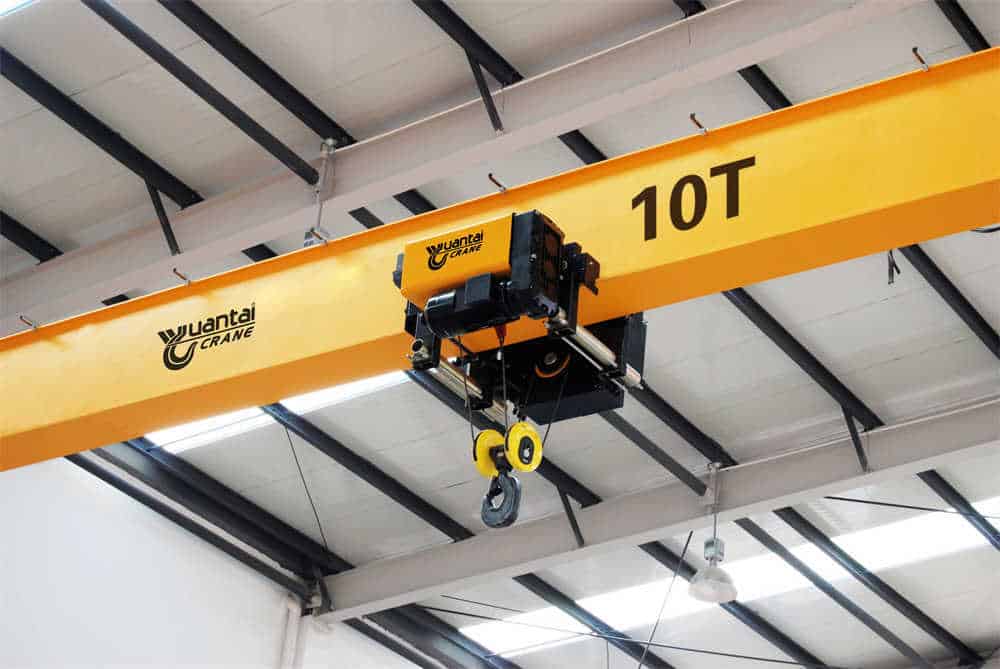
Balanced Portfolio for Diverse Needs:
Beyond these two leading models, our indoor overhead crane system portfolio includes specialized configurations. This includes units equipped with additional safety features, customized speed controls, or adaptations for specific industries, ensuring a technically viable option for virtually any fixed-path lifting requirement within an industrial facility.
When comparing these two mainstream bridge cranes, a key decision-making factor is load capacity and span: For routine lifting operations in a typical workshop (usually ≤ 20 tons), the HD model offers significant advantages in energy efficiency and compact design; while for heavy-duty, large-span applications, the QDX model’s structural strength and stability are essential guarantees. If you have further questions regarding model selection for specific working conditions, please provide specific information on span, lifting capacity, and duty cycle for a more detailed analysis.
The 2025 sales data for indoor gantry cranes reveals a clear market preference for mobility and adaptability. Unlike permanent overhead systems, this product line caters to dynamic workspaces where flexibility is paramount. The overwhelming demand was concentrated on one specific solution, defining the segment’s character.
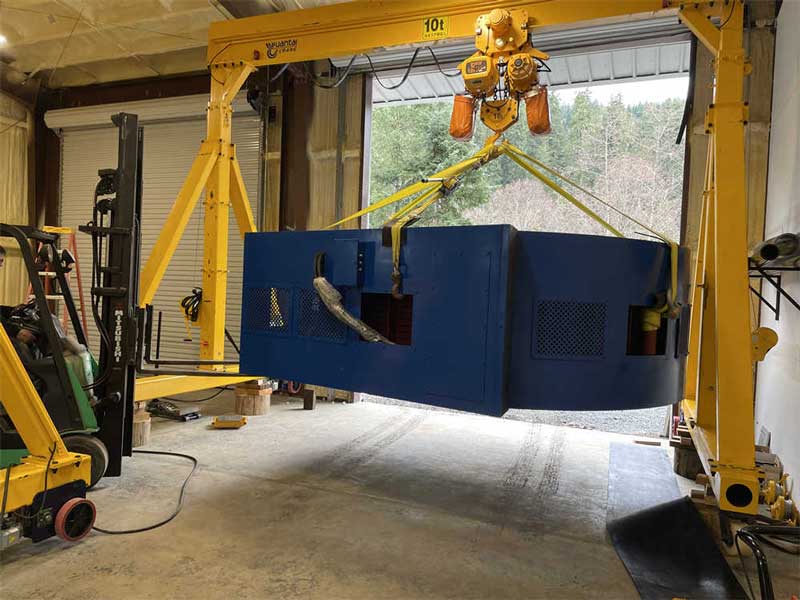
When evaluating gantry crane options, the key is to balance stability with flexibility. The core advantage of portable indoor gantry cranes is their ability to handle temporary and multi-location lifting needs, offering low investment and quick deployment. If your lifting operations are concentrated in one or a few fixed locations and are frequent, a more robust fixed or semi-gantry indoor gantry crane may be a more durable and efficient choice. Do you typically plan to use the crane at several different locations?
While primary crane systems handle core material flow, our supplementary lifting solutions address the critical, often decentralized lifting needs that arise within a larger workflow. Sales data from 2025 confirms steady growth in this category, reflecting an industry trend towards integrated material handling where versatile, point-of-use equipment augments fixed installations. The demand was primarily for two types of equipment that offer localized flexibility.
| Product Category | Typical Profile & Characteristics | Common Applications & Role | Key Driver for Selection |
|---|---|---|---|
| Small Indoor Crane | Low-capacity, lightweight, and often cost-effective. Designs include wall-mounted jibs, workstation gantries, or lightweight articulated arms. | Performing repetitive, light-duty tasks at a fixed workstation (e.g., assembly line part feeding, positioning components in a machining cell, packaging station). | Precision & Ergonomics: To reduce worker strain and improve handling accuracy for small, frequent lifts within a confined area. |
| Indoor Mobile Crane | Highly mobile, self-contained units. This category includes battery-powered floor cranes, hydraulic gantries, and lightweight pick-and-carry cranes on wheels. | Addressing sporadic or variable lifting needs across a facility (e.g., machine maintenance, loading/unloading at non-dedicated bays, moving materials between different production zones). | On-Demand Mobility: To provide lifting capability anywhere it is needed, without being tied to fixed runways or power sources. |
Synergy with Primary Systems:
These units are rarely standalone solutions but are integral to efficient plant design. A typical integration sees a primary indoor overhead crane system moving large loads down the central aisle, while multiple small indoor cranes handle sub-assembly at adjacent stations, and an indoor mobile crane is deployed for occasional equipment servicing. This layered approach maximizes the utility of both fixed infrastructure and flexible assets.
When selecting auxiliary equipment, the core focus is on clearly defining its supporting role in the overall process. An effective method is to analyze whether there are isolated, low-frequency, or highly mobile lifting points outside the working range of your main cranes (such as bridge cranes or gantry cranes). For example, equipping a fixed workstation with a small indoor crane (such as a small jib crane) can significantly improve the efficiency and ergonomics of that point; while equipping the entire plant with an indoor mobile crane for emergency repairs and sporadic lifting can solve many unplanned temporary needs. You can assess whether there are any scattered work points on your main production line where workers manually move heavy parts.
Dongqi Crane’s product availability is structured around a comprehensive portfolio, designed to match a wide spectrum of industrial lifting requirements. Clients searching for an “indoor crane for sale” or specific solutions like an “indoor gantry crane for sale” can access both our bestselling models and a full range of specialized equipment. Our supply chain and engineering processes support everything from quick-ship standard items to fully customized systems.
Extended Core Product Line
Beyond the top-selling HD-Type and QDX-Type indoor overhead cranes, our readily available portfolio includes several other key series to address specific operational conditions:
Customization and Engineered Solutions
All models, including those listed above, can be customized. Modifications to span, lifting height, control systems (e.g., radio remote), and other operational features are available to create a tailored indoor crane system. For highly unique applications, we provide complete engineered-to-order solutions from concept to installation.
Streamlined Procurement Process
We maintain clear protocols for both standard and custom orders. Standard models like certain configurations of the LD-Type or small indoor crane units typically feature shorter lead times. For customized or heavy-duty systems like a specialized QDY or MG gantry, our project management team provides detailed timelines following a technical review, ensuring reliable planning for our clients’ projects.
Faced with a wide range of products, defining your core application scenario is the first step to efficient selection. You can initially filter based on three dimensions: the usage environment (e.g., whether there are explosion-proof requirements), load and span, and working procedures. For example, in potentially explosive environments such as paint shops, the LB type explosion-proof bridge crane is a necessary choice; while for ordinary workshop material handling, the LD single-girder bridge crane is usually more cost-effective.
Based on the common usage patterns observed among our clients in 2025, here are some practical points to consider:
Dongqi Crane’s product development and support are focused on providing reliable and applicable indoor crane equipment. We are prepared to provide detailed specifications and technical data to help inform your purchasing decision.
Contact our crane specialists
Send us a message and we will get back to you as soon as possible.