As an indispensable equipment in modern industrial production, the safety of lifting equipment is directly related to the safety of life and property of operators and production efficiency. In order to ensure that lifting equipment can operate stably and reliably under various complex working conditions, it is particularly important to formulate a set of scientific and comprehensive safety inspection standards. This set of standards not only covers the common parts of lifting equipment, such as hooks, wire ropes, brakes and other key components, but also goes deep into multiple dimensions such as safety protection devices, metal structures, connectors, and driver’s cabs and working environments. Through this series of detailed and targeted inspection items, it aims to timely discover and eliminate potential safety hazards and provide solid guarantees for the safe use of lifting equipment.
Inspection of common parts of lifting equipment is an important link to ensure its overall performance and safety. During the inspection process, special attention should be paid to the following key parts:
As a key component of lifting equipment that directly contacts and bears weight, the shape integrity and surface quality of the hook are directly related to the safe operation of the entire equipment. When inspecting the hook, first carefully check whether its surface is smooth and flat, and whether there are cracks, deformation or excessive wear. Because any slight flaws may cause the hook to break or fail during use, thus causing serious safety accidents. In addition to the inspection of the hook itself, the anti-slip device needs to be inspected in detail. Anti-slip devices such as safety locks and insurance cards are important guarantees to prevent the accidental fall of the hanging objects. During the inspection process, it should be ensured that these devices are intact and can effectively prevent the hanging objects from falling off. In addition, dynamic tests are required to verify the reliability of the anti-slip device under extreme conditions to ensure that it can play its due role at critical moments.
As a medium for transmitting force, the wear and breakage of wire rope directly affect the safety of the hoist. During the inspection process, the staff needs to inspect along the length of the wire rope, carefully observe the changes in its diameter, the number and location of broken wires, and whether the rope end is firmly fixed. If any abnormality is found, it should be handled in time to ensure that the wire rope is always in good condition during use. As an important part of the lifting equipment, the operation status of the pulley block directly affects the lifting and moving of the hoisted objects. The staff needs to check whether the pulley block rotates flexibly, the wear degree of the pulley groove, and the lubrication condition of the bearing. Ensure that the pulley block does not produce excessive friction and wear during operation, so as to ensure its long-term stable and efficient operation. Through these measures, the staff can promptly discover and deal with potential safety hazards to ensure the safety and reliability of the lifting equipment.
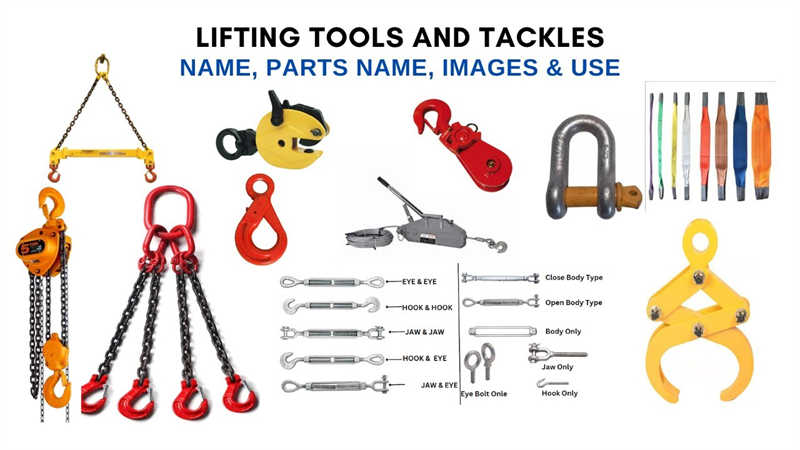
Table: Wire Rope Safety Checklist
| Inspection items | Check content | Check the results | Remark |
| Surface state | Is it smooth and flat? | _ | If there are cracks, deformation or excessive wear, please replace it in time |
| Diameter change | Is the diameter uniform? Is there any local thinning? | _ | Large diameter changes may affect load-bearing capacity |
| Wire breakage | Number and location of broken wires | _ | Too many broken wires need to be replaced in time |
| Rope end fixing | Is the rope end fixed securely? | _ | If the rope end is not fixed firmly, it may cause the wire rope to fall off |
| Wear | Is the degree of wear excessive? | _ | Excessive wear and tear requires timely replacement |
Table: Pulley Block Safety Checklist
| Inspection items | Check content | Check the results | Remark |
| Pulley rotation | Is the pulley flexible? | _ | Inflexible rotation may affect the lifting efficiency of the hoisted objects |
| Pulley groove wear | Wear degree of pulley groove | _ | If the wear is too deep, the pulley needs to be replaced in time |
| Bearing lubrication | Bearing lubrication condition | _ | Poor lubrication may cause bearing overheating and damage |
| Pulley fixed | Is the pulley block fixed securely? | _ | Insufficient fixation may cause the pulley block to fall off |
| Pulley Material | Does the pulley material meet the requirements? | _ | Inconsistent materials may affect the service life and safety of the pulley |
The brake is a key component in the lifting equipment to achieve precise positioning and prevent the weight from sliding down. The performance of the brake is directly related to the safety and reliability of the lifting equipment. When inspecting the brake, it is necessary to verify its braking performance, including braking time, braking distance and stability after braking. These indicators can comprehensively evaluate whether the performance of the brake meets the requirements. As an important component in the lifting equipment, the operating status of the drum has an important impact on the safety and reliability of the lifting equipment. When inspecting the drum, it is necessary to pay attention to its surface quality, rope groove wear and bearing operation status. These factors will affect the performance and life of the drum. By regularly inspecting and maintaining the drum, it can be ensured that it always maintains a good operating condition, thereby ensuring the safety and reliability of the lifting equipment.
Rope guides and rope arrangements are essential to maintain the orderly arrangement of wire ropes. During the inspection process, the staff should ensure that the rope guide is accurately guided and there is no jamming. At the same time, the rope arrangement should be able to evenly arrange the wire ropes to avoid overlapping and crossing. This careful inspection ensures that the wire rope is always in the best condition during use, effectively reducing the risk of wear and damage. Such maintenance measures are extremely important for ensuring the safety and stability of lifting equipment.
The importance of safety protection devices in lifting equipment operation is self-evident, and they constitute the last line of defense to ensure the safe operation of the entire system. For this series of key safety protection facilities, the depth and meticulousness of the inspection content are crucial, covering multiple dimensions:
As the core protection components of lifting equipment, the full performance of overload protection devices and torque limiters depends on accurate set values, fast response speeds, and the ability to quickly and reliably cut off the power source or sound an alarm when facing overload or torque exceeding the limit. During the inspection process, the rationality of these set values must first be verified and tested to ensure that they meet relevant national standards and actual operating requirements; by simulating the overload or torque approaching the limit under actual working conditions, verify whether the device can quickly trigger the protection mechanism within the specified range, and confirm the accuracy and consistency of its action. At the same time, high requirements are placed on the sensitivity, accuracy, and real-time data transmission of sensors, because this directly affects the monitoring and feedback of the operating status of the lifting equipment.
The position limit device is an effective means to prevent the lifting equipment from exceeding the preset working range due to misoperation or unexpected circumstances during operation, while the alarm device is a key component that issues a warning when a potential danger or abnormal state occurs. During the inspection, it is necessary not only to test the sensitivity of the limit switch to ensure that the feed power can be cut off in time and remain stationary when the lifting equipment approaches or reaches the limit position, but also to verify its stability and reliability; at the same time, the inspection of the alarm device focuses on evaluating the clarity and recognition of the sound and light warning signals issued under different working conditions to ensure that information can be effectively conveyed in noisy or complex environments. In addition, the control circuit and electrical components need to be inspected in detail to confirm that all related components are tightly connected, in good contact, and have sufficient electrical insulation performance.
In outdoor or windy working environments, anemometers and anti-tilt devices play a vital role in ensuring the safe operation of lifting equipment. The accuracy of the anemometer is related to the real-time monitoring and reasonable evaluation of wind conditions, while the stability of the anti-tilt device determines the safety performance of the spreader under strong winds. In addition to verifying the response speed and measurement accuracy of the anemometer during the inspection, it is also necessary to ensure that the anti-tilt device can reliably maintain a stable state when affected by wind to avoid overturning or loss of control. At the same time, the connection status of the anti-tilt device and the overall structure of the lifting spreader is checked to confirm that all fasteners are firm and reliable without any signs of looseness, thereby ensuring the stability and safety of the entire system.
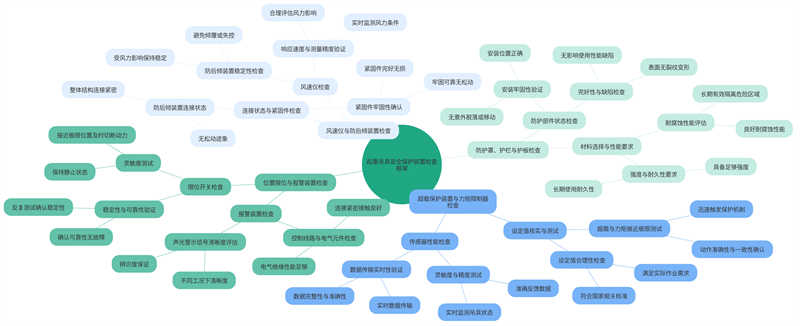
As an important part of the safety protection of lifting equipment operators, the function and status of protective covers, guardrails and guard plates directly affect the life safety of operators. During the inspection, you should first confirm whether these protective parts are intact, without cracks, deformation or other defects that affect the performance; at the same time, check whether they are firmly and reliably installed to ensure that they will not accidentally fall off or move during the operation. In addition, high requirements are placed on the material selection of protective covers, guardrails and guard plates. They must not only have sufficient strength and durability, but also have good corrosion resistance to ensure that they can continue to effectively isolate dangerous areas during long-term use and provide solid safety protection for operators.
The metal structure plays a vital role in the lifting sling. It not only serves as the supporting skeleton of the sling to ensure the stability of the overall structure, but also directly determines the load-bearing capacity and service life of the sling. Therefore, the inspection and maintenance of metal structures are of vital importance, and special attention should be paid to the following key aspects:
The main load-bearing components, such as main beams, columns, booms, etc., are the parts of the metal structure that bear the main load. During the inspection process, it is first necessary to ensure that the cross-sectional dimensions of these components meet the design requirements, and the wall thickness is uniform and meets the specified standards. Through professional testing equipment and instruments, such as ultrasonic flaw detectors and magnetic particle flaw detectors, the main load-bearing components are fully inspected to find possible cracks, slag inclusions, welding defects and other problems. In addition, the deformation of the main load-bearing components needs to be inspected, including but not limited to deflection, distortion and local depression. These deformations may affect the stiffness and load-bearing capacity of the structure, so they need to be strictly monitored. At the same time, the welding quality of the main load-bearing components is comprehensively reviewed, including the appearance quality of the weld, the height and width of the weld, and the defects inside the weld. Non-destructive testing, such as radiographic testing, ultrasonic testing or magnetic particle testing, is performed on the welded joints at key locations to confirm their welding quality and safety. Finally, material performance tests, such as tensile tests, bending tests or impact tests, are performed on the main load-bearing components as needed. These tests can verify the strength, toughness and durability of the material, thereby ensuring the stability and safety of the entire metal structure.
Connecting welds and bolts are the most important connecting components in metal structures. For welds, first of all, it is necessary to observe their appearance quality to ensure that the welds are flat, free of cracks, slag inclusions, and incomplete penetration. It can be inspected by visual observation, manual touch or professional tools. In order to further ensure the quality of welds, non-destructive testing, such as ultrasonic flaw detection and X-ray flaw detection, can be performed. For welds at key locations, mechanical performance tests, such as tensile tests and bending tests, are also required to ensure that they can withstand the expected load during actual use. For bolted connections, first of all, it is necessary to check whether the tightness of the bolts meets the requirements. Loose bolts may cause structural connection failure, leading to safety accidents. The tightness of the bolts can be checked one by one with a wrench or special tools, and corresponding measures can be taken to reinforce them. In order to prevent the bolts from loosening, it is necessary to check whether the anti-loosening measures are effective. Common anti-loosening measures include the use of spring washers, stop washers, etc. These anti-loosening measures can effectively prevent the bolts from loosening, thereby ensuring the stability and safety of the structure. It is also necessary to perform non-destructive testing and mechanical property testing on the welds and bolts in key parts. Through these measures, the connection quality and safety of the metal structure can be fully ensured.
Anti-corrosion painting is an important measure to extend the service life of metal structures. During the inspection process, first pay attention to whether the thickness of the anti-corrosion paint layer meets the requirements, which can be tested by a professional thickness gauge. At the same time, observe the uniformity of the paint layer to ensure that the paint does not flow or leak. In addition, regularly check whether the paint layer has peeling, cracking, etc., and if found, it should be handled in time. For metal structures that have been corroded, they should be repaired and repainted in time. During the repair process, the corroded part should be thoroughly removed, and the necessary anti-corrosion treatment should be carried out before painting. The painting material should be selected with good durability and anti-corrosion properties to ensure the long-term safety of the metal structure.
As the operator’s direct workplace, the comfort and safety of the driver’s cab have a direct impact on operating efficiency, operating safety, and the physical and mental health of the operator. At the same time, the working environment is also one of the important factors affecting the safe operation of the lifting equipment.
The suspension and support connection inspection of the driver’s cab is a key step to ensure the safety of the operator and the normal operation of the equipment. First, it is necessary to check the connecting parts between the driver’s cab and the hoisting track or platform, including connecting rods, bolts, pins, etc., to ensure that their materials meet the design requirements, the specifications are correct, and the degree of tightening is moderate to avoid connection failure or safety hazards due to looseness or overtightening. At the same time, the stability and anti-overturning capacity of the driver’s cab must be verified. By simulating the operating conditions under extreme conditions, such as sudden load changes, uneven tracks, etc., it is confirmed that the driver’s cab can remain stable under various working conditions and has sufficient anti-overturning capacity, thereby ensuring the safety of the operator.
The load capacity and safety distance of the working environment are important parameters to ensure the safe operation of the lifting equipment. During the inspection process, the load-bearing capacity of the working ground should be tested first to confirm whether it meets the design requirements of the sling. If the load-bearing capacity of the working ground is insufficient, it may cause safety accidents such as the sinking and overturning of the sling. At the same time, it is also necessary to check whether the safety distance between the sling and the surrounding buildings and equipment is sufficient. If the safety distance is insufficient, the sling may collide with other objects, causing equipment damage or casualties. For areas with safety hazards, rectification and treatment should be carried out in a timely manner.
In high-altitude operations, the suspension points of the platform and safety belts are crucial to ensure the safety of operators. During the inspection, it should be ensured that the platform structure is stable, the anti-slip measures are effective, and the safety belt suspension points are firm and reliable. First, conduct a comprehensive inspection of the high-altitude working platform, including the structural stability and load-bearing capacity of the platform. In addition, the effectiveness of anti-slip measures, such as whether anti-slip mats, handrails and other facilities are intact, should be checked. At the same time, the safety belt suspension points should be carefully checked to ensure that they are firm and reliable. Attention should also be paid to the platform’s protective measures and the setting of emergency escape routes. These measures can effectively reduce the probability of accidents and ensure the life safety of operators.
In addition to the above-mentioned key components and links, there are some other necessary inspection contents that cannot be ignored:
Lifting weight sign and safety sign are important signs to remind operators to pay attention to the performance and safety requirements of the lifting equipment. During the inspection, it should be ensured that these signs are clearly visible, the content is accurate, and they comply with relevant standards and regulations. For blurred or damaged signs, they should be replaced and repaired in time.
The safety awareness and operating skills of operators are key factors in ensuring the safe operation of lifting equipment. During the inspection, attention should be paid to whether the operator has received systematic safety training and holds a valid operating certificate. For those who have not been trained or are not certified, they should be trained and assessed in time to ensure that they have the necessary operating skills and safety awareness.
For the possible dangerous factors of lifting equipment, it should be checked and ensured that all necessary protective measures are in place. For example, whether there are obvious cordons, warning lights and warning signs in the lifting operation area to prevent irrelevant personnel from approaching and reduce the risk of accidents.
Regular maintenance of lifting equipment is an important part of ensuring its long-term stable operation. During the inspection, attention should be paid to whether the equipment has undergone necessary maintenance work according to the prescribed cycle, including but not limited to lubrication, tightening, adjustment, etc. At the same time, relevant records should be checked to confirm the authenticity and effectiveness of the maintenance work.
Special inspection and evaluation should be carried out regularly for specific components, systems or overall performance of lifting equipment. For example, the load-bearing capacity, dynamic stability, control system sensitivity, etc. of the lifting equipment are tested and evaluated to ensure its safety and reliability under various working conditions.
In summary, customizing the safety inspection standards for lifting equipment is an important measure to ensure the safe and efficient operation of the lifting equipment. Through comprehensive and detailed inspections, potential safety hazards can be discovered and eliminated in a timely manner, providing strong safety guarantees for industrial production and logistics transportation.
Contact our crane specialists
Send us a message and we will get back to you as soon as possible.