In modern industry and construction, lifting operations and lifting machinery play a vital role. They not only significantly improve work efficiency but also expand the boundaries of construction and production. However, with the increasing complexity of lifting operations and the diversification of lifting machinery types, safety issues have become increasingly prominent. Lifting operations involve multiple high-risk processes, such as working at height and handling heavy objects. Improper operation or equipment failure can lead to serious accidents, posing a significant threat to personnel safety and production order. Therefore, in-depth discussion of the safety requirements for lifting operations and lifting machinery is not only a compliance with industry standards, but also a respect and protection for human safety.
Lifting operations refer to the use of various lifting machinery and equipment to move materials vertically or horizontally for loading, unloading, installation, and handling. Depending on the operation method, material characteristics, and usage scenario, lifting operations can be divided into various types, such as hoisting, handling, and loading and unloading. Each type has its own specific safety requirements and operating procedures. For example, lifting operations require the use of lifting machinery such as cranes to lift, install, or move heavy objects; handling operations require the use of equipment such as forklifts to move materials horizontally; and loading and unloading operations require the use of various loading and unloading machines in locations such as ports and cargo yards to load and unload materials into and out of vehicles and warehouses.
Before carrying out lifting operations, a comprehensive assessment of factors such as the working environment, equipment condition, and material characteristics must be conducted to identify potential safety risks. This assessment includes, but is not limited to, equipment load capacity, working space limitations, and material stability. This risk assessment allows for the development of targeted safety precautions to reduce the likelihood of accidents. For example, for lifting operations, it is necessary to assess whether the crane’s load capacity meets requirements, whether the lifting plan is reasonable, and whether the lifting equipment is safe and reliable. For handling operations, it is necessary to assess whether aisles are clear and the forklift’s stability is good. For loading and unloading operations, it is necessary to assess whether the cargo is stable and whether the loading and unloading machinery is operated in accordance with regulations.
Lifting operators must possess relevant professional knowledge and skills and hold a valid operator’s certificate. They should be familiar with the performance, structure, safety devices, and operation of lifting machinery, and master basic first aid and emergency response skills. Operators also need to undergo regular training and assessments to continuously enhance their safety awareness and operational skills. Operators also need to understand relevant safety regulations and operating procedures to ensure their own and others’ safety.
A comprehensive safety management system should be established at lifting operation sites, clearly defining the safety responsibilities and operating procedures of personnel at all levels. Clear safety warning signs should be displayed, and necessary safety protection facilities should be installed. Furthermore, monitoring and management of the operation process should be strengthened to ensure the effective implementation of all safety measures. For example, at lifting operation sites, safety signs such as cordons and warning lights should be posted to alert pedestrians and vehicles to safety. At handling operations, passages should be kept clear of debris and obstructions. At loading and unloading sites, cargo stacking and transportation routes should be rationally arranged to avoid cross-operation and collisions.
Table: Lifting Operation Site Safety Management Table
| Safety Management Project | Specific content | Person in charge | Remark |
| Work Type | Lifting/handling/loading and unloading operations | _ | Fill in according to actual situation |
| Security Risk Assessment | Equipment carrying capacity, working space limitations, material stability, etc. | Security Administrator | Risk Assessment Report |
| Operator qualifications | Operational certificates, professional knowledge and skills, first aid knowledge and emergency response skills | Human Resources Department | Copy of qualification certificate |
| Safety management system | Safety responsibilities and operating specifications for personnel at all levels | Safety Management Department | Management system documents |
| Safety warning signs | Cordons, warning lights, safety signs, etc. | On-site management personnel | Regular inspection and maintenance |
| Safety protection facilities | Safety nets, guardrails, protective mats, etc. | On-site management personnel | Regular inspection and maintenance |
| Operation process monitoring | Real-time monitoring and recording of operation process | On-site management personnel | Monitoring record table |
| Emergency measures | Emergency plans, emergency equipment, emergency drills, etc. | Safety Management Department | Emergency plan documents |
| Safety education and training | Regularly organize safety training and assessment | Human Resources Department | Training record form |
| Safety hazard investigation | Regularly inspect and rectify safety hazards | Safety Management Department | Hidden danger investigation record form |
Table: Safety precautions for lifting operations
| Preventive measures | Specific content | Person in charge | Remark |
| Equipment inspection and maintenance | Regularly check equipment performance, structure, safety devices, etc. | Equipment maintenance personnel | Maintenance record sheet |
| Work environment management | Keep the work site clean and tidy, and avoid clutter | On-site management personnel | Environmental Inspection Record Form |
| Material stability management | Ensure that materials are stacked firmly to avoid collapse or sliding | On-site management personnel | Material Inspection Record Sheet |
| Implementation of operating regulations | Strictly follow the operating procedures to operate, and illegal operations are prohibited | Operators | Operation record sheet |
| Communication guarantee | Ensure smooth on-site communication and timely communication of operation information | On-site management personnel | Communication equipment inspection records |
| Personal protective equipment | Operators must wear necessary protective equipment, such as safety helmets, safety belts, etc. | Operators | Protective equipment inspection records |
| Cross-task management | Arrange the operation sequence reasonably to avoid collision accidents caused by cross-operation | On-site management personnel | Work Schedule |
| Weather condition monitoring | Pay attention to weather changes and avoid working in bad weather | On-site management personnel | Weather forecast records |
| Safety Inspection | Regularly conduct safety inspections on the work site to identify and rectify problems in a timely manner | Safety Manager | Inspection record form |
| Accident reporting and handling | Report the accident immediately and handle it according to the emergency plan | Safety Manager | Accident Report Record Form |
Lifting machinery is an essential and vital piece of equipment in modern industrial production. It comes in a wide variety of types, classified according to their structure, function, and application. They can be categorized into tower cranes, bridge cranes, gantry cranes, and mobile cranes.
The main components of a lifting machinery include the hoisting mechanism, operating mechanism, metal structure, and electrical system. These components work together to handle and lift materials.
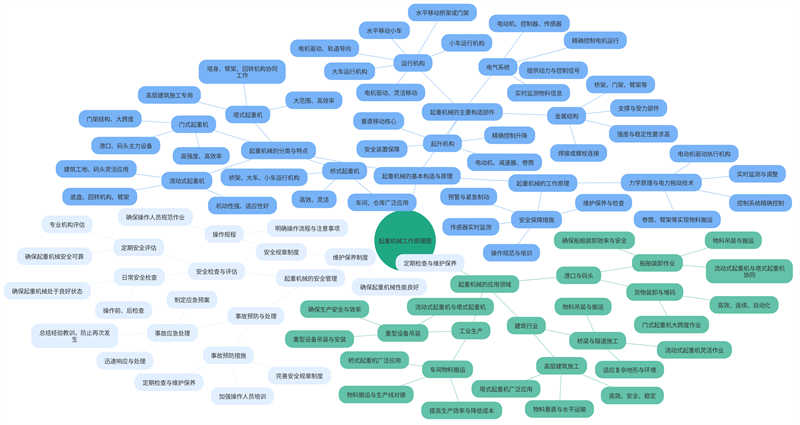
Overload limiters are a core safety device for lifting machinery, and their setup and function are crucial. First, the overload limit should be scientifically and rationally set based on the design parameters and operational requirements of the lifting machinery. This limit is typically lower than the actual load capacity of the lifting machinery to ensure that the limiter is not frequently triggered during normal operation. Once the actual load on the lifting machinery exceeds the preset limit, the overload limiter immediately responds by shutting off the power supply or issuing an audible or visual alarm to prevent further overloaded operation, thereby preventing serious safety accidents such as equipment damage, structural instability, and wire rope breakage caused by overload.
Limiters are a vital component of lifting machinery. Depending on their function, they can be divided into various types, such as travel limiters, height limiters, and weight limiters. These limiters precisely control the range of motion of the lifting machinery through mechanical or electrical means, ensuring a safe and controllable operation. Travel limiters are typically installed on the crane’s running rails or beams to limit the maximum travel distance of the crane in a specific direction. Height limiters are used to limit the maximum vertical lift height of a hoist or hoisted object, preventing accidents caused by over-lifting.
Buffers and stop devices are essential safety features in lifting machinery. Buffers are typically made of materials such as springs, hydraulics, or rubber. They effectively absorb the impact energy generated during the movement of the lifting machinery, thereby reducing damage to the equipment in the event of an impact. Stop devices are fixed to the equipment’s motion path and precisely control the lifting machinery’s range of motion through mechanical or electrical means.
To ensure personnel safety, guards or guardrails must be installed around hazardous areas such as rotating and moving parts of the lifting machinery. Guards and guardrails must be sturdy and reliable, effectively preventing personnel from accidentally entering or contacting hazardous areas. These devices must also be easily accessible and maintainable, ensuring they do not interfere with the operator’s ability to monitor equipment status and perform routine maintenance. Furthermore, the design of guards and guardrails should take into account factors such as heat dissipation, maintenance, and operator visibility.
Regular inspections are crucial for ensuring the safe operation of lifting machinery and cover multiple aspects. Visual inspections involve a detailed inspection of the lifting machinery’s structural components, connectors, and safety features to identify potential cracks, deformation, wear, corrosion, and other issues. Functional testing involves comprehensive testing of all movements and performance indicators of the lifting machinery, such as lifting capacity, operating stability, and braking performance, to ensure the equipment’s reliability and safety under normal operation. Calibration of safety devices, including but not limited to overload protection devices, limit switches, and alarms, is crucial for ensuring that the lifting machinery can operate promptly and effectively in the event of an abnormality. The accuracy and reliability of these safety devices directly impact the safety performance of the lifting machinery.
When determining the frequency of regular inspections, multiple factors must be considered. Frequency of equipment use is a key factor. Frequently used lifting machinery clearly requires shorter inspection intervals to ensure it remains in good operating condition and safe. The operating environment is also a key consideration. Harsh operating environments, such as high temperature, high humidity, and high dust levels, can accelerate equipment wear and aging, necessitating a shorter inspection interval. Manufacturer recommendations are also an important reference for determining inspection cycles. Following the manufacturer’s recommendations and standards ensures that the requirements of the equipment are met during design and manufacturing.
Strictly implementing a regular inspection system can effectively identify and eliminate potential safety hazards, ensuring a safe working environment and the safety of personnel. It can also effectively extend the service life of the lifting machinery and improve its economic benefits and efficiency.
Daily maintenance of lifting machinery is crucial for ensuring its safe and stable operation. This work involves several aspects. First, maintain the cleanliness of the equipment surface. Regularly clean the surface of the lifting machinery to prevent dust and oil accumulation that can affect the equipment’s appearance and performance. Second, lubrication of components is crucial for ensuring the proper operation of the lifting machinery. Regularly inspect and lubricate all lubrication points according to the equipment’s lubrication requirements and actual operating conditions to reduce component wear and maintain stable operation. Furthermore, checking fasteners is a crucial part of daily maintenance. Loose fasteners are a common cause of lifting machinery failure. Therefore, regular inspection of all connections is necessary to promptly identify and tighten loose bolts, nuts, and other fasteners to prevent equipment failure or safety accidents caused by loose fasteners. During routine maintenance, personnel should maintain regular maintenance records, documenting maintenance dates, details, and parts replacements. This ensures a complete equipment maintenance file and provides strong support for subsequent equipment management. These measures ensure the safety and stability of lifting machinery during daily use, effectively preventing accidents and equipment damage caused by improper maintenance.
When a lifting machinery malfunctions or becomes damaged, it must be evaluated based on the criteria for repair and replacement. This evaluation process begins with a comprehensive and detailed analysis and assessment of the nature and extent of the malfunction. For malfunctions that can be restored to their original performance and will not significantly impact overall operation, repairs should be decisively initiated. This saves costs and resources, maintains the equipment’s original performance, and extends its service life. However, for malfunctions that cannot be effectively corrected through repair, or where repairs still pose safety hazards or damage that impacts overall equipment performance, replacement measures should be resolutely implemented. Replacing faulty parts or the entire machine can completely resolve the problem, eliminate potential safety hazards, and ensure the safe and stable operation of the lifting machinery. Safety Hazard Detection and Correction
The detection and correction of safety hazards are crucial during the use of lifting machinery. To ensure the safe operation of the equipment, a comprehensive and thorough hazard detection process is essential. This process involves examining all aspects of the equipment, including but not limited to the aging of structural components, loose connections, the integrity of the electrical system, and the effectiveness of safety features. During the inspection, every detail and link that could potentially harbor a hazard must be carefully examined. For any safety hazards discovered, effective corrective measures must be implemented immediately. Corrective measures should be targeted and actionable to ensure the complete elimination of the hazard. Furthermore, during the rectification process, proper record-keeping should be maintained to provide a robust basis for subsequent tracking and management. By strictly implementing a safety hazard detection and correction system, the safe operation of lifting machinery can be effectively guaranteed, the likelihood of accidents can be reduced, and the safety of personnel and the integrity of the equipment can be ensured.
Before operating lifting machinery, a series of preparatory steps are required to ensure the proper operation of the equipment and the safety of personnel. First, inspect the appearance of the lifting machinery, including checking for surface damage such as cracks and deformation, and ensure that all component connections are secure. Also, check the performance of the equipment, such as the braking system, hydraulic system, and electrical system. It is also essential to verify the effectiveness of safety devices such as limiters, overload protectors, and emergency stop buttons to ensure that the equipment can be stopped promptly in the event of a hazardous situation. Understanding the operating environment is also crucial. Operators need to understand the material characteristics, such as weight, size, and shape, in order to select appropriate lifting equipment and lifting methods. Furthermore, wearing personal protective equipment, such as a hard hat, safety glasses, and gloves, is essential to prevent injury in the event of an accident.
When operating lifting machinery, strict adherence to safety operating procedures is essential. Correct operation of the control handles is crucial to ensure stable operation and precise position control. It is also essential to carefully monitor the equipment’s operating status and ensure the stability of each component. Any abnormalities should be addressed promptly. Maintaining communication with operators is also crucial to ensure safe collaborative operations. Furthermore, dangerous operations such as overspeeding and overloading should be avoided during operation to ensure safe equipment operation.
In emergency situations, such as equipment failure or personal injury, operators must take immediate action. First, shut off the power supply to prevent accidental equipment startup or further consequences; activate the emergency stop device to quickly stop the equipment; evacuate personnel to prevent the accident from escalating; and promptly report the incident to the relevant departments and personnel for prompt handling. During the incident response, remain calm and take appropriate and rational measures to minimize casualties and property damage.
After the operation, proper cleanup should be performed. First, turn off the equipment to save energy and prevent overheating or damage from prolonged operation. Clean the work site to maintain order and avoid potential safety hazards. Return tools to prevent loss or misuse. Inspection and maintenance of the equipment are also essential, such as checking the firmness of component connections and the lubrication system to ensure it is in good operating condition. This rigorous finishing work ensures safety for the next operation and extends the life of the equipment.
Contact our crane specialists
Send us a message and we will get back to you as soon as possible.