Imagine this. A procurement manager in Hamburg opens a quotation from a Chinese crane manufacturer for a 50-ton double-girder gantry crane configured to European specifications: EN 15011-compliant structural design, CE-certified electrical systems, SEW drives, Siemens controls, IP65 enclosures, FEM Class M6 duty rating, and a full 12-month warranty with 48-hour-response service-level agreement on-site within the European Union. The quoted price is €185,000 FOB Shanghai.
Thirty minutes later, a procurement manager in Lagos opens a quotation from the same manufacturer for a 50-ton double-girder gantry crane configured to regional specifications: ISO-standard structural design, Chinese-brand electrical systems with IEC compliance, IP54 enclosures, FEM Class M5 duty rating, and a standard warranty with remote support. The quoted price is €110,000 FOB Shanghai.
The difference: 40 percent.
Both buyers are purchasing a 50-ton gantry crane. Both factories sit on the same production floor in Changyuan, Henan Province, China. Both cranes lift 50 tons. Yet the price tag for the European unit is nearly double that of the African unit.
How is this possible? And more importantly — what does this price gap reveal about how crane procurement actually works in global markets?
This article, prepared by Dongqi Crane — a Sino-New Zealand joint venture with a 240,000-square-meter manufacturing facility, over 500 sets of production and testing machinery, and crane installations in more than 150 countries — unpacks the economics behind the price differential. By understanding the cost-driver layers, procurement teams can navigate the global crane market with higher confidence and avoid the costly trap of comparing price tags that reflect fundamentally different products.
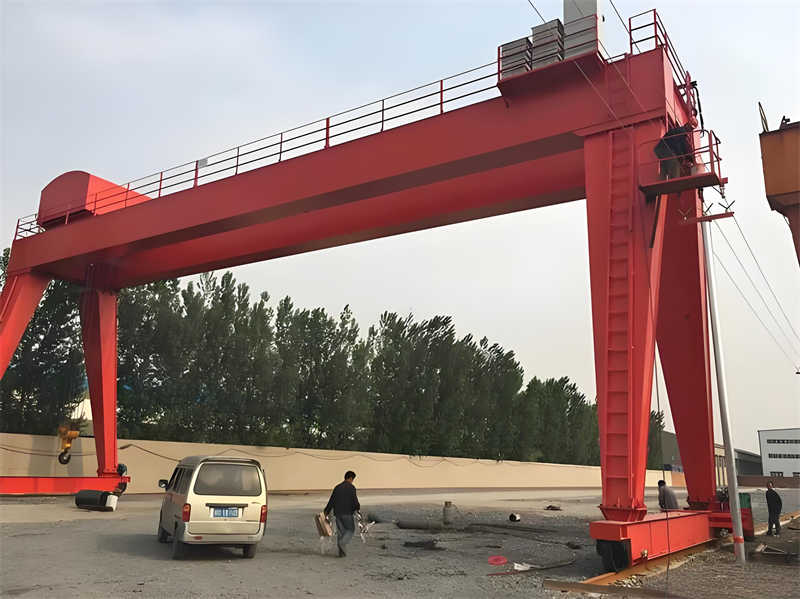
Procurement teams in 2026 face an increasingly fragmented global crane market. The overhead crane segment alone has reached $5.33 billion, growing at a 6.5% compound annual rate. Chinese crane manufacturers typically offer prices 20% to 40% lower than comparable Western or Japanese equipment for equivalent technical specifications. In fact, unit prices from China’s Henan-based crane clusters average 25–35% below those from European or North American manufacturers.
But “lower” is a dangerous word in crane procurement. It invites the assumption that all cranes are commodity products differentiated only by price — an assumption that has destroyed operating budgets, shelved entire production lines, and in a few documented cases, caused structural failures.
The reality is that a crane is an engineered-to-order asset. Its cost depends on dozens of interdependent variables: capacity, span, lift height, work duty classification, electrical configuration, local certification requirements, and the geographic distance between the factory and the installation site.
When two quotations for the “same” 50-ton gantry crane differ by 40%, the most informative question is not “who is overcharging?” It is: “what, precisely, is different — and what does that difference cost in operation over 20 years?”
Before regional price variations can be understood, a baseline must be established: what does it cost to manufacture a gantry crane inside a Chinese production facility?
A crane’s manufacturing cost is driven by materials, fabrication labor, production overhead, and supply-chain efficiency. On every one of these dimensions, China’s crane manufacturing ecosystem operates with structural cost advantages.
China’s dominance in industrial crane manufacturing is anchored in Henan province, specifically in the cities of Xinxiang and Changyuan — known nationally as China’s “Cradleland of Cranes.” Within a 50-kilometer radius of Dongqi Crane’s headquarters, specialized manufacturers produce every crane component: motors, gearboxes, wire ropes, control systems, and structural steel. This geographic concentration eliminates multiple layers of logistics costs and intermediary markups that add friction to Western supply chains.
The localized ecosystem also contributes directly to cost competitiveness. When a European manufacturer sources a specialized gearbox from a supplier 800 kilometers away in another country, and a Chinese manufacturer sources one from a facility in the same industrial park, the cost difference is not merely in marginal transport — it is in lead time, inventory carrying cost, quality coordination, and the speed of design iteration.
Chinese crane manufacturers produce at volumes that exceed most Western competitors by orders of magnitude. Dongqi Crane alone has an annual production capacity exceeding 10,000 crane sets. This scale drives down per-unit fixed costs in ways that smaller manufacturers — producing dozens or low hundreds of units annually — cannot match.
The economics are straightforward: a production facility amortizing its overhead across 10,000 units achieves a per-unit burden that a facility producing 500 units cannot approach, even if labor costs were identical. This is not a labor arbitrage — it is a capital efficiency structural advantage.
At Dongqi Crane, the company manufactures its own structural components, assembles its own electrical panels, and maintains direct partnerships with premium component suppliers including SEW, NORD, ABB, Siemens, and Schneider. This eliminates intermediary markups at multiple stages of production.
Steel represents 30-50% of total crane production costs. China’s domestic steel prices provide a structural advantage: in 2025, the national steel composite price averaged 3,562 RMB/ton, declining approximately 8.7% year-over-year. Looking into 2026, the steel market is projected to enter a “quantity reduction and quality improvement” phase, with raw material supply remaining ample and prices expected to maintain moderate downward pressure. This stable and relatively low steel cost environment establishes a predictable and competitive cost base for crane manufacturers, which directly translates to more stable pricing for global buyers.
What does all of this produce? For a standard-configuration Chinese gantry crane — ISO-compliant, IP54-rated, standard hoist speeds, Chinese-brand motors and electrical components — the factory-gate price for a 50-ton unit ranges between approximately $80,000 and $120,000, depending on span, lift height, and specific hoist configuration.
This is the Layer Zero cost — the price of the physical crane as it sits on the factory floor in Henan, having passed its load test and been signed off by quality control. From this point forward, every additional dollar added to the landed cost is driven by the destination market, not the crane itself.
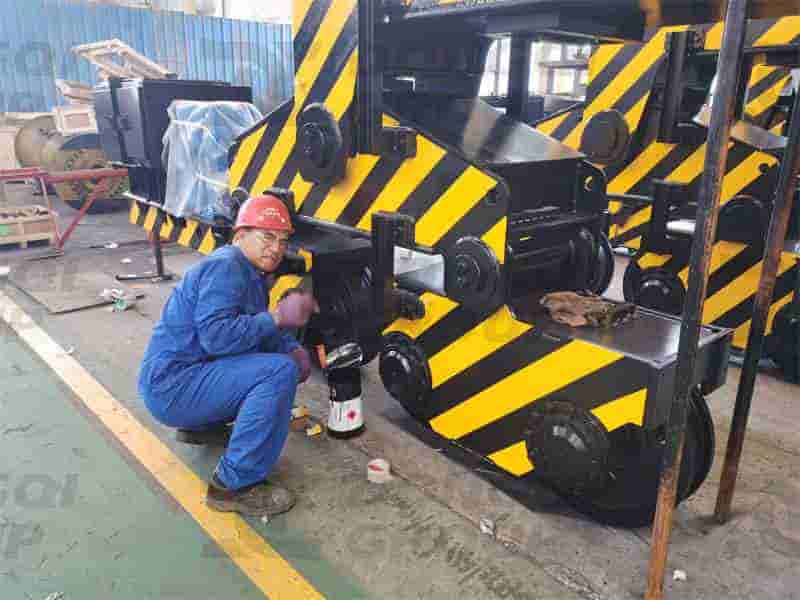
The 40% price gap between African and European quotations does not arise from a single factor. It materializes across four distinct layers that accumulate on top of the factory-gate baseline. Each layer reflects decisions made by the buyer’s market — its regulatory environment, its geographic characteristics, its service expectations — not by the manufacturer.
This is the single largest layer of cost differentiation, and the most frequently misunderstood.
European specifications are governed by the Machinery Directive (2006/42/EC) and enforced through a comprehensive network of harmonized standards. For a gantry crane, these include EN 15011 (structural and safety requirements for bridge and gantry cranes), EN 13001-series (crane design general requirements), EN 60204-32 (electrical safety), and EN 13411 (wire rope terminations). Compliance with these standards requires:
African specifications, by contrast, operate under a different compliance framework. Most African countries reference ISO standards (ISO 4301 for duty classification, ISO 12482 for crane monitoring) rather than the European EN system. Electrical components typically use IEC standards with IP54 enclosures, adequate for the majority of African industrial environments. The resulting bill-of-materials cost is substantially lower, not because of lower quality, but because of lower regulatory overhead and region-appropriate specification levels.
The specification differential alone can account for 15-25 percentage points of the 40% price gap.
A note on the North American comparison: For procurement teams in the United States and Canada, a similar specification-driven cost differential applies. CMAA (Crane Manufacturers Association of America) Specification No. 70 and No. 74 govern overhead and gantry crane design. Additionally, the United States maintains anti-dumping duties on certain Chinese-manufactured steel products and crane components, and steel imported into the US market carries tariff exposure that adds an additional layer of cost not present in European or African procurement scenarios. These combined factors push North American crane pricing further into the premium tier.
Logistics costs are an often-underestimated variable. For crane procurement, shipping is not a marginal expense — it is frequently a double-digit percentage of the total project cost.
Africa-to-logistics cost. Transporting oversized, heavy equipment to Africa involves significant complexity — engineering logistics that extends well beyond standard containerized shipping. For a gantry crane exceeding standard container dimensions, total transport costs can reach 10% to 30% of the equipment value, depending on dimensions, destination port, and inland transport complexity. If a 50-ton gantry crane is valued at $100,000 FOB, the shipping bill alone could range from $10,000 to $30,000 or more. This involves break-bulk vessel chartering or deck-space booking (as the crane typically cannot fit in a standard container), specialized heavy-lift port handling at both origin and destination, inland transport via multi-axle hydraulic trailers, route surveys, and police escort coordination.
Europe-to-logistics cost. While physically shorter in distance, the Europe route incurs a different cost profile: ship-to-shore handling at major European ports (Rotterdam, Hamburg, Antwerp) is more efficient, but customs brokerage, terminal handling charges, and compliance documentation compliance add cost layers. Average machinery shipping costs from China to Europe range between $15,000 and $22,000 per container-equivalent, with break-bulk shipments incurring higher per-ton costs. For a 50-ton gantry crane, total sea freight to Europe is generally lower than to Africa because European ports have better heavy-lift infrastructure.
The irony: shipping a crane to Africa often costs more than shipping it to Europe, despite the shorter physical distance, because African port infrastructure for heavy-lift cargo is less developed and inland transport presents greater engineering challenges.
This layer is highly jurisdiction-specific and can swing the landed cost by 5-20%.
European Union duties: Under the EU’s Common Customs Tariff, bridge cranes and gantry cranes classified under HS codes 8426.11, 8426.19, and 8426.30 are generally subject to duty rates of 0-2% for Most-Favored-Nation (MFN) imports from China, depending on the specific sub-classification. The EU-Vietnam Free Trade Agreement and similar arrangements further reduce tariffs — and bridge and gantry crane imports from China to Vietnam, for example, currently benefit from 0% duty under ACFTA or RCEP agreements. Additionally, imports are subject to standard EU VAT at destination-country rates (typically 19-25%), though VAT is recoverable for registered businesses.
African duties: African markets present a more complex and often more costly tariff landscape. Nigeria, as a representative example, applies a Common External Tariff (CET) with industrial machinery import duty rates typically ranging from 5% to 10%. However, additional statutory levies — including a 7.5% VAT calculated on cumulative duty-inclusive value, a 0.7% Comprehensive Import Supervision Scheme (CISS) charge, a 0.5% ECOWAS Trade Liberalization Scheme (ETLS) levy, and a 1% Inspection Deposit Settlement Levy — push the effective total tax burden on crane imports to approximately 16-22% of CIF value. In Kenya, VAT applies at 16% on the sum of customs value, import duty, and other levies, alongside an Import Declaration Fee (IDF) of 3.5% and Railway Development Levy (RDL) of 2%. Some African countries also impose age restrictions or require pre-shipment inspection certification, each adding cost and administrative burden.
The net effect: while European tariffs on Chinese cranes are relatively modest (0-2%), African markets can impose effective tax burdens that approach or exceed 20% of CIF value. These costs are borne by the importer, not the manufacturer — but they influence the total cost perception and frequently shape the configuration decisions buyers make at the specification stage.
This is the most subtle layer, but often the most consequential.
European service model: When a crane is sold into the European Union, the manufacturer or its authorized representative assumes statutory obligations under the Machinery Directive and the Product Liability Directive. The warranty period is backed by legal enforceability. Service response commitments — typically 48-hour on-site response — must be met through local service partnerships or in-country engineering teams.
African service model: Service delivery in Africa introduces a different cost profile for both manufacturer and buyer. Physical distance from spare-parts inventory hubs, longer response times, and reliance on remote diagnostic support translate to a different warranty cost structure. While this reduces the manufacturer’s direct warranty provisioning cost, it increases the buyer’s operational risk: unplanned downtime from a failed component can extend for weeks if no local service infrastructure exists. The result is a lower upfront price but a higher self-insured operational risk — and buyers who understand this trade-off can plan accordingly.
The 40% price differential between African and European crane quotations is not mysterious once the four cost-driver layers are understood. Engineering construction cranes should be considered based on global cost, not just acquisition cost, considering the equipment’s entire lifecycle.
Three critical clarifications regarding the African quotation:
The key insight: the same factory with the same manufacturing cost produces different-priced cranes for different markets because each market imposes a unique set of cost-driver layers on top of the baseline specification.
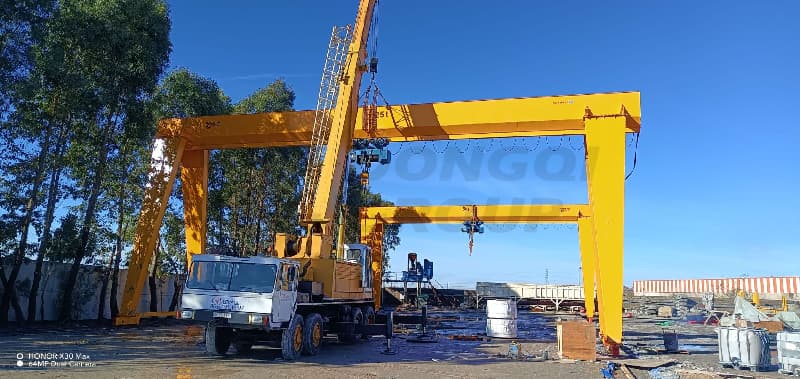
When evaluating crane procurement value, buying enterprises should consider the total life cycle cost of the equipment. For a typical gantry crane with a 20-year service life, the true total cost of ownership (TCO) typically breaks down into:
For the African buyer, a lower upfront acquisition cost partially conserves capital, but if the specification level is insufficient for the actual operating environment — resulting in higher maintenance frequency and longer downtime — the total cost over 20 years may exceed that of a higher-specification European-configured crane.
For the European buyer, higher upfront compliance and component costs are partially offset by lower energy consumption over the equipment’s life (through premium-efficiency drives), higher reliability, and more predictable regulatory compliance costs.
Dongqi Crane’s pricing therefore reflects a rigorous effort to calibrate the configuration to the application, matching the specification level to the actual operating duty and regulatory environment. A crane that works in a steel mill at M7 duty must have different component specifications than one that works in a warehouse at M4 duty — regardless of which continent it sits on.
Dongqi Crane’s approach to global pricing is built on a simple principle: configure the crane to the application, and price each cost-driver layer transparently.
This means:
This calibration is not about offering “cheap cranes to Africa” and “expensive cranes to Europe.” It is about aligning the crane’s technical specification with the actual demands the crane will face over its service life.
The 40% price gap between African and European crane quotations tells a complex story. A factory in Changyuan manufactures both cranes at similar baseline cost. But by the time the crane reaches its destination:
Dongqi Crane’s role is not to obscure these differences with a single all-inclusive price — it is to help buyers understand them, budget for them, and make specification decisions that optimize their 20-year total cost of ownership rather than their first-day acquisition cost.
The next time a procurement team in your organization asks, “Why is the African quotation for the same crane 40% lower than the European one?”, the answer should be: Because it is not the same crane. It is a different crane, engineered to a different specification, governed by different standards, and serving a different operational reality — all built on the same factory floor, under the same quality system, by the same manufacturer.
That understanding, applied consistently, turns procurement from a price-comparison exercise into an intelligent investment decision.
For a customized crane configuration proposal that is precisely calibrated to your region’s regulatory requirements, operating environment, and total-cost-of-ownership objectives, contact Dongqi Crane’s global sales engineering team.
Contact our crane specialists
Send us a message and we will get back to you as soon as possible.