A cement plant being erected at 3,500 meters in the Andes. A hydropower station burrowed into a mountain valley accessible only by a single-track road that washes out every monsoon. A mining camp in the West African interior, six hours of rutted laterite track from the nearest paved road. A polar research logistics hub where the construction window closes solid with the sea ice.
These are not theoretical scenarios. They describe real projects that Dongqi Crane has supported—or been called upon to salvage—over the past four decades of shipping lifting equipment to more than 96 countries. And in each case, the client’s primary anxiety was not the crane’s lifting capacity, span, or hoist speed. It was a more primal fear: Will it get here? Can we put it together once it arrives? And if something breaks, are we completely alone out here?
Procurement for remote locations inverts the standard risk pyramid of capital equipment sourcing. In a conventional urban factory installation, the crane arrives on a fully equipped low-loader, erection takes a few days with a mobile crane and a crew of specialists, and a service technician is a two-hour drive away if a contactor fails. In a remote project, none of these assumptions hold. The logistics chain is fragile. The local labor pool may have never seen a bridge beam. The nearest qualified electrician capable of reading a ladder logic diagram might be an international flight away. The margin for error in specification, packaging, documentation, and commissioning planning shrinks to zero.
Dongqi Crane, headquartered in China’s “Cradle of Cranes” and operating a 240,000-square-meter manufacturing complex that produces over 10,000 crane units annually, has accumulated deep institutional knowledge about what it takes to successfully deliver, erect, and sustain material handling equipment in the world’s hardest-to-reach places. This guide distills that knowledge into a practical, phase-by-phase roadmap for procurement professionals, project managers, and site engineers who have been handed the task of specifying and acquiring a crane where Amazon does not deliver and service vans do not roam.
By following this framework—and, crucially, engaging with your crane manufacturer early enough in the project cycle to incorporate remote-site imperatives into the design itself—you can transform a high-risk procurement into a controlled, predictable operation that delivers a crane ready to work on day one and maintainable for decades thereafter.
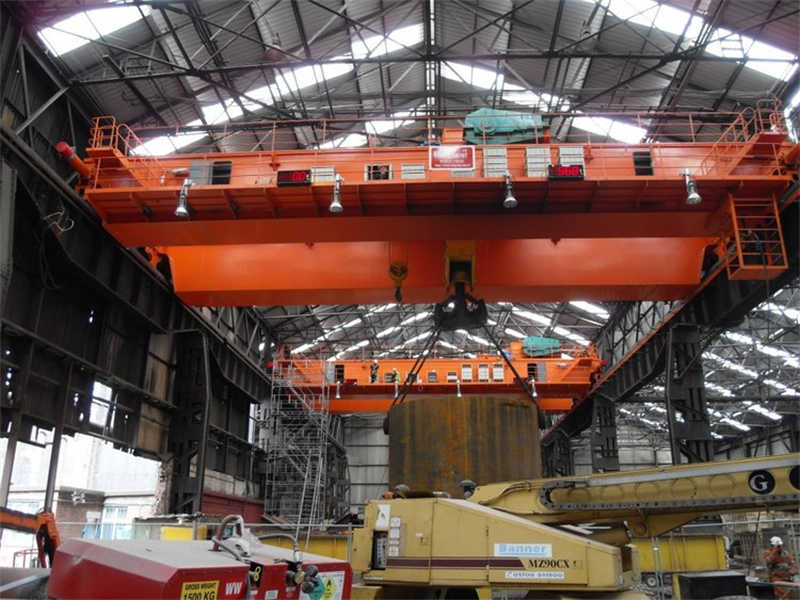
Urban crane projects often skip the site assessment because the conditions are known: standard industrial park, flat floor, 380V/50Hz power at the wall, clear access for a 50-ton mobile crane. Remote locations invalidate every one of these assumptions. The first and most critical phase is a disciplined, thorough data-gathering exercise.
Before any crane is specified, the project team must collect dimensions and conditions that will constrain both the machine’s design and the installation method. At a minimum, the Remote Site Assessment Checklist should capture:
| Parameter | Why It Matters in a Remote Location |
|---|---|
| Access road conditions | Maximum axle load, bridge weight limits, tunnel clearances, seasonal closures (monsoon, snow) determine girder segmentation |
| Site altitude | Above 1,000 meters, electric motors must be de-rated for thinner cooling air; above 3,000 meters, special insulation and potential control voltage adjustments apply |
| Ambient temperature extremes | Arctic sites require low-temperature steel grades (impact-tested to -40°C or -50°C) and synthetic lubricants; desert sites need solar radiation shielding and cooling for electrical enclosures |
| Foundation and rail datum | Uneven or settling foundations common in remote sites may require adjustable crane rail mounting and ongoing monitoring; pre-existing rails must be surveyed for gauge, level, and alignment |
| Available power supply | Is grid power stable? What are the voltage fluctuations? In many remote sites, dedicated diesel generators or hybrid solar-battery systems form the crane’s power source, requiring harmonic filtering and voltage regulation |
| Lifting equipment available on site | If no mobile crane larger than a 25-ton rough-terrain unit can reach the site, the bridge girder assembly must be designed for a “crane-less” erection method (see Phase 4) |
| Accommodation and medical support | Not a crane parameter, but directly affects installation crew logistics, safety planning, and cost |
Dongqi Crane’s project engineering group uses a standardized Remote Site Survey Form—an extended version of our Working Condition Analysis Worksheet—to collect these data points. We strongly recommend engaging our engineers before the building is designed or the foundation is poured; adjustments at the design stage are inexpensive; retrofits after equipment arrives are catastrophic.
Crane duty in remote locations tends toward extremes: either the machine will be lightly used for sporadic maintenance lifts (as at a remote pump station), or it will be worked relentlessly in a continuous-process operation where any downtime stops revenue (as at a mine). The middle ground is rare. This bimodal distribution demands careful specification:
In both cases, the remoteness changes procurement economics: the cost of sending a technician to replace a failed bearing can exceed the bearing’s price by a factor of 20, 50, or 100. This reality must be factored into the decision about component quality at the specification stage. Dongqi Crane’s premium drivetrain selections—SEW or equivalent gearboxes, IE3 motors, sealed-for-life bearings—which might appear as “over-specification” in an urban setting, become strict economic necessities in a desert or on a mountain.
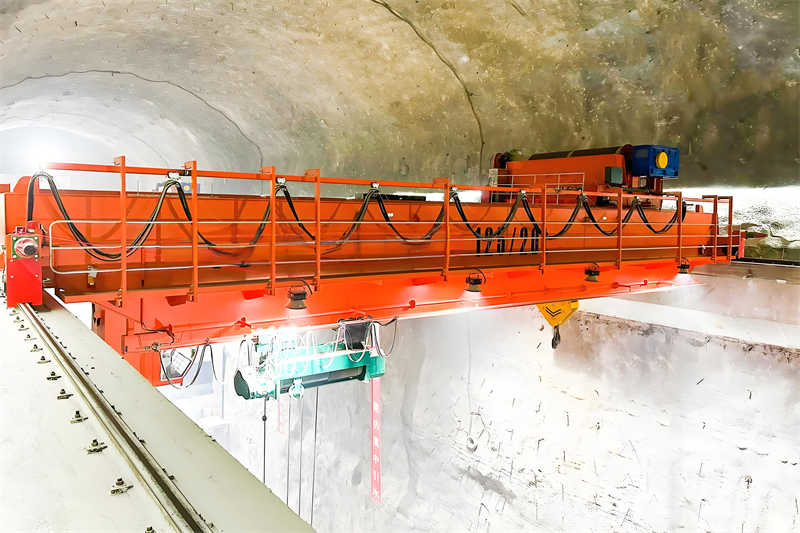
Remote international locations often coincide with emerging-market regulatory environments where equipment certification requirements differ markedly from the manufacturer’s home standards. Crane specifications in Sub-Saharan Africa may require compliance with local mining regulations. Pacific Island nations may require compliance with Australian/New Zealand Standards (AS/NZS). Central Asian projects may require GOST-K or EAC certification. Failing to identify these requirements during specification leads to cranes that sit in customs crates while certificates are chased retroactively.
Dongqi Crane’s export compliance team maps the regulatory landscape for each project at the inquiry stage. Our standard certifications—CE, ISO 9001, ISO 45001, ISO 14001, ISO 50001, and GJB9001C—cover a wide spectrum of international requirements, and we have experience obtaining project-specific certifications including ATEX, IECEx, ASME B30, FEM, and national special equipment licenses for diverse markets. Engage your manufacturer early on this point; certification lead times can extend project schedules by months if left to the last minute.
With site conditions fully understood, the crane design itself must be adapted to the realities of transport, erection, and autonomous operation. Trying to force a standard factory crane into a remote context is the single most common—and most expensive—procurement error we encounter.
A standard double-girder overhead crane for a 50-ton capacity with a 25-meter span ships as a main girder that can be 27 meters long and weigh 30 tons. On a European motorway, that is a routine permit load. On an unpaved mountain road in Papua New Guinea with 15-ton bridge limits and hairpin bends, it is an impossibility.
The solution is a crane designed from the drawing board for segmental transport and on-site bolted assembly. Dongqi Crane engineering provides several options depending on the severity of the transport constraints:
At the design stage, Dongqi Crane’s structural engineering team works directly with the client’s logistics provider to understand the route’s vessel size, road gauge, weight restrictions, and transshipment points, translating these physical constraints into the girder segmentation plan.
Urban factories plug a crane into a busbar feeder and forget about it. Remote sites grapple with voltage sags, frequency instability, phase imbalance, and outright blackouts. The crane’s electrical system must be specified to survive these conditions—or to bypass the grid entirely.
Dongqi Crane configures electrical systems for remote power conditions:
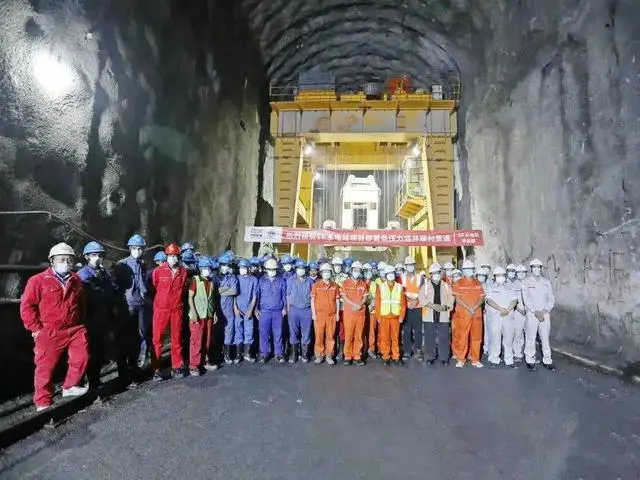
All Dongqi motors in critical applications are supplied with PTC thermistors embedded in windings, wired to the control system to alarm and trip on over-temperature—protection that is especially important in high-altitude or desert installations.
Remote sites often coincide with extreme environments. Our engineering team categorizes environmental aggressiveness per ISO 12944 and ISO 9223 standards and selects protection accordingly:
These are not generic “options” to be ticked after the fact; they are embedded in the design from the structural analysis phase. Dongqi Crane’s engineering center in Xinxiang has performed seismic and thermal finite-element analyses for hundreds of projects, and we can provide calculation reports as part of project documentation.
In a remote location, the most valuable feature a crane can possess is the ability to tell someone what is wrong with it before a human ever sets foot on site. Dongqi Crane’s IoT condition monitoring platform, branded internally as our Smart Crane System, was developed specifically to address the challenge of service distance.
The system integrates:
For a client operating a crane 800 kilometers from the nearest technician, the Smart Crane System delivers three specific operational benefits:
Procurement for remote sites should treat remote connectivity not as an optional add-on, but as a core component of the crane’s specification with a direct impact on lifecycle costs and availability.
Crane logistics for remote sites is an art of its own. It intersects heavy-lift shipping, multimodal transshipment, import bureaucracy, and final-leg transport in a ballet where a single dropped container or a customs delay can derail a construction schedule.
For a recent project delivering gantry cranes to an inland port facility in Central Africa, Dongqi’s logistics team coordinated the following chain: factory-load in Xinxiang onto heavy-lift trailers, rail to a Shanghai port, ocean freight to a West African hub port, transshipment to a feeder vessel for river navigation to an inland river port, offload onto barges for five days upstream, final transshipment onto 6×6 trucks for a three-day overland journey to site. Girder sections were designed to fit within the dimensional limits of the smallest vessel in the chain. Without the segmentation engineered in Phase 2, the project would have been physically impossible.
For any remote project, our logistics team recommends—and can facilitate—a formal route survey conducted by a local agent. The survey must verify:
The packaging specification is a direct function of the transport environment. Dongqi Crane’s standard export packaging for remote projects includes:
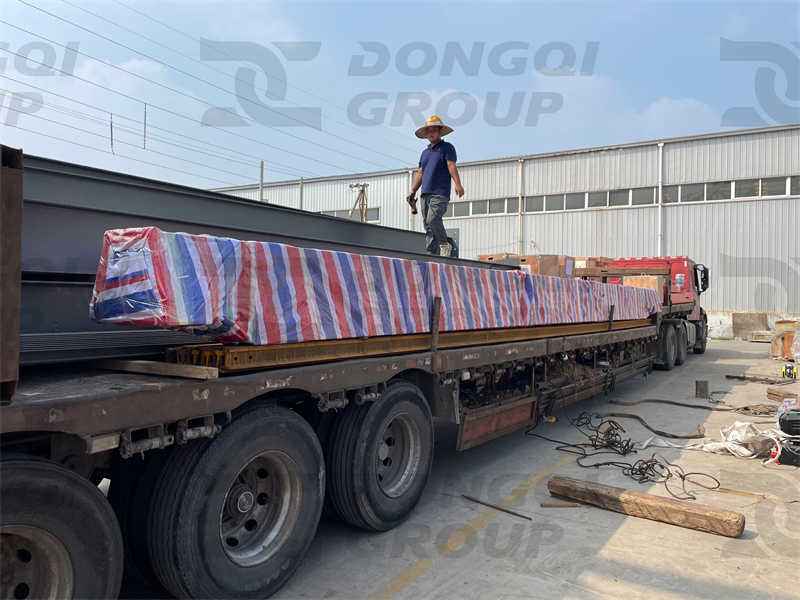
All export packaging is fumigated to ISPM 15 standards and includes a detailed packing list with photographs, weights, and dimensions, used by the site receiving team to verify completeness before the transport vehicles are released.
Customs clearance for crane shipments in remote-location countries can be a weeks-long quagmire if the paperwork is not meticulously prepared. Dongqi Crane’s export documentation team provides a complete set of commercial, financial, and technical documents aligned with the specific importing country’s requirements, often including:
We strongly recommend that the project’s on-site logistics coordinator conduct a physical receiving inspection against the packing list within 24 hours of each shipment’s arrival. This is the last moment to identify and claim for transport damage before liability becomes contested among the ocean carrier, road hauler, and insurer.
When the crane components have been unloaded onto a remote site—a patch of leveled ground, a generator humming in the background, a crew of local laborers looking at a 20-ton girder segment and a collection of bolted splices—the question becomes: how do we get this from the ground to the runway without the 100-ton mobile crane that every urban project takes for granted?
Dongqi Crane engineers have deployed a range of low-infrastructure erection methods, selected based on the specific crane type, available equipment, and site constraints:
Method A: Launching girder using runway rails. For overhead cranes, the end carriages and bridge girders can be assembled at ground level at one end of the runway. A winch or come-along is used to pull the assembled crane along the rails into position. This requires careful structural analysis to verify that the runway is sufficiently robust to support the crane’s self-weight during the pull, and that the end carriages are stable without counterweight until the bridge is fully positioned.
Method B: Strand jack or climbing gantry. For heavy double-girder cranes, a small modular strand jack system or a temporary climbing gantry can be erected on the runway to lift each girder section into position for bolting. Dongqi can provide the rigging design and lifting procedure documentation; the strand jack equipment itself may be sourced locally or supplied as part of a turnkey installation package.
Method C: Mobile crane substitution with creative heavy lift. In some sites, a heavy forklift, a pair of reach stackers working in tandem, or even a large excavator configured as a lifting machine can handle smaller crane assemblies. We provide lifting point calculations and stability assessments for whatever the client has available.
Method D: Dongqi’s supervised installation crew. For projects requesting turnkey delivery, Dongqi Crane dispatches an experienced installation team comprising a site supervisor, riggers, welders (if any field welding is required, though bolted designs minimize this), and electrical commissioning engineers. The team travels with a comprehensive toolkit, calibrated instruments for alignment and load testing, and a pre-prepared method statement and risk assessment specific to the project. We have deployed teams to sites in over 30 countries, operating under challenging conditions ranging from tropical monsoon to high-altitude cold.
Installation in remote sites also requires planning for life support: accommodation, potable water, food, satellite communication, medical evacuation plans, and personal protective equipment appropriate for the environment. In our experience, these logistics are just as critical to project success as the technical method statement, and we work with clients to align expectations early.
Every crane must be load-tested before handover, typically to 125% of rated capacity for overhead cranes per international standards. In a remote location, sourcing certified test weights equal to 125% of a 50-ton crane—62.5 tonnes of calibrated steel blocks—can be a project in itself.
Dongqi Crane supports alternative load-testing methods:
We coordinate the load test procedure with any local regulatory authority or certifying body that must witness and sign off on the test.
A crane installed in a remote location will be operated and maintained by local personnel who may have never worked with overhead lifting equipment before. Dongqi Crane provides comprehensive training as a core part of every remote project delivery, not an optional extra. Our standard training package covers:
Training materials are provided in the language of the site workforce (or in English with a local translator coordinated with the client). We leave behind a full set of hard-copy and digital manuals, maintenance logs, and quick-reference fault-finding guides customized to the specific crane built. Where possible, we recommend that the client designate a “crane champion”—one or two individuals who receive more in-depth training and become the site’s first line of competence.
The moment the commissioning engineer boards the last vehicle out is the moment the procurement team’s long-term bet is revealed. Will the crane operate reliably with only local resources and minimal external intervention? The answer depends entirely on the spare parts strategy, remote support infrastructure, and maintenance culture established during the project planning phase.
For remote sites, Dongqi Crane strongly endorses a “heavy spare parts inventory upfront” model. The alternative—ordering parts as failures occur—results in weeks or months of downtime waiting for international freight, customs, and final-mile delivery. The costs of that downtime, as we have demonstrated in our Lifecycle Cost Calculator publication, dwarf the inventory carrying cost of the spare parts.
We provide every remote-client project with a Recommended Spare Parts List (RSPL) organized into three tiers:
Tier 1 – Commissioning and Start-Up Spares: Consumables and high-wear items expected to be needed during the first year of operation, including brake linings, contactor sets, limit switch heads, fuses, rope lubricant, and touch-up paint. These ship with the crane.
Tier 2 – Operational Spares (2–5 Years): Components with predictable wear intervals, such as wire ropes, sheave bearings, pendant control stations, VFD keypads, and relays. We recommend stocking these at the site from day one.
Tier 3 – Strategic Spares (5+ Years): Major long-lead items that could cause extended downtime if they fail: a complete gearbox assembly, a hoist motor, a set of travel drive wheels. The decision to stock these is a financial one balancing cost versus downtime risk. Our lifecycle cost analysis can model the optimal inventory position for each site.
All spare parts are tagged with the crane’s unique project number in Dongqi’s system, ensuring that any future order placed by the client—even years later by a different site manager—is matched to the correct technical configuration.
The Smart Crane System mentioned in Phase 2 is not merely an installation and commissioning tool; it becomes the backbone of the long-term manufacturer-client relationship for remote sites. Annual service contracts can include remote data review by a Dongqi engineer, who issues a health report and maintenance recommendations based on actual equipment condition rather than fixed calendar intervals. This moves the maintenance regime from “replace at X hours” to “replace when trending data indicates it is needed,” reducing both parts consumption and downtime risk.
When a fault does occur, the ability for both the site technician and a Dongqi support engineer to look at the same error log and trend data simultaneously—even if they are on different continents—fundamentally transforms the speed and accuracy of diagnosis. In multiple instances, our remote diagnostic service has guided a local electrician through replacing a VFD parameter set after a power surge, restoring the crane to operation in hours rather than the weeks it would have taken to fly in a specialist.
For critical cranes where extended downtime is commercially or operationally unacceptable, Dongqi Crane can provide a formal Emergency Response Service Level Agreement (SLA). Elements include:
We also encourage remote clients to develop a reciprocal support arrangement with other industries in the same region using similar equipment. Two mining companies with Dongqi cranes might agree to share a Tier 3 spare component, halving its inventory cost while ensuring availability for both.
The challenges of procuring and installing an overhead crane in a remote location are real, but they are entirely surmountable. The difference between a project that runs smoothly and one that descends into cost overruns, schedule delays, and bitter disputes is almost always the quality and timing of the planning.
At Dongqi Crane, we have learned that remote-site success requires the manufacturer to engage not merely as a vendor shipping a catalogue product, but as an engineering partner integrated into the project from the conceptual phase. We need to understand the access road before we design the girder splices. We need to know the generator capacity before we specify motor starting currents. We need to see the local electrician’s qualifications before we design the control interface. All of this information, gathered early and shared openly, allows us to configure a crane that genuinely fits the context in which it must live and work.
If you are reading this as a procurement professional or project manager tasked with delivering lifting equipment to a location that makes logistics contractors nervous, we invite you to contact Dongqi Crane’s application engineering team. Send us the coordinates of your site, a description of what you need the crane to do, and whatever you know—or don’t yet know—about the transport, utility, and labor conditions. We will work with you to define a specification, a logistics plan, an erection methodology, and a long-term support strategy that together transform “an impossible site” into “a successfully delivered project.”
Because in the world of crane engineering, remoteness is not an excuse for reduced performance. It is a design parameter to be satisfied, just like span or lifting capacity. And we have been satisfying it, in some of the most inaccessible locations on the planet, for over forty years.
About Dongqi Crane
Henan Dongqi Machinery Co., Ltd. (Dongqi Crane) is a Sino-New Zealand joint venture headquartered in Xinxiang, Henan Province—China’s recognized center of crane manufacturing excellence. Our integrated 240,000-square-meter facility encompasses steel fabrication, machining, electrical assembly, and full-scale load testing. With over 3,600 employees, including 500+ technical and engineering staff and 70+ senior engineers, and an annual production capacity exceeding 10,000 crane units, Dongqi Crane is one of the world’s most comprehensive single-source crane manufacturers.
Our products—spanning single-girder and double-girder overhead cranes, gantry and semi-gantry cranes, jib cranes, KBK modular systems, explosion-proof configurations, metallurgical ladle cranes, and intelligent lifting devices—are exported to more than 96 countries and regions. We hold international certifications including CE, ISO 9001 (quality), ISO 45001 (occupational health and safety), ISO 14001 (environmental), ISO 50001 (energy management), and GJB9001C (defense quality). Our project engineering team has direct experience delivering and commissioning cranes in remote, logistically complex, and environmentally extreme locations across Asia, Africa, the Middle East, South America, and Oceania.
For an initial consultation on your remote-site crane requirements, contact the Dongqi Crane Global Projects Team.
Contact our crane specialists
Send us a message and we will get back to you as soon as possible.