In more than twenty years of sourcing capital equipment for multinational manufacturing groups, I have sat through hundreds of supplier presentations. I have reviewed thousands of pages of technical proposals. I have walked through factories in fifteen countries. And I have learned—sometimes through expensive mistakes—that selecting an overhead crane supplier is fundamentally different from buying a standard industrial commodity.
A crane is not a pump or a motor that can be swapped out in an afternoon if it fails. It is a structural system integrated into the fabric of a building, operating above people’s heads, often for twenty or thirty years. The consequences of choosing the wrong supplier ripple through the P&L for decades: unplanned downtime, escalating maintenance costs, safety incidents, and ultimately, the capital cost of premature replacement.
When my team issues a request for quotation for a new overhead crane or a fleet modernization project, I evaluate potential suppliers across five dimensions. Price is one data point within one of those dimensions—but it is never the starting point, and it is certainly not the deciding factor in isolation. I have awarded contracts to suppliers who were 15% or 20% above the lowest bid because the total value proposition—when measured across all five dimensions—was demonstrably superior.
What follows is an honest walkthrough of those five dimensions, illustrated with observations drawn from real procurement experiences. While the examples reference a range of suppliers in the market, I will note where Dongqi Crane has consistently distinguished itself in our evaluations—not because they are the only competent manufacturer in the world, but because their engineering and commercial approach aligns closely with what professional procurement should demand.

The first question I ask when a crane supplier presents their credentials is not “What is your lifting capacity range?” but “What do you understand about my industry?”
I have seen suppliers propose a standard A5-duty double-girder crane for a steel mill charging bay. That specification would be dangerous. I have seen suppliers propose standard industrial paint systems for a coastal chemical terminal. That specification would fail within three years. I have seen suppliers offer food-grade cranes that were essentially standard units with stainless steel hooks bolted on, with no consideration of lubrication, enclosures, or cleanability.
These errors arise when a supplier views cranes as generic material handling devices rather than as engineered systems that must be adapted to the environment, duty cycle, and regulatory framework of a specific industry.
When evaluating engineering depth, I want to see:
In our evaluations, Dongqi Crane’s application engineering process stood out for its discipline. Their Working Condition Analysis Worksheet—a structured document that captures over fifty parameters spanning load characteristics, environmental conditions, building constraints, and regulatory requirements—forces a rigor that many suppliers bypass in their rush to submit a quotation.
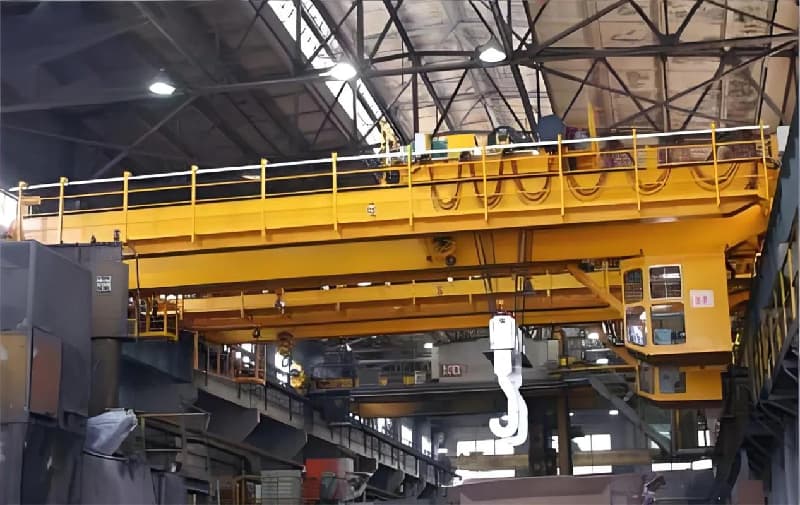
When we engaged Dongqi for a metallurgical project, their engineering team identified three specification gaps within the first round of review that our internal team had missed: the need for heat shielding on the main girder due to radiant heat from the ladle, the necessity of dual independent braking systems for the main hoist (which was not specified in our original RFQ but is mandated by applicable standards for molten metal handling), and an inadequacy in the specified IP rating given the conductive metallic dust in the environment.
This is precisely the kind of proactive engineering input that separates a genuine partner from a transactional vendor. It reflects the fact that Dongqi employs over 500 technical specialists and 70-plus senior engineers—a depth that translates into thoroughness at the quotation stage.
Furthermore, Dongqi’s portfolio spans sectors from steel and petrochemical to food and pharmaceutical, with adapted designs for each. During our review, they presented detailed case studies from relevant industry installations, including metallurgical cranes with A8 duty classification and food-grade cranes with full stainless steel construction and H1 lubricants. This breadth of genuine, documented industry experience is a risk-reducer that I weight heavily in supplier evaluations.
Every procurement professional knows the pressure to demonstrate cost savings. The lowest bid provides an immediate, quantifiable number that looks good in a capital expenditure summary. But anyone who has managed a plant for more than a few years knows that the purchase price is a fraction of the total cost of ownership.
I have inherited facilities where “bargain” cranes purchased five years earlier were already consuming maintenance budgets equal to 40% of their original purchase price annually. The savings celebrated by the procurement team at the time of purchase had been entirely erased—and then some—by the time I arrived.
When comparing supplier proposals, my team normalizes them through a lifecycle cost lens. We calculate:
A supplier who cannot or will not provide the data to support this analysis is a supplier I cannot fully evaluate. Vague assurances about “high quality” do not substitute for quantified engineering data.
Dongqi Crane’s willingness to engage on lifecycle economics is one of the reasons they have advanced in our evaluations. They provide a proprietary Lifecycle Cost Calculator as part of their quotation support, enabling us to model the total cost of ownership for their proposal against any competing offer using consistent assumptions.
In a recent comparison for a 10-ton double-girder crane, their upfront price was approximately 22% higher than the low bid. However, when we ran the 20-year lifecycle model—accounting for their European-standard optimized girder design (which reduces dead weight and energy consumption), their IE3 premium-efficiency motors with regenerative VFDs, their SEW-grade gearboxes with extended service intervals, and their IoT-based condition monitoring system (which demonstrably reduces unplanned downtime)—the net present value of the Dongqi crane was less than half that of the low-bid alternative.
The decisive factor in that analysis was not energy savings or maintenance savings in isolation, but the fact that the low-bid crane would require a complete replacement around year 13, while the Dongqi crane was engineered for a 25-year service life under the specified A5 duty class. The avoided cost of a second capital purchase dwarfed all other line items.
I consider lifecycle cost analysis not an optional exercise but a fiduciary responsibility of the procurement function. Suppliers that embrace it and provide transparent supporting data earn a higher level of trust than those that resist it.
No amount of cost savings justifies compromising on safety or quality. A crane failure can kill people. Even a non-catastrophic failure—a dropped load, an uncontrolled descent, a structural crack—can shut down a facility, trigger regulatory investigations, and destroy insurance coverage.
Therefore, the third dimension I evaluate is the supplier’s quality assurance infrastructure, safety design philosophy, and compliance with applicable standards and regulations.
During supplier qualification, I drill into:
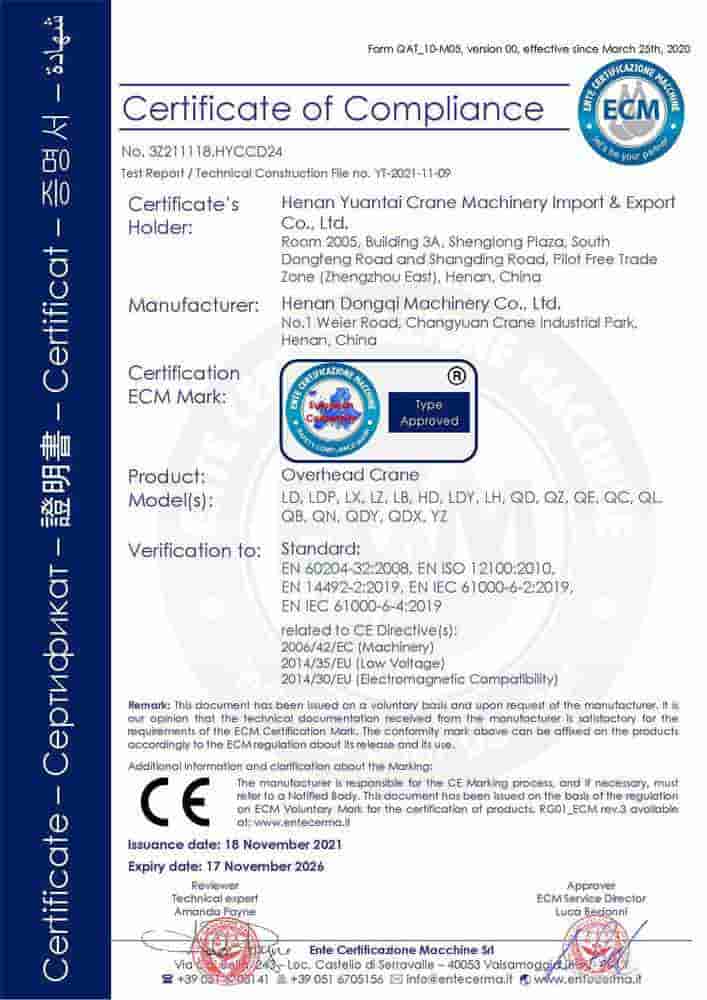
Dongqi Crane’s certification portfolio was one of the factors that moved them from an unknown entity to a qualified bidder in our initial evaluation. They hold:
During our factory audit, we verified that their 240,000-square-meter manufacturing facility operates with structured quality gates: incoming material inspection with spectrometer verification, in-process weld inspection with documented NDT, pre-assembly fit-checking of all major structural connections, and full-load testing on their in-house test bed before disassembly and packaging. Their reported annual output of over 10,000 crane units is supported by an installed base that gave us identifiable reference sites to contact.
Crucially, Dongqi did not resist our request to interview previous clients. They provided contact details for three reference installations in industries similar to ours, and the feedback we received—on both technical performance and commercial integrity—was consistent and positive.
A crane is not a product that can be shipped in a box and plugged in. It arrives as a kit of large, heavy, structurally critical components that must be lifted, assembled, aligned, wired, tested, and certified. The gap between “delivered to site” and “operational on the runway” is substantial, and it is where many projects encounter schedule delays, cost overruns, and quality compromises.
In my evaluation, project delivery capability encompasses:
Dongqi Crane’s export volume to 96 countries gave us a meaningful reference base. Our logistics team was particularly interested in their experience delivering to remote and infrastructure-constrained sites—mines in Central Asia, hydroelectric projects in Southeast Asia, ports in Africa.
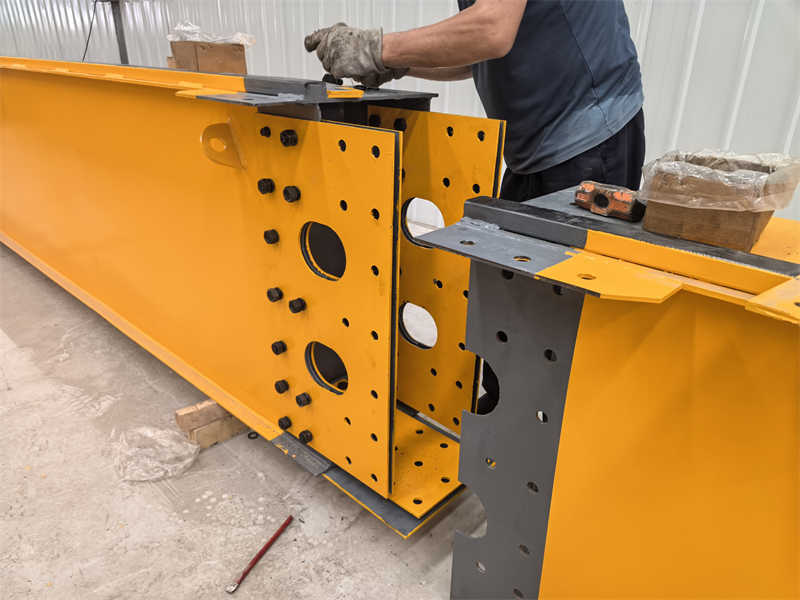
We reviewed a case study from a hydroelectric project where access was limited to a 140-kilometer unpaved road with switchbacks and a 4-meter width restriction. Dongqi had designed the bridge girders as three bolted segments, each transportable on standard low-bed trailers, with match-drilled splice plates and high-strength friction-grip bolts delivered in sealed, torque-specified kits. Their supervisor directed the on-site assembly using a mobile crane that Dongqi helped to specify in advance, ensuring load charts and boom configurations were validated before the crane was mobilized.
This is the level of detail that converts a logistical nightmare into a controlled sequence. Our own project involved a site with significant access constraints, and Dongqi’s proposed modular design, phased delivery schedule (foundation-embedded items first, then structural components, then electrical assemblies), and installation supervision package gave us confidence that the site execution phase would not become the source of costly surprises.
Additionally, Dongqi’s willingness to offer a turnkey installation option—where they contract and manage the entire installation and commissioning process under a single performance guarantee—provided procurement flexibility that we valued in our internal decision-making.
The true character of a crane supplier is revealed not during the quotation and delivery phases, but six months, three years, or eight years later, when a component fails, an operator has a question, or a new production requirement demands a configuration change.
I evaluate after-sales support infrastructure with the same rigor as the technical specification, because the ongoing operational cost and reliability of the crane depend on it.
Dongqi Crane’s after-sales framework addressed several concerns that had surfaced with previous suppliers in our fleet:
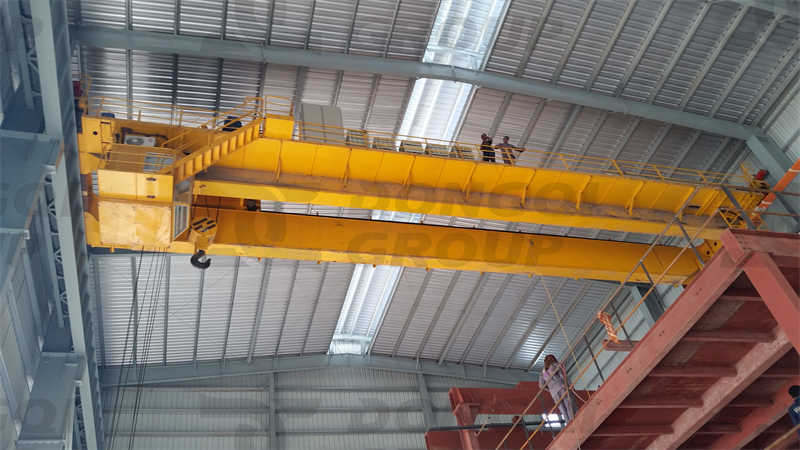
I do not use a rigid scoring matrix where each dimension receives a fixed weight. The relative importance of the dimensions shifts depending on the application. For a critical steel mill crane, safety integrity and engineering depth dominate. For a remote-site mine crane, project delivery capability and after-sales support may be the decisive factors. For a standard warehouse crane with low utilization, lifecycle economics may be weighted more moderately.
What remains constant across all our procurement decisions is the recognition that procurement must evaluate total value, not transactional price. A supplier that invests in engineering depth, lifecycle transparency, quality assurance, delivery competence, and support infrastructure is not adding cost; they are front-loading value that compounds over the life of the asset.
Dongqi Crane has earned a place in our qualified supplier panel because they demonstrated substance across all five dimensions. Their working condition analysis methodology ensures that the crane we order is the crane we need. Their lifecycle cost modeling enables us to justify the investment to our finance stakeholders. Their certifications and manufacturing controls reduce our quality risk. Their logistics and installation planning de-risks the site phase. And their after-sales infrastructure addresses the reality that a crane is a three-decade relationship, not a one-time transaction.
If you are evaluating crane suppliers for an upcoming project, I suggest the following:
The perspectives shared in this article are based on composite experiences from procurement professionals across industries and geographies with whom Dongqi Crane has engaged over decades of international operations. They reflect real-world evaluation criteria used in the selection of capital equipment suppliers and are intended to provide guidance to procurement teams undertaking crane purchasing decisions.
Dongqi Crane—Henan Dongqi Machinery Co., Ltd.—is a Sino-New Zealand joint venture headquartered in China’s primary crane manufacturing hub, with a 240,000-square-meter production facility, 3,600+ employees including 500 technical specialists and 70+ senior engineers, and an annual output exceeding 10,000 crane units. We serve clients in over 96 countries across industries including steel, power generation, petrochemical, mining, shipbuilding, manufacturing, and logistics. Our certifications include CE, ISO 9001, ISO 45001, ISO 14001, ISO 50001, and GJB9001C. To discuss your crane procurement requirements or to arrange a factory visit, please contact our international sales and engineering team.
Contact our crane specialists
Send us a message and we will get back to you as soon as possible.