In the world of industrial material handling, the overhead crane is often viewed as the backbone of the facility. It is the massive steel structure running the length of the bay, the visible capital investment that signals “we are open for business.” Conversely, the below-the-hook (BTH) lifting device—the spreader bar, the sheet lifter, the coil grab—is frequently treated as an afterthought; a relatively inexpensive accessory ordered at the last minute from a specialized vendor.
This procurement hierarchy is dangerous. It is the equivalent of designing a Formula 1 car and purchasing the tires from a different manufacturer six months later, hoping they fit. While the titles listed above break this topic into neat segments, the reality is that the separation of crane and lifting device is not merely a logistical inconvenience—it is a systemic risk that compromises safety, efficiency, and structural longevity.
To truly understand why these components must be designed in parallel, we must abandon the “accessory” mindset and adopt a “Systems Engineering” approach. This article explores the physics, the financial pitfalls, and the forward-thinking strategies required to build a lifting ecosystem that is greater than the sum of its parts.
There is a pervasive myth in material handling that an overhead crane is a universal tool. The logic is seductive: If I buy a 20-ton bridge crane, I can lift 20 tons of anything. In reality, a crane without a defined lifting interface is merely a movable beam. It has potential energy, but no utility.
The mistake begins when engineers specify cranes based on “Capacity” and “Span” alone, neglecting the Center of Gravity (CG) interface between the hook and the load.
A below-the-hook device is not a passive connector; it is a force-mediating mechanism. Consider the difference between lifting a steel coil and lifting a pallet of bricks. The coil wants to roll; the pallet wants to swing. The BTH device is designed to alter the vector of force, translating the vertical pull of the hoist into a controlled grip or a balanced spread.
When you purchase these components separately, you are betting that the structural dynamics of the crane will align perfectly with the kinetic requirements of the load. Often, they do not. A crane designed for “hook height” may not accommodate the physical depth of a motorized spreader beam. A crane designed for “lift speed” may cycle so fast that a vacuum lifter cannot maintain sufficient negative pressure.
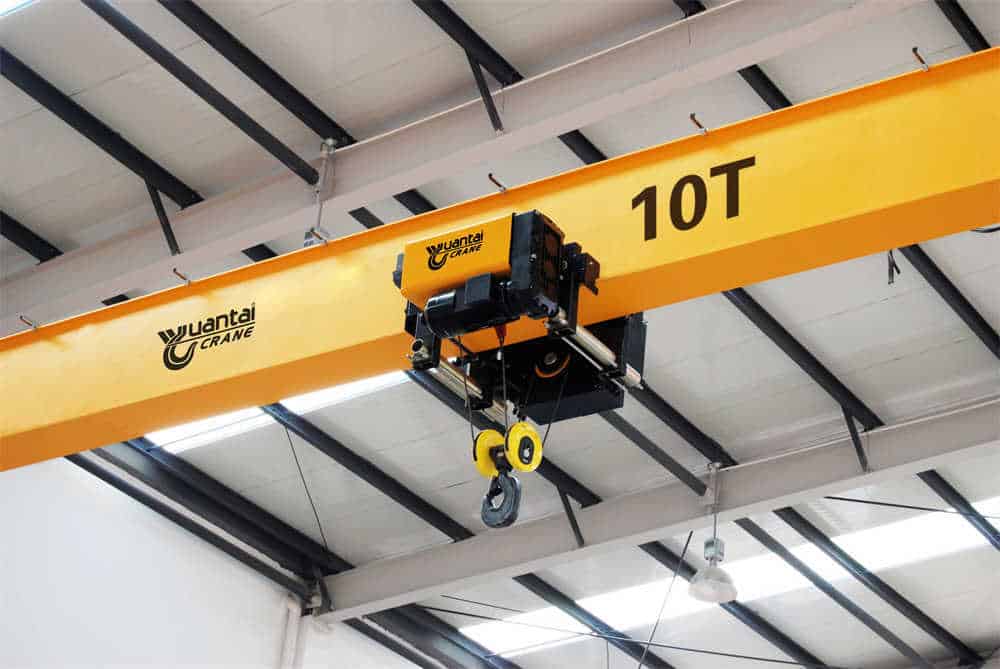
The Systems Approach: An engineer designing a BTH device needs to know the exact acceleration rates of the hoist. They need the wheel load data to understand how the pendulum effect of an off-center lift will stress the end trucks. When these variables are shared in a single design phase, the crane is built to host the device, rather than merely supporting it.
The question, “What If You Purchase Cranes and Lifting Devices Separately?” is often answered with a shrug: “We just bolt it on.” This naive assumption ignores the four horsemen of procurement waste: Retrofit Engineering, Downtime, Interface Liability, and Performance Degradation.
Retrofitting a crane to accept a specific BTH device is rarely as simple as changing the hook. Often, the electrical system of the crane is incompatible with the smart sensors on a modern lifter. If the BTH device requires power (for magnets, clamps, or hydraulics), the facility must install festoon systems or cable reels that were never part of the original scope.
Worse, the physical interface—the clevis or latch—may not match. This leads to field modifications that void warranties. As noted in the prompt regarding retrofit costs, these modifications are exponentially more expensive than original equipment manufacturing (OEM) integration. You are paying a field technician $150 an hour to cut and weld in a confined space, rather than paying a fabricator $50 an hour to do it safely on the bench.
This is the silent killer. When a crane fails during a lift, the finger-pointing begins immediately. The crane manufacturer claims the BTH device introduced harmonic oscillations that overloaded the gearbox. The BTH manufacturer claims the crane drifted (creeped) during the lift, exceeding the safe dwell time of the vacuum system.
When purchased separately, the buyer becomes the integrator—and the integrator holds the liability bag. A single engineered system shifts this risk upstream to the suppliers, who are forced to collaborate.
A crane purchased without a defined BTH partner is often oversized “just in case.” Facilities buy a 30-ton crane to lift a 15-ton load because they are afraid of unknown future attachments. This results in a “light duty” crane operating in a “heavy duty” environment. The result? High energy consumption, slow speeds (due to oversized components running below optimal RPMs), and a massive waste of capital.
“How do you future-proof a crane?” is the wrong question. The right question is: How do you future-proof a lifting process?
Future-proofing is not about buying a crane with a higher capacity rating than you need. It is about designing modularity and interface compatibility into the system from day one.
Instead of viewing the crane as a standalone machine, view it as a mobile utility port. In a truly integrated system, the trolley is not just a rolling beam; it is a data and power distribution hub.
When you purchase the crane and BTH device together, you can specify “wet legs” (hydraulic lines running through the trolley) or “live booms” (conductors that carry data signals from the lifter’s sensors back to the operator cab). This is prohibitively expensive to add later, but relatively cheap when drawn on the original schematic.
Future loads are often physically different, not just heavier. A crane built with an extra 3 feet of lift height, or a slightly wider spread between the runways, can accommodate a radically different BTH device ten years from now. However, you won’t know to ask for that extra 3 feet unless you have modeled the likely trajectory of your future lifting devices alongside the current one.
By simulating future BTH needs during the crane design phase, you build a forgiving envelope. This isn’t speculation; it is parametric design.
There is a specific category of lifts where purchasing separately is not just a mistake, but a physical impossibility. These are the scenarios that define the necessity of the single engineered system.
Imagine lifting a wind turbine nacelle or a large pressure vessel. The CG is not where the hook lands. A standard crane, paired with an off-the-shelf lifting beam, will tilt the load unpredictably. An engineered system, however, utilizes a load cell integrated BTH device that communicates with the crane’s variable frequency drive (VFD). As the load tilts, the crane automatically adjusts the travel speed to prevent pendulum swing.
Ferrous plate handling requires a perfectly flat lift. If the crane’s hoist has even a slight asymmetry in the wire rope payout, one corner of the magnet will lift before the others, creating a “peeling” effect that can drop the load. A crane designed in tandem with a magnet spreader beam can be rigged with dual hoists or synchronized blocks to ensure absolute level lift initiation.
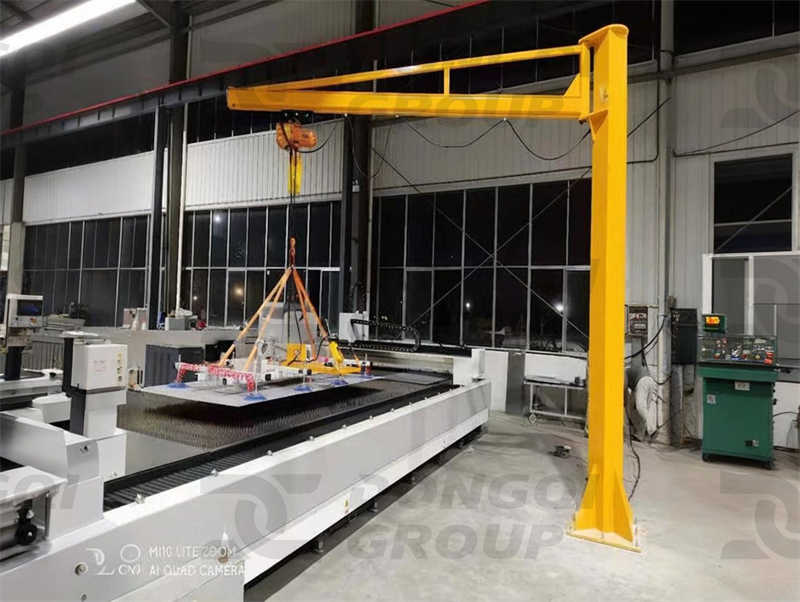
In automated storage and retrieval systems (ASRS) using overhead cranes, the BTH device must dock with millimeter precision. This requires the crane’s positioning system (encoders, lasers) to speak the same language as the BTH device’s alignment guides. This is achievable only through integrated software architecture, not a fieldbus handshake attempted by two different contractors on a Sunday night.
The resistance to buying cranes and lifting devices together usually stems from budget timing. The crane is a $200,000 decision; the BTH device is a $20,000 decision. Procurement departments kick the $20,000 can down the road to make the $200,000 purchase look leaner.
This is penny-wise, pound-foolish.
Let’s assign hard numbers to the “buy separately” scenario:
Total Hidden Cost: $43,500+
A BTH device that could have been integrated for a $2,000 engineering surcharge during the initial crane build now costs nearly double the purchase price to install.
To truly understand why these purchases must be paired, we must look at the psychology of the operator and the maintenance team.
An operator trusts a machine that feels cohesive. When the BTH device swings erratically because the crane’s acceleration is too aggressive for the load’s pendulum length, the operator blames the crane. They slow down. They creep. They become less productive. They fear the lift.
An integrated system is tuned. The ramp-up time of the motor is matched to the damping characteristics of the BTH device. The lift feels solid. The operator pushes the joystick further, knowing the load will follow obediently. This psychological safety translates directly into reduced cycle times.
Maintenance teams hate orphans. When the crane is from Vendor A and the lifter is from Vendor B, the maintenance department needs two sets of spare parts, two sets of manuals, and two service contracts. When failures occur at the interface (e.g., a damaged hook latch), neither vendor claims responsibility.
An integrated system often comes with a single source for service. The technician understands that a vibration in the lifter might be caused by a flat spot on the crane’s bridge wheel. They diagnose the system, not the component.
So, how does a facility manager move from the fragmented model to the integrated model? It requires a shift in the Request for Quote (RFQ) process.
Do not issue an RFQ for “One 10-Ton Double Girder Crane.” Instead, issue an RFQ for “One Lifting System Capable of Handling 4’x8’ Sheet Steel and Rotating Large Castings.”
Define the loads, not the machine. Let the vendors propose the optimal combination of bridge, hoist, and lifting attachment. Some may propose a standard crane with a custom spreader; others may propose a customized crane with a standard spreader. By evaluating them as a single economic unit, you allow market competition to solve the integration problem for you.
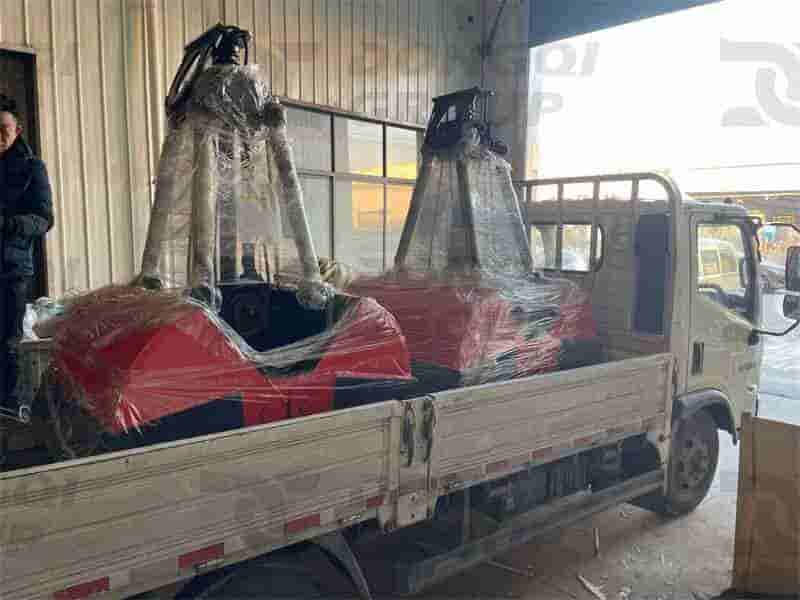
When purchasing separately is unavoidable (perhaps due to existing infrastructure), demand a formal interface control document (ICD) from both parties before signing the purchase orders. This document must specify:
If the vendors cannot agree on this document, the integration risk falls on you—and that is a risk you should not accept.
The argument for pairing overhead cranes and below-the-hook devices is not a sales tactic; it is a logical necessity derived from the laws of physics and the realities of organizational finance.
We have moved past the era where a crane was merely a beam and a chainfall. Modern lifting is a data-rich, high-speed, precision activity. The interface between the machine and the material is no longer a passive hook—it is an active, intelligent manipulator.
To separate the manipulator from the machine is to sever the nervous system from the skeleton. The result is a facility that is technically operational, but profoundly limited.
By demanding integration from the outset, you are not just buying hardware; you are buying capacity confidence. You are ensuring that the first time the hook goes up, the load comes with it—smoothly, safely, and exactly as planned. You are future-proofing not through brute force oversizing, but through intelligent interface design.
The hook is not the end of the crane; it is the beginning of the lift. Treat it as such, and your entire material handling ecosystem will perform in harmony.
Contact our crane specialists
Send us a message and we will get back to you as soon as possible.